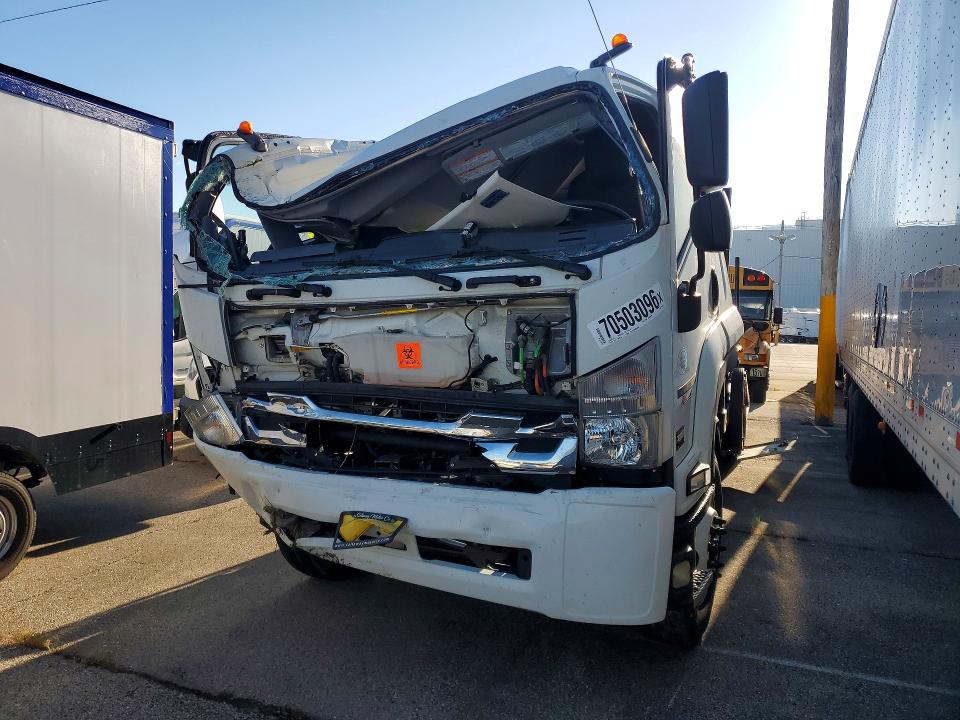
2019 Isuzu FTR Car Hauler Rolled at 230K: Salvage Title, Zero Answers
Rollover on a car hauler means the frame twisted under load. That's not a body shop fix — that's a funeral.
How is the Shame Score calculated?
The Shame Score (1–10) combines five signals: damage-type severity, title-condition risk, the gap between ACV (Actual Cash Value — the car's pre-damage market price) and AI max bid, listing red flags (run/drive status, secondary damage), and misleading-listing signals from AI photo analysis. A score of 8+ means the model found no financially defensible reason to bid. ACV is pulled from auction listing data; repair costs reference industry body-shop benchmarks. All figures are directional estimates, not binding quotes. Repair costs reference CCC Intelligent Solutions benchmarks and regional body-shop averages.
Would you bid?
Vehicle
2019 ISUZU ALL OTHER
Title
salvage
Damage
ROLLOVER
State
Ohio
Mileage
over 200k
Runs/drives
—
Approx ACV
~$33,000
AI max bid
$0
ACV from auction listing data · Repair costs via CCC benchmarks + body-shop averages
In plain numbers: Someone is bidding ~$29,700+ on this vehicle. AI analysis says it's worth at most $0 as a project. That's a $33,000gap. Here's why.
A 2019 Isuzu FTR car hauler at zero dollars current bid. Commercial hauler, purpose-built, the kind of truck that prints money on the right route. ACV (Actual Cash Value — what it was worth before the wreck) sitting at $32,650, which for a medium-duty commercial hauler with a car-carrying deck is almost a bargain. You start doing the math on a fleet purchase or an owner-operator setup and the number looks interesting. You let yourself think about it.
Then the mileage hits you: 230,663. On a commercial chassis that's been working for a living, not commuting. Then the title: salvage (legally declared a total loss — the insurance company did the math and walked away). Then the damage: rollover. On a car hauler. Think about what a rollover means on a vehicle designed to carry 15,000 pounds of other vehicles on an elevated deck. The physics of that event don't produce a bent fender. They produce a chassis that twisted under a load it was never meant to carry sideways, a cab that absorbed forces it was engineered to deflect forward, and a deck structure that may look intact in photos and be fundamentally compromised in ways no photograph will show you.
Frame inspection on a medium-duty commercial chassis runs $800–$1,200 before they touch anything. If the frame is bent — and after a loaded rollover, the question isn't whether it bent, it's where — straightening a commercial frame costs $6,000–$9,000 and that's before alignment, which on a multi-axle hauler runs another $400–$600. The cab structure needs a full assessment: $1,500 in diagnostic time minimum. The deck and tie-down system have to be recertified before this truck legally hauls anything, which means an inspection, likely replacement hardware, and depending on your state, a commercial vehicle safety inspection that a salvage-titled rollover may not pass at all. Salvage title on a commercial vehicle also means most fleet insurance carriers won't touch it, and the ones that will charge a premium that eats your margin. No key, no run/drive confirmation, 230,000 miles, and zero documentation of what was on the deck when it went over. Frame straightening $7,500 + cab assessment $1,500 + deck recertification $2,000 + commercial insurance premium delta $3,000/year = $14,000 before the engine turns once.
Derek in Knoxville is going to bid on this because he's been looking for a hauler for six months and the price looks too good to ignore. The truck that survived 230,000 miles of commercial work didn't survive the last job, and neither will his deposit.
“The truck that carried wrecks finally joined the collection.”
What to watch for: ROLLOVER
- •On a rollover, the frame rails bend at the point of impact — on a car hauler, look for the cab-to-frame mounting points. Crouch at the front corner and sight down the length of the frame rail. It should be a straight line. Any bow, kink, or visible weld repair means someone already tried to fix it.
- •The deck structure on a car hauler is load-bearing in a very specific direction — vertical. A rollover stresses it laterally. Check every deck support strut where it meets the main rail: look for cracked welds, paint that's buckled or spider-cracked from the inside, and any strut that's not sitting flush against its mount.
- •Check the cab door gaps on the rollover side. Open both doors and measure the gap at the top and bottom of each door frame. Uneven gaps — more than a quarter inch difference top to bottom — mean the cab structure twisted and the doors are telling you what the photos aren't.
- •Hydraulic lines on a tilt-deck hauler run along the frame. After a rollover, those lines may be kinked, cracked, or rubbing against a frame member that shifted. Look for hydraulic fluid staining along the underside of the deck rails — dried fluid leaves a dark brown streak that doesn't wash off clean.
- •Before you bid, pull the VIN and run it through FMCSA (Federal Motor Carrier Safety Administration) if the truck was registered as a commercial carrier. You'll see inspection history, out-of-service orders, and any prior safety violations. A truck with prior OOS orders that then rolled is a truck that was already being pushed.
Tomorrow’s lot. Before the auction. Free.
One lot. AI verdict. Max bid. The numbers that matter — before you bid.
Not bidding? Same email — one lot, one roast, every morning. Join readers who watch so they never bid blind.
Not ready? Browse all entries →TL;DR — copy & share
2019 ISUZU ALL OTHER / ROLLOVER / Ohio / ACV ~$33,000 Shame Score: 9.2/10 | AI Max Bid: $0 The truck that carried wrecks finally joined the collection. vetmyride.com/hall-of-shame/2019-isuzu-ftr-car-hauler-rolled-at-230k-salvage-title-zero-answers-70503096
Previous entry
2022 FORD TRANSIT · Shame 9.2
“The odometer and the engine both gave up, just in different ways.”
Lot identifying info (lot number, VIN, seller, exact sale date) scrubbed. AI commentary is opinion based on publicly listed damage + auction signals. Always inspect in person before bidding.
AI-generated opinion based on publicly listed auction data. Not a factual vehicle assessment. Actual vehicle condition may differ from listing description. All figures are directional estimates, not binding quotes. VetMyRide is not affiliated with, endorsed by, or sponsored by any auction platform. Not a substitute for professional inspection.