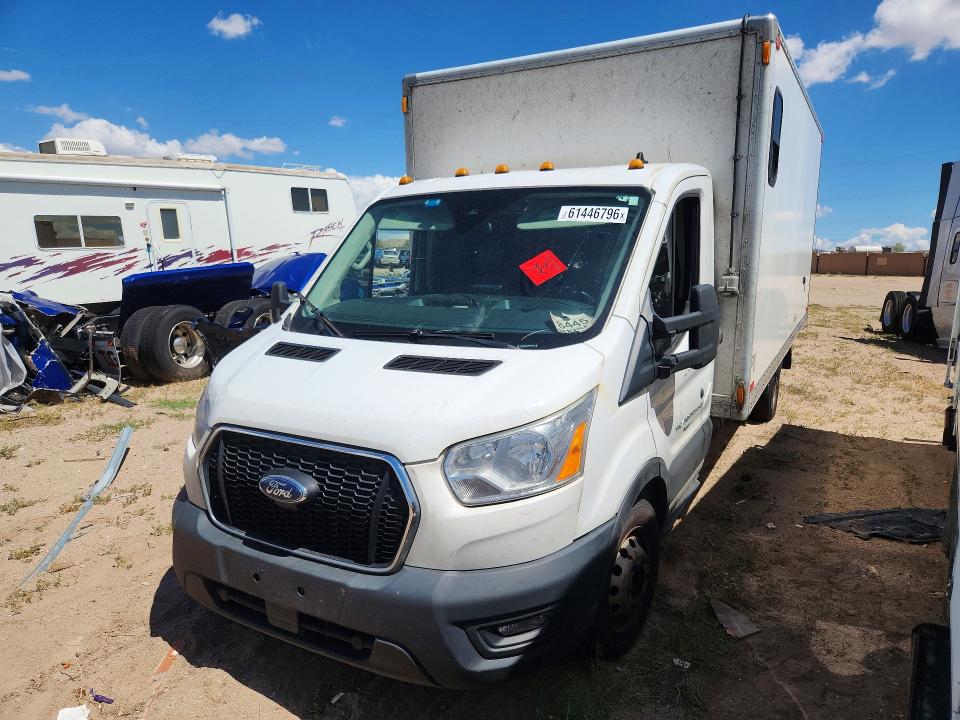
2022 Ford Transit Box Truck: Salvage Title, Engine Fire, 485K Miles
At 485K miles the engine already quit — then it caught fire. There is no version of this where you come out ahead.
How is the Shame Score calculated?
The Shame Score (1–10) combines five signals: damage-type severity, title-condition risk, the gap between ACV (Actual Cash Value — the car's pre-damage market price) and AI max bid, listing red flags (run/drive status, secondary damage), and misleading-listing signals from AI photo analysis. A score of 8+ means the model found no financially defensible reason to bid. ACV is pulled from auction listing data; repair costs reference industry body-shop benchmarks. All figures are directional estimates, not binding quotes. Repair costs reference CCC Intelligent Solutions benchmarks and regional body-shop averages.
Would you bid?
Vehicle
2022 FORD TRANSIT
Title
salvage
Damage
BURN - ENGINE
State
New Mexico
Mileage
over 200k
Runs/drives
—
Approx ACV
~$32,000
AI max bid
$0
ACV from auction listing data · Repair costs via CCC benchmarks + body-shop averages
In plain numbers: Someone is bidding ~$28,800+ on this vehicle. AI analysis says it's worth at most $0 as a project. That's a $32,000gap. Here's why.
A 2022 Ford Transit box truck with a buy-now under a grand sounds like the kind of deal you call your brother-in-law about at 11pm. Commercial body, decent year, Transit platform that fleets have trusted for decades. Opening bid of $125 on a vehicle Copart values at $31,725 (Actual Cash Value — what it was worth before the fire). The math looks insane in your favor. That's the trap.
The mileage is 484,965. Not a typo. This truck has been around the Earth nineteen times. At that number, the 3.5L EcoBoost — if it's even the EcoBoost trim — has lived multiple commercial lifetimes. Gaskets, turbos, injectors, rod bearings: all of them are operating on borrowed time before anyone mentions the fire. The listing doesn't say what caused the burn. Engine fires on high-mileage commercial vehicles don't happen in a vacuum. Wiring harnesses degrade. Turbo oil lines crack. Fuel system components fail. The fire is a symptom. The disease has been building since around mile 200,000.
Engine replacement on a Transit runs $6,500–$9,000 for a reman unit, plus $1,800–$2,400 in labor — and that assumes the fire stayed contained. It rarely does. Wiring harness damage from an engine fire adds $2,000–$5,000 depending on how far the heat traveled. If the firewall is compromised, you're looking at $3,000–$6,000 more. Then the salvage title (legally declared a total loss by an insurance company) permanently kills commercial resale and fleet eligibility — the only buyers who actually want a box truck at half a million miles. Engine $7,500 + wiring $3,500 + firewall repair $4,000 + title discount on resale $8,000 = $23,000 in losses before you've moved a single pallet. The ACV was $31,725 on a truck that can't be commercially insured, can't join a fleet, and needs a new powertrain.
Someone is going to bid $400 on this because $400 feels like nothing. Keisha in Memphis is going to win this auction and spend the next four months discovering exactly how a fire at mile 484,965 is not a starting point — it's a eulogy. The truck is done. The title says so. The odometer said so first.
“The odometer and the engine both gave up, just in different ways.”
What to watch for: BURN - ENGINE
- •Pop the hood and look at the wiring harness routing along the firewall and intake — melted insulation, fused connectors, or brittle plastic that crumbles when touched means the fire spread beyond the engine block and you're looking at a full harness replacement.
- •Check the firewall itself for discoloration, warping, or bubbled paint on the cab side. A firewall that took heat is a structural and sealing problem — exhaust fumes enter the cab, and repair means cutting and welding, not patching.
- •Pull the oil cap and look inside the valve cover — if you see sludge, carbon deposits like black sand, or anything that looks cooked rather than oily, the engine ran hot long before it burned. That tells you the fire was the ending, not the incident.
- •Look at the fuel lines and brake lines near the engine bay. Heat warps and cracks both. Cracked brake lines on a box truck that you're about to load with cargo is not a repair you discover on a hill.
- •Check the salvage title paperwork for the state of loss — if it was totaled in a state with weak title branding laws and transferred before you see it, the damage history may be deeper than what Copart is showing.
Tomorrow’s lot. Before the auction. Free.
One lot. AI verdict. Max bid. The numbers that matter — before you bid.
Not bidding? Same email — one lot, one roast, every morning. Join readers who watch so they never bid blind.
Not ready? Browse all entries →TL;DR — copy & share
2022 FORD TRANSIT / BURN - ENGINE / New Mexico / ACV ~$32,000 Shame Score: 9.2/10 | AI Max Bid: $0 The odometer and the engine both gave up, just in different ways. vetmyride.com/hall-of-shame/2022-ford-transit-box-truck-salvage-title-engine-fire-61446796
Previous entry
2024 INTERNATIONAL ALL OTHER · Shame 9.2
“The tank survived the rollover. The title didn't.”
Lot identifying info (lot number, VIN, seller, exact sale date) scrubbed. AI commentary is opinion based on publicly listed damage + auction signals. Always inspect in person before bidding.
AI-generated opinion based on publicly listed auction data. Not a factual vehicle assessment. Actual vehicle condition may differ from listing description. All figures are directional estimates, not binding quotes. VetMyRide is not affiliated with, endorsed by, or sponsored by any auction platform. Not a substitute for professional inspection.