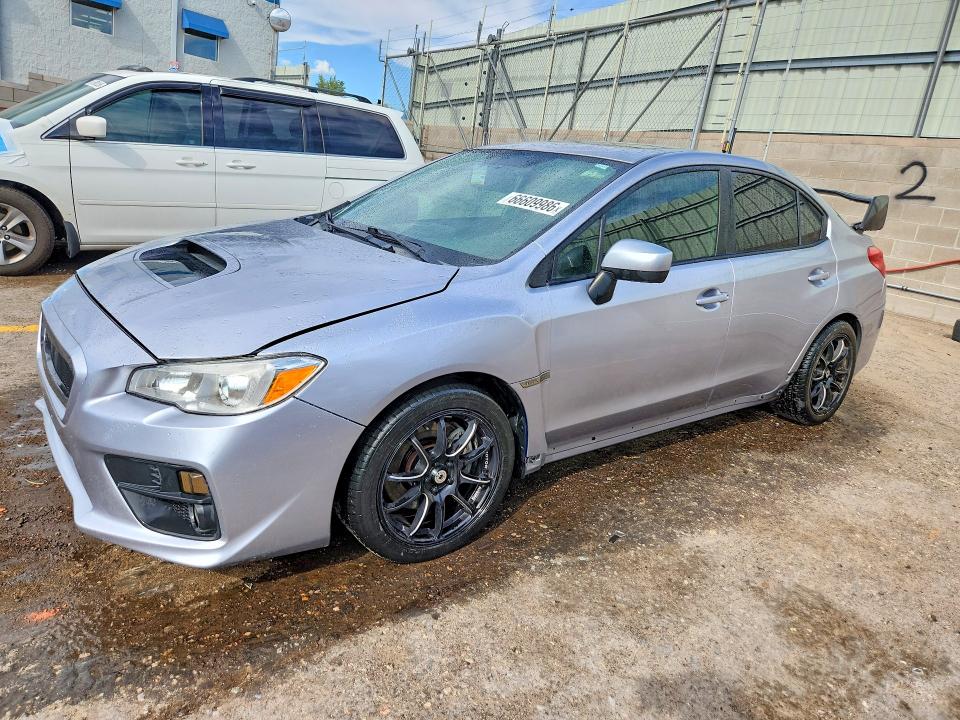
2015 Subaru WRX Limited Flood Salvage: Walk Away Now
Mileage unknown. Run/drive unknown. The ECU is probably still damp. You can't register a salvage WRX in half the country.
How is the Shame Score calculated?
The Shame Score (1–10) combines five signals: damage-type severity, title-condition risk, the gap between ACV (Actual Cash Value — the car's pre-damage market price) and AI max bid, listing red flags (run/drive status, secondary damage), and misleading-listing signals from AI photo analysis. A score of 8+ means the model found no financially defensible reason to bid. ACV is pulled from auction listing data; repair costs reference industry body-shop benchmarks. All figures are directional estimates, not binding quotes. Repair costs reference CCC Intelligent Solutions benchmarks and regional body-shop averages.
Would you bid?
Vehicle
2015 SUBARU WRX
Title
salvage
Damage
WATER/FLOOD
State
New Mexico
Mileage
—
Runs/drives
—
Approx ACV
~$10,000
AI max bid
$0
ACV from auction listing data · Repair costs via CCC benchmarks + body-shop averages
In plain numbers: Someone is bidding ~$9,000+ on this vehicle. AI analysis says it's worth at most $0 as a project. That's a $10,000gap. Here's why.
A 2015 WRX Limited is a genuinely good car. Turbocharged 2.0-liter boxer, 268 horsepower, Bilstein dampers, leather-trimmed everything, and a six-speed manual that makes you feel like you earned it. ACV (Actual Cash Value — what it was worth before the water) sits at $10,150, which means someone drowned a car that was still worth real money. At $0 current bid, your brain starts doing the math. It starts whispering.
Stop listening to your brain. The listing has no mileage. No run/drive status. No secondary damage listed — which doesn't mean there isn't any, it means nobody looked hard enough to find it, or they found it and stopped writing. Water/flood (the primary damage designation for submersion events) is the category that keeps destroying people because the car looks fine. Seats dry. Carpet vacuumed. Dash lights off. And then three months later the ABS module corrodes through, the transmission starts slipping, and the turbo boost controller throws a code nobody can read because the ECU is running on faith.
The WRX platform is not forgiving when wet. The Subaru EJ-series and FA-series engines breathe through an intake that sits low in the engine bay — if this car took on water while running, you're looking at a hydrolocked engine, which means bent connecting rods, scored cylinder walls, and a rebuild that starts at $4,500 and climbs fast. Add ECU replacement at $800-$1,200, wiring harness inspection and repair at $1,500-$3,000 because flood cars corrode at every connector, ABS and stability control module replacement at $600-$900, and a full interior strip-and-dry that any competent shop will tell you takes the carpet, padding, seats, and door panels — call it $2,000 minimum. That's $8,800-$12,100 in likely repairs on a car with an ACV of $10,150. And you still have a salvage title (legally declared a total loss by an insurance company), which cuts resale value by 30-50% and makes it unregisterable in states like California, New York, and New Jersey without a rebuilt title inspection that this car may not pass.
Somebody is going to bid on this because it's a WRX and it's currently at zero dollars and that combination short-circuits rational thought. Derek in Chattanooga is going to win it for $2,400, tow it home proud, and spend the next fourteen months finding new ways it can fail him. The water is already inside the wiring. It's been there since the flood. It's waiting.
“The turbo survived the flood. The title didn't.”
What to watch for: WATER/FLOOD
- •Pull the dipstick and look at the oil on a white rag — if it's milky, gray, or foamy, water got into the engine and you're looking at a rebuild before the car moves under its own power.
- •Find the lowest electrical connector in the car — usually under the driver's seat or behind the kick panels — and look for white or green corrosion on the terminals. If it's there in one place, it's everywhere.
- •Lift the carpet at the rear footwells and press the padding hard with your hand. Flood cars trap water in the insulation for months. If it's damp, the floor is rusting underneath it right now.
- •Check the interior of the turbocharger inlet pipe for waterline marks or debris. If water entered the intake while the engine was running, the connecting rods are bent — and the engine will start, run rough, and destroy itself within a few hundred miles.
- •Request the CIN (Copart Inspection Notes) and any available photo set, then look at the headliner seams and the area around the B-pillars for tide lines — a faint stain at a consistent height tells you exactly how deep the water was.
Tomorrow’s lot. Before the auction. Free.
One lot. AI verdict. Max bid. The numbers that matter — before you bid.
Not bidding? Same email — one lot, one roast, every morning. Join readers who watch so they never bid blind.
Not ready? Browse all entries →TL;DR — copy & share
2015 SUBARU WRX / WATER/FLOOD / New Mexico / ACV ~$10,000 Shame Score: 9.2/10 | AI Max Bid: $0 The turbo survived the flood. The title didn't. vetmyride.com/hall-of-shame/2015-subaru-wrx-limited-flood-salvage-walk-away-now-66609986
Previous entry
2015 BMW 5 SERIES · Shame 8.2
“143,000 miles of deferred maintenance just became 143,000 miles of deferred flood damage.”
Lot identifying info (lot number, VIN, seller, exact sale date) scrubbed. AI commentary is opinion based on publicly listed damage + auction signals. Always inspect in person before bidding.
AI-generated opinion based on publicly listed auction data. Not a factual vehicle assessment. Actual vehicle condition may differ from listing description. All figures are directional estimates, not binding quotes. VetMyRide is not affiliated with, endorsed by, or sponsored by any auction platform. Not a substitute for professional inspection.