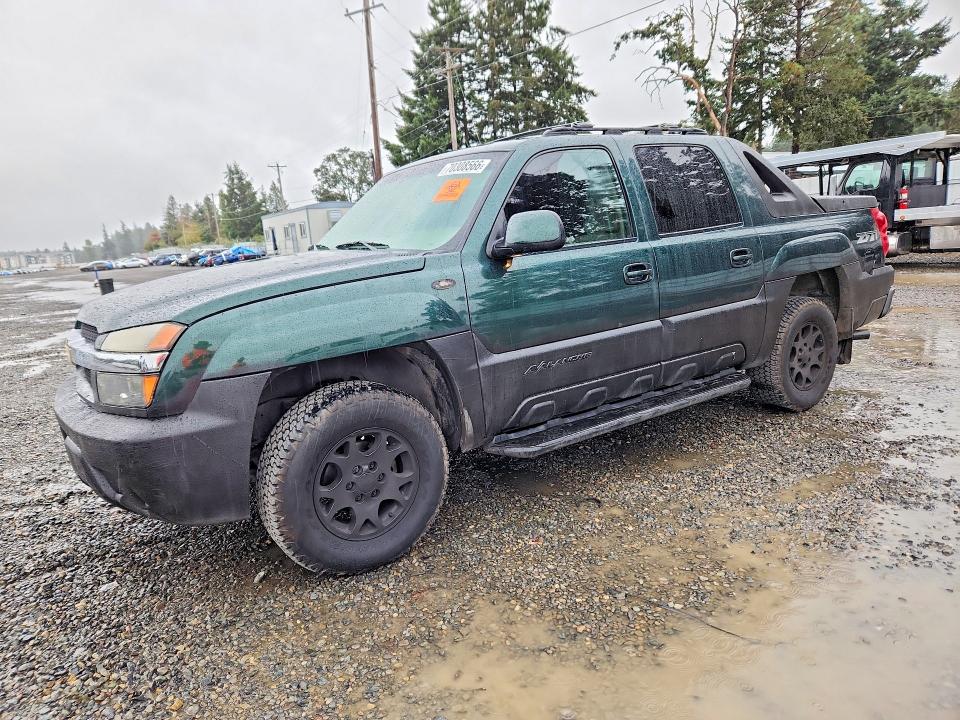
2002 Chevy Avalanche K1500: Salvage Title, No Key, Undercarriage Hit at 173K
No key means no test drive. Salvage means it was totaled. Undercarriage damage means you can't see where it hurts.
How is the Shame Score calculated?
The Shame Score (1–10) combines five signals: damage-type severity, title-condition risk, the gap between ACV (Actual Cash Value — the car's pre-damage market price) and AI max bid, listing red flags (run/drive status, secondary damage), and misleading-listing signals from AI photo analysis. A score of 8+ means the model found no financially defensible reason to bid. ACV is pulled from auction listing data; repair costs reference industry body-shop benchmarks. All figures are directional estimates, not binding quotes. Repair costs reference CCC Intelligent Solutions benchmarks and regional body-shop averages.
Would you bid?
Vehicle
2002 CHEVROLET AVALANCHE
Title
salvage
Damage
UNDERCARRIAGE
State
Washington
Mileage
150-200k
Runs/drives
Yes
AI max bid
$0
ACV from auction listing data · Repair costs via CCC benchmarks + body-shop averages
The 2002 Avalanche K1500 was genuinely clever — a truck that ate its own bed to make a longer one, 5.3L V8 with real tow capacity, the kind of rig that made suburban dads feel like they'd earned something. Twenty-two years later, at $0 current bid with no buy-now, this one looks like a steal. Big truck. Cheap entry. "Run/drive: Yes" right there in the listing. You start doing the math on what you could haul.
The listing says undercarriage damage. That's it. No secondary damage listed, no photos of what specifically got hit, no explanation of how a truck gets a salvage title (legally declared a total loss by an insurance company) from undercarriage damage and keeps running. Think about that gap. Insurance companies don't total trucks because something scraped the skid plate. They total trucks when the repair estimate exceeds the vehicle's worth — and on a 2002 with 173,934 miles, the ACV (Actual Cash Value — what it was worth before the incident) wasn't high. Which means the damage didn't have to be catastrophic to trigger a total loss. It just had to be expensive. Bent frame rails are expensive. Damaged transfer case is expensive. Broken differential housing is expensive. The listing tells you nothing. That's the tell.
There's no key. No key means no test drive, which means "Run/drive: Yes" is someone's word, not your experience. Frame inspection on an Avalanche is complicated by the midgate design — there are more structural connection points than a standard pickup, more places for a hit to travel. Frame straightening on a full-size truck runs $2,500–$4,500, and that's before you know if it's even straightenable. Transfer case replacement on a K1500 is $1,200–$2,400 in parts alone. Rear differential rebuild is $800–$1,500. Front axle U-joints and CV shafts if the front axle took any of the load: another $600–$1,100. You're at $5,100–$9,500 before you've confirmed the damage, and you're doing all of this on a salvage title that most lenders won't finance and some states won't register without a salvage inspection that can take weeks. The truck is 22 years old. The frame has 173,000 miles of flex memory in it. A hit to the undercarriage on a truck this age doesn't heal clean.
Somebody bids $800 on this feeling clever. The flatbed home is $200. The salvage inspection fee is $150. The mechanic's diagnostic to locate the actual damage is $180. Then the estimate comes back. Daniel in Shreveport is going to bid on this and spend the next four months finding out what "undercarriage" actually meant.
“The car is a mystery novel where every chapter costs $2,000.”
What to watch for: UNDERCARRIAGE
- •Bring a flashlight and lie on the ground behind and in front of each wheel. Look at the frame rails — they should be straight, uniform, and unpainted in suspicious patches. Fresh undercoating or new paint on isolated frame sections means someone tried to hide a repair or a crack.
- •On a K1500 4x4, grab the front driveshaft and try to rotate it with the truck in park. Any clunk, grinding, or excessive play points to transfer case or front differential damage that a 'run/drive yes' label won't warn you about.
- •Check where the body meets the bed and where the midgate connects to the cab — the Avalanche's unique structure means a frame hit can show up as misalignment at those seams before it shows anywhere else. Gaps wider than a pencil thickness on one side versus the other mean the frame moved.
- •With no key, you can't start it — but you can still look at the oil fill cap. Pull it. White residue or a milky film means coolant in the oil, which means a head gasket or worse, which is a separate catastrophe riding alongside whatever hit the undercarriage.
- •Look at the tires. Uneven wear on the inside or outside edge of the rear tires on a truck that supposedly 'runs and drives' means the axle or frame geometry is already off. That's not an alignment fix — that's a structural problem.
Tomorrow’s lot. Before the auction. Free.
One lot. AI verdict. Max bid. The numbers that matter — before you bid.
Not bidding? Same email — one lot, one roast, every morning. Join readers who watch so they never bid blind.
Not ready? Browse all entries →TL;DR — copy & share
2002 CHEVROLET AVALANCHE / UNDERCARRIAGE / Washington / ACV ~$? Shame Score: 8.2/10 | AI Max Bid: $0 The car is a mystery novel where every chapter costs $2,000. vetmyride.com/hall-of-shame/2002-chevy-avalanche-k1500-salvage-title-no-key-undercarriage-hit-at-173k-70308566
Previous entry
2013 TOYOTA HIGHLANDER · Shame 7.2
“260,000 miles and the undercarriage damage is still 'unknown' — to whom?”
Lot identifying info (lot number, VIN, seller, exact sale date) scrubbed. AI commentary is opinion based on publicly listed damage + auction signals. Always inspect in person before bidding.
AI-generated opinion based on publicly listed auction data. Not a factual vehicle assessment. Actual vehicle condition may differ from listing description. All figures are directional estimates, not binding quotes. VetMyRide is not affiliated with, endorsed by, or sponsored by any auction platform. Not a substitute for professional inspection.