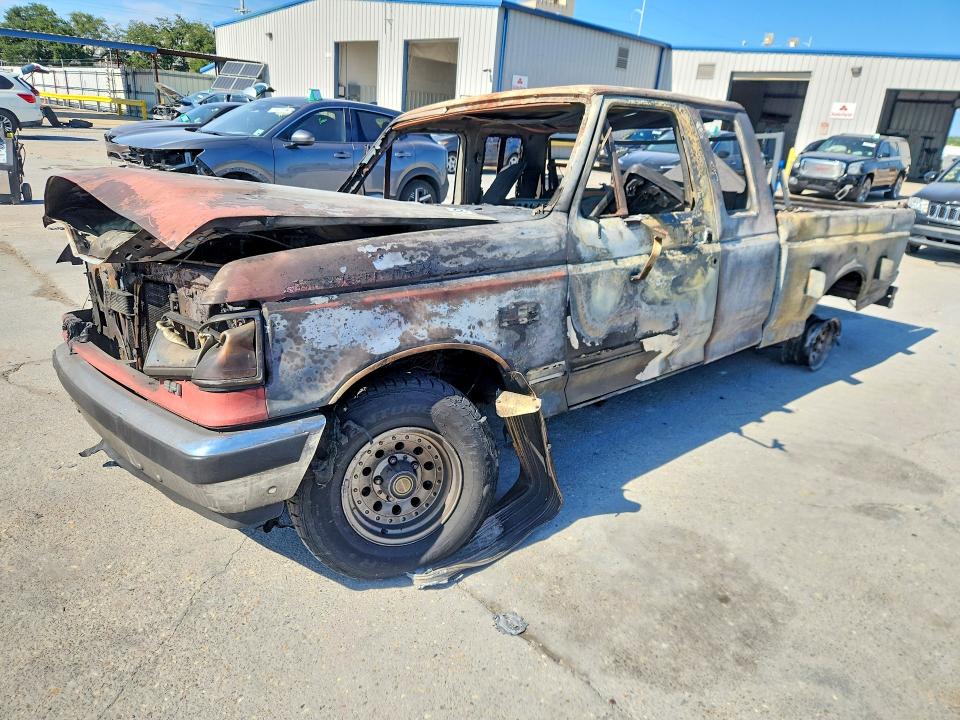
1991 Ford F-150 Salvage: Fire Damage, No Mileage, No Keys, No Mercy
No mileage. No keys. No ACV. Fire damage on a 34-year-old truck with a salvage title — the unknowns aren't a mystery, they're the answer.
How is the Shame Score calculated?
The Shame Score (1–10) combines five signals: damage-type severity, title-condition risk, the gap between ACV (Actual Cash Value — the car's pre-damage market price) and AI max bid, listing red flags (run/drive status, secondary damage), and misleading-listing signals from AI photo analysis. A score of 8+ means the model found no financially defensible reason to bid. ACV is pulled from auction listing data; repair costs reference industry body-shop benchmarks. All figures are directional estimates, not binding quotes. Repair costs reference CCC Intelligent Solutions benchmarks and regional body-shop averages.
Would you bid?
Vehicle
1991 FORD F150
Title
salvage
Damage
BURN
State
Louisiana
Mileage
—
Runs/drives
—
AI max bid
$0
ACV from auction listing data · Repair costs via CCC benchmarks + body-shop averages
A 1991 F-150 is the right truck. Carbureted or throttle-body injected, simple enough that a decent wrench can fix almost anything, old enough to avoid the emissions headaches, light enough to actually work. No computer modules to corrupt, no CVT to grenade, no panoramic roof to leak. The bones on these trucks last. Guys pay real money for clean examples. At $0 current bid with no buy-now, the math looks like an open door.
The listing says fire. It does not say where the fire started, how long it burned, how it was extinguished, or what was left when the smoke cleared. It does not say whether the wiring harness is ash or merely scorched. It does not mention the fuel system, the cab interior, the bed, or whether the frame saw enough heat to compromise its temper — and steel that's been through a serious fire loses structural integrity in ways that don't show up in a walk-around. The listing offers you a photograph and a category. That's the whole disclosure.
Fire damage on a vehicle this age means the wiring harness — already 34 years old and already brittle — is now a liability that runs the length of the truck. Full rewire on an F-150 runs $2,500 to $4,500 depending on how far the damage traveled. If the fire started in the engine bay, figure a carburetor or throttle body replacement at $400 to $900, intake manifold inspection, and coolant hose replacement throughout because rubber and fire are not friends. Cab interior stripped and replaced: $800 to $2,000. If the bed liner caught, the bed itself may be warped. And because the title is already salvage (legally declared a total loss) and mileage is unknown, you cannot get a clean title in most states without a full inspection process that costs time and money before you've turned a wrench. Resale value on a rebuilt salvage F-150 with fire history and unknown mileage: whatever someone at a swap meet will give you.
Diana in Knoxville is going to bid $200 on this because it's an old Ford and she loves old Fords, and she will spend the next two years finding out what burned and why. The truck might be savable. The information required to know that does not exist in this listing, which means the risk is entirely yours, the seller's obligation is zero, and the fire already made every important decision about this truck's future.
“The seller knows less about this truck than the fire did.”
What to watch for: BURN
- •Stand at the engine bay and look for wiring insulation that's bubbled, cracked, or missing entirely — fire-damaged wiring doesn't always look black, it sometimes just looks melted at the connectors. Pull a handful of connectors near the firewall and check whether the plastic has deformed. If it has, the harness behind the dash is worse.
- •Check the frame rails under the cab for heat discoloration — a blue or purple tint on bare steel means the metal reached temperatures that change its structural properties. Run your hand along the rail and feel for warping or scale. A frame that's been through serious heat is not a frame you want under a truck.
- •Open every door and look at the door jamb weatherstripping and the A-pillar. Fire that enters the cab leaves a soot line that shows how high the flames or smoke reached. If the headliner is gone or the soot line is above the dash, assume the entire interior wiring loom needs replacement.
- •Check the fuel lines running along the frame for heat cracking — on a 34-year-old truck they're already marginal, and any fire exposure makes them a fuel leak waiting to happen. Squeeze the rubber sections if any remain. Cracked rubber on a fuel line is a fire waiting to happen again.
Tomorrow’s lot. Before the auction. Free.
One lot. AI verdict. Max bid. The numbers that matter — before you bid.
Not bidding? Same email — one lot, one roast, every morning. Join readers who watch so they never bid blind.
Not ready? Browse all entries →TL;DR — copy & share
1991 FORD F150 / BURN / Louisiana / ACV ~$? Shame Score: 8.2/10 | AI Max Bid: $0 The seller knows less about this truck than the fire did. vetmyride.com/hall-of-shame/1991-ford-f-150-salvage-fire-damage-no-mileage-no-keys-no-mercy-70517876
Previous entry
2019 ISUZU ALL OTHER · Shame 9.2
“The truck that carried wrecks finally joined the collection.”
Lot identifying info (lot number, VIN, seller, exact sale date) scrubbed. AI commentary is opinion based on publicly listed damage + auction signals. Always inspect in person before bidding.
AI-generated opinion based on publicly listed auction data. Not a factual vehicle assessment. Actual vehicle condition may differ from listing description. All figures are directional estimates, not binding quotes. VetMyRide is not affiliated with, endorsed by, or sponsored by any auction platform. Not a substitute for professional inspection.