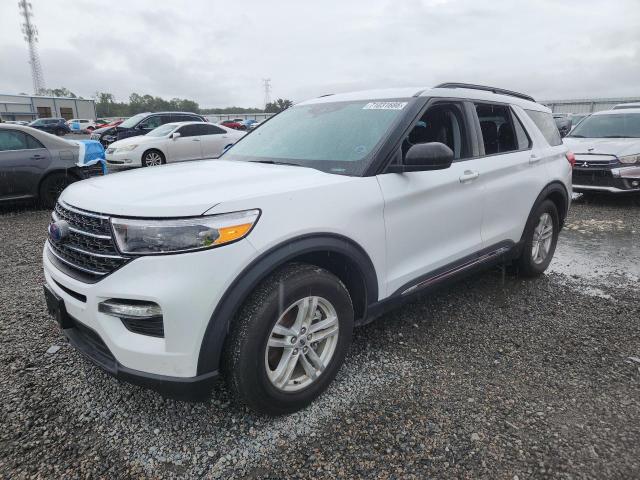
2023 Ford Explorer XLT: Flood Salvage at $0 Bid, $25,800 ACV
The ECU alone is $1,400. Multiply that by every module this Explorer has — and it has 47 of them.
How is the Shame Score calculated?
The Shame Score (1–10) combines five signals: damage-type severity, title-condition risk, the gap between ACV (Actual Cash Value — the car's pre-damage market price) and AI max bid, listing red flags (run/drive status, secondary damage), and misleading-listing signals from AI photo analysis. A score of 8+ means the model found no financially defensible reason to bid. ACV is pulled from auction listing data; repair costs reference industry body-shop benchmarks. All figures are directional estimates, not binding quotes. Repair costs reference CCC Intelligent Solutions benchmarks and regional body-shop averages.
Would you bid?
Vehicle
2023 FORD EXPLORER
Title
salvage
Damage
WATER/FLOOD
State
Florida
Mileage
—
Runs/drives
—
Approx ACV
~$26,000
AI max bid
$0
ACV from auction listing data · Repair costs via CCC benchmarks + body-shop averages
In plain numbers: Someone is bidding ~$23,400+ on this vehicle. AI analysis says it's worth at most $0 as a project. That's a $26,000gap. Here's why.
A 2023 Ford Explorer XLT with a key in hand and a $0 current bid. The ACV (Actual Cash Value — what it was worth before the water) sits at $25,800, which means someone is about to feel like they found the deal of the decade. Third-row SUV, recent model year, probably still has that new-car smell — or it did, before the smell became something else entirely. The bid sheet is blank. The floor is yours. You could own a 2023 Explorer for whatever you type into that box.
The listing says water/flood damage and then goes quiet. No mileage. No run/drive status. Unknown on both counts, which in auction language means the seller knows something and has decided you don't need to. Flood damage on a 2023 Explorer isn't a wet carpet situation — this generation runs on a SYNC 4 (Ford's latest infotainment and vehicle control architecture) system networked to somewhere between 40 and 50 individual control modules governing everything from the adaptive cruise to the power liftgate to the trailer brake controller. Water doesn't have to drown a module to kill it. Corrosion does the same job, slower, after you've already driven it home.
Here's what the math looks like before you've replaced a single body panel. Wiring harness inspection and partial replacement: $2,800–$4,500. SYNC 4 module replacement: $1,200–$1,800. Individual BCM (Body Control Module — the brain that runs your locks, windows, and lighting), PCM (Powertrain Control Module — runs the engine), and ABS module if corroded: $3,500–$5,500 combined. Mold remediation on a sealed third-row cabin with under-seat storage cavities and recessed floor channels: $1,500–$2,500. Interior replacement if the foam and padding are saturated past cleaning — and on a flood car they usually are: $3,000–$5,000. That's $12,000–$19,300 before you've addressed the salvage title (legally declared a total loss by the insurance company), which will cost you another 20–40% of resale value permanently, and before you've confirmed the engine and transmission weren't running when the water came in, which is the difference between a rebuild and a boat anchor.
Someone is going to bid on this because the number starts at zero and the car cost $42,000 new. Destiny in Naperville is going to win it for $8,400, drive it home smelling optimism, and spend the next four months watching warning lights appear in an order that makes no narrative sense. The salvage title means no standard financing, limited insurance options, and a resale market that will offer her roughly what she paid for the modules she already replaced. The water is gone. Everything the water touched is still there.
“47 modules, one flood. Math is not in your favor.”
What to watch for: WATER/FLOOD
- •Pull the driver's seat completely and press your palm into the carpet padding underneath. If it's cold, dense, or leaves any moisture on your hand, the floor pan held water long enough to start rusting from beneath the insulation — and you won't see it until the carpet comes out.
- •Find the OBD-II port (under the dash, driver's side) and plug in a full-system scanner — not a parts-store code reader. Count how many modules respond. On a healthy 2023 Explorer you should see 40+. If half of them are silent or throwing U-codes (network communication faults), the wiring harness is compromised and you're looking at a full replacement.
- •Open the third-row storage compartment and the under-floor cargo bin in the rear. Water pools in both cavities and the drain paths are slow. If the foam liner smells sweet, musty, or chemical — that's mold or mold treatment, and neither answer is good.
- •Check the seatbelt pretensioners on all three rows. Flood water triggers some pyrotechnic pretensioners without a crash, and a triggered pretensioner looks identical to an untriggered one until you're in an accident and nothing happens. Replacement per seat: $300–$600, and you can't know without pulling the B-pillar trim.
- •Look at the SYNC 4 screen with the car on. It should boot in under 10 seconds and show no missing tiles or grayed-out features. A screen that boots slowly, freezes, or shows blank feature tiles means the APIM (Accessory Protocol Interface Module) took water — $1,200 to $1,800 to replace, and it's VIN-coded to the vehicle.
Tomorrow’s lot. Before the auction. Free.
One lot. AI verdict. Max bid. The numbers that matter — before you bid.
Not bidding? Same email — one lot, one roast, every morning. Join readers who watch so they never bid blind.
Not ready? Browse all entries →TL;DR — copy & share
2023 FORD EXPLORER / WATER/FLOOD / Florida / ACV ~$26,000 Shame Score: 9.2/10 | AI Max Bid: $0 47 modules, one flood. Math is not in your favor. vetmyride.com/hall-of-shame/2023-ford-explorer-xlt-flood-salvage-at-bid-acv-71031686
Previous entry
2012 MAZDA 3 · Shame 7.2
“The car has more miles than excuses, and it's running out of both.”
Lot identifying info (lot number, VIN, seller, exact sale date) scrubbed. AI commentary is opinion based on publicly listed damage + auction signals. Always inspect in person before bidding.
AI-generated opinion based on publicly listed auction data. Not a factual vehicle assessment. Actual vehicle condition may differ from listing description. All figures are directional estimates, not binding quotes. VetMyRide is not affiliated with, endorsed by, or sponsored by any auction platform. Not a substitute for professional inspection.