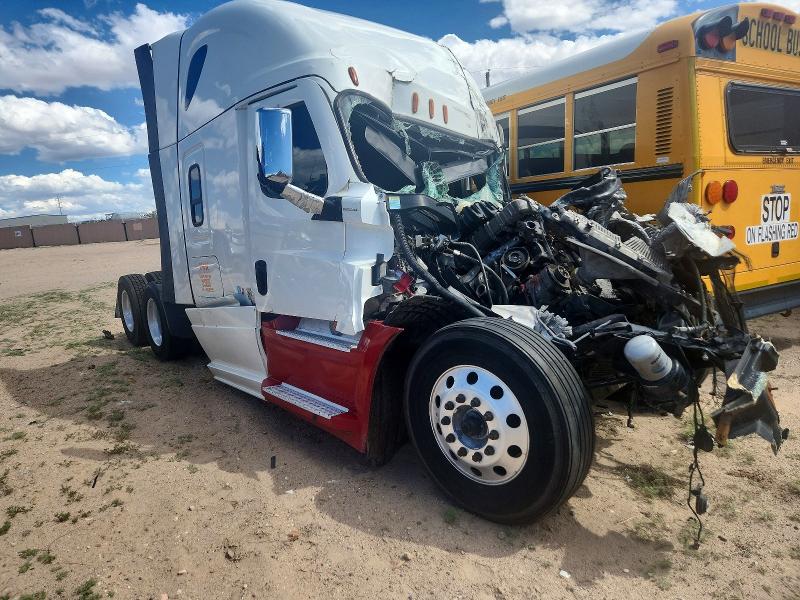
2021 Freightliner Cascadia 126: Salvage, All-Over Damage, Zero Answers
You can't register a salvage semi in most states without a DOT inspection it will fail. The damage category is literally 'all over.'
How is the Shame Score calculated?
The Shame Score (1–10) combines five signals: damage-type severity, title-condition risk, the gap between ACV (Actual Cash Value — the car's pre-damage market price) and AI max bid, listing red flags (run/drive status, secondary damage), and misleading-listing signals from AI photo analysis. A score of 8+ means the model found no financially defensible reason to bid. ACV is pulled from auction listing data; repair costs reference industry body-shop benchmarks. All figures are directional estimates, not binding quotes. Repair costs reference CCC Intelligent Solutions benchmarks and regional body-shop averages.
Would you bid?
Vehicle
2021 FREIGHTLINER ALL OTHER
Title
salvage
Damage
ALL OVER
State
New Mexico
Mileage
—
Runs/drives
—
Approx ACV
~$44,000
AI max bid
$0
ACV from auction listing data · Repair costs via CCC benchmarks + body-shop averages
In plain numbers: Someone is bidding ~$39,600+ on this vehicle. AI analysis says it's worth at most $0 as a project. That's a $44,000gap. Here's why.
A 2021 Freightliner Cascadia 126 (Freightliner's flagship long-haul platform, the one you see pulling refrigerated trailers across I-40 at 2am) with an ACV of $43,525 and a current bid of zero dollars. That price point, for a three-year-old Class 8 tractor, sounds like the kind of deal that makes a small fleet owner's hands shake. The Cascadia 126 is a legitimate workhorse — Detroit Diesel powertrain, aerodynamic cab, the truck that moved American freight through a pandemic. At the right number, this should be a no-brainer.
The listing says the primary damage is 'all over.' Not 'front end.' Not 'rollover.' Not 'rear impact.' All over. That is not a damage category — that is a confession. Copart's own system has specific codes for front, rear, side, rollover, mechanical, and flood. When a vehicle ends up coded as 'all over,' it means the damage was so distributed, so comprehensive, that no single zone could carry the description. The mileage is unknown. Whether it runs is unknown. Whether keys exist is unknown. The title is salvage (legally declared a total loss by an insurance carrier), and the secondary damage field is blank — not because there is no secondary damage, but because when everything is primary, the concept of secondary loses meaning.
Here is what 'all over' costs on a Class 8 truck. Frame rail replacement on a Cascadia runs $8,000–$14,000 in parts alone, plus alignment and certification. A Detroit DD15 rebuild, if the engine took damage, starts at $18,000 and climbs fast. Cab replacement or major structural repair — $12,000–$25,000 depending on what's salvageable. Suspension, axles, fifth wheel, electrical harness, DEF system, transmission: each one a line item with a comma in it. You are not buying a damaged truck. You are buying a $43,525 puzzle with unknown pieces, and the box has no picture on it. Frame straightening $11K + engine assessment $2,500 + cab structural $18K + suspension and axles $9K + DOT recertification $3,500 = $44,000 before you've turned a wheel under load — which is more than the ACV of the truck you just bought.
A salvage-titled semi cannot legally haul freight until it passes a DOT Level 1 inspection and, in most states, a state-level salvage inspection. Those inspectors are not generous with trucks coded 'all over.' The commercial insurance market for a salvage-title Cascadia is brutal — carriers that will touch it charge premiums that erase any margin a small operator was counting on. Denise in Memphis is going to see that ACV, do the math wrong, and finance a parts yard she has to drive to job sites. This truck's next owner isn't a fleet. It's a field.
“The damage field says 'all over' — which is the trucking equivalent of a coroner writing 'everything.'”
What to watch for: ALL OVER
- •Walk every frame rail with a flashlight and a straightedge before anything else. On a Cascadia, frame damage that isn't perfectly straight means the truck cannot legally haul — and straightening a Class 8 frame requires a certified heavy truck frame rack, not a body shop with a porta-power.
- •Pull the DEF (Diesel Exhaust Fluid) tank and SCR (Selective Catalytic Reduction) system covers. Impact damage to the aftertreatment system on a Detroit DD-series engine triggers fault codes that derate the engine to 5 mph. Replacement runs $6,000–$11,000 and requires dealer programming.
- •Check the fifth wheel mounting plate and the crossmembers directly behind the cab. 'All over' damage on a semi frequently includes fifth wheel displacement — if those mounting points are bent or cracked, the truck cannot legally couple to a trailer under FMCSA regulations.
- •Inspect the electrical harness routing along the driver-side frame rail. Cascadia harnesses run exposed in sections, and impact damage that 'looks cosmetic' frequently means chafed or severed circuits that cause ABS, stability control, and engine management faults — none of which show up until the truck is under load at highway speed.
- •Before bidding, call your commercial insurance broker — not after. Get a quote on a salvage-title 2021 Cascadia with unknown damage history. If they won't write it, or the premium exceeds $18,000 annually, the business case for this truck is already dead.
Tomorrow’s lot. Before the auction. Free.
One lot. AI verdict. Max bid. The numbers that matter — before you bid.
Not bidding? Same email — one lot, one roast, every morning. Join readers who watch so they never bid blind.
Not ready? Browse all entries →TL;DR — copy & share
2021 FREIGHTLINER ALL OTHER / ALL OVER / New Mexico / ACV ~$44,000 Shame Score: 9.4/10 | AI Max Bid: $0 The damage field says 'all over' — which is the trucking equivalent of a coroner writing 'everything.' vetmyride.com/hall-of-shame/2021-freightliner-cascadia-126-salvage-all-over-damage-zero-answers-52476276
Previous entry
2023 TESLA MODEL Y · Shame 9.2
“Clean title on a car nobody can start to find out what's wrong with it.”
Lot identifying info (lot number, VIN, seller, exact sale date) scrubbed. AI commentary is opinion based on publicly listed damage + auction signals. Always inspect in person before bidding.
AI-generated opinion based on publicly listed auction data. Not a factual vehicle assessment. Actual vehicle condition may differ from listing description. All figures are directional estimates, not binding quotes. VetMyRide is not affiliated with, endorsed by, or sponsored by any auction platform. Not a substitute for professional inspection.