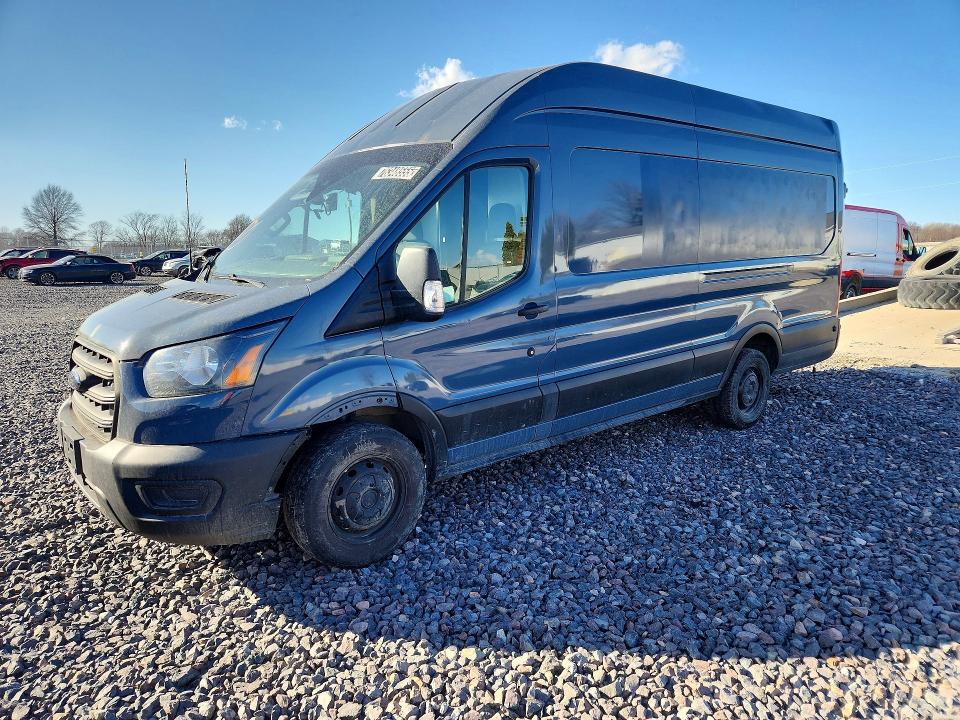
2020 Ford Transit T-250: Clean Title, Rear End Smashed, Fleet History
Fleet vans get hit from behind by forklifts. That's not a metaphor — check the frame rails.
How is the Shame Score calculated?
The Shame Score (1–10) combines five signals: damage-type severity, title-condition risk, the gap between ACV (Actual Cash Value — the car's pre-damage market price) and AI max bid, listing red flags (run/drive status, secondary damage), and misleading-listing signals from AI photo analysis. A score of 8+ means the model found no financially defensible reason to bid. ACV is pulled from auction listing data; repair costs reference industry body-shop benchmarks. All figures are directional estimates, not binding quotes. Repair costs reference CCC Intelligent Solutions benchmarks and regional body-shop averages.
Would you bid?
Vehicle
2020 FORD TRANSIT
Title
clean
Damage
REAR END
State
Indiana
Mileage
50-100k
Runs/drives
—
Approx ACV
~$24,000
AI max bid
$0
ACV from auction listing data · Repair costs via CCC benchmarks + body-shop averages
In plain numbers: Someone is bidding ~$21,600+ on this vehicle. AI analysis says it's worth at most $0 as a project. That's a $24,000gap. Here's why.
A 2020 Ford Transit T-250 with a clean title at $2,250 current bid against a $24,325 ACV (Actual Cash Value — what the vehicle was worth before the damage) looks like the kind of deal you call your brother-in-law about. Cargo van, relatively low miles for a 2020, and the buy-now is $14,985 — which still leaves $9,340 of ACV headroom on paper. Tradespeople pay real money for work-ready Transits. This one even has its keys.
The problem starts with two words: prior fleet. Fleet vehicles are not babied. They are driven by people who don't own them, serviced on schedules set by accountants, and loaded past their rated capacity every third Tuesday. At 74,606 miles this van has been a tool, not a vehicle — and fleet rear-end damage is a different animal than a parking lot tap. Delivery fleets get hit by loading docks. Box trucks back into them. Forklifts clip them at warehouse bays. The rear damage on a cargo van that lived in a fleet is not a bumper cover and a tail light. It is potentially a crushed rear frame rail, a compromised floor structure, and a cargo bay that no longer closes square.
Run/drive is unknown. That is not a minor gap — on a Transit with rear-end damage, "unknown" means the transmission cooler lines (routed near the rear on some configurations), the fuel tank (mounted under the cargo floor, directly in the damage zone), and the rear axle assembly have not been cleared. Rear axle repair on a T-250 runs $1,800–$3,200 in parts alone. Frame straightening on a Transit, if the rails took the hit, starts at $3,500 and climbs fast because the Transit's high-roof unibody-adjacent structure is not a simple pull-and-measure job. Add a fuel tank replacement at $600–$900, tail light and bumper assembly at $1,200–$1,800, and any hidden floor pan damage at $2,000–$4,000 depending on how far the crush traveled forward. You are at $9,100–$13,900 in repairs before you find out what the fleet did to the engine in 74,000 hard miles. The buy-now at $14,985 plus $11,000 in repairs puts you at $25,985 for a van with an ACV of $24,325.
The math doesn't work. It doesn't work at the buy-now, and it gets dangerous fast at auction because bidders see "clean title" and "$2,250" and stop reading. Someone is going to win this at $7,000, spend $10,000 fixing it, and have a van worth $22,000 retail that they're in for $17,000 — and that's the optimistic version where nothing else is broken. Derek in Columbus is going to bid on this and spend the next four months arguing with a body shop about whether the floor pan repair is in the estimate.
“Clean title on a van that can't tell you if it moves.”
What to watch for: REAR END
- •Stand at the rear corners and sight down both frame rails toward the front of the van — a rear hit on a Transit often bends the rails inward or upward, and you can see the bow without any tools if it's bad enough
- •Open the rear cargo doors and check whether they hang square in the opening — if one corner gaps more than a quarter inch or the doors bind on the latch, the cargo bay structure has moved and you're looking at major frame work
- •Get under the van at the rear and look at the fuel tank skid plate and the tank itself — dents, cracks, or a tank sitting at an angle means the impact reached the undercarriage and the repair scope just doubled
- •Check the floor pan from inside the cargo bay by pulling up any rubber matting near the rear bulkhead — rippled or buckled sheet metal on the floor means the crush traveled forward and you're into structural repair territory, not cosmetic
- •If the van does start, listen for transmission engagement hesitation in reverse — rear impacts on Transits occasionally damage the transmission crossmember or shift linkage, and a van that drives forward but clunks in reverse has a problem the auction photo won't show you
Tomorrow’s lot. Before the auction. Free.
One lot. AI verdict. Max bid. The numbers that matter — before you bid.
Not bidding? Same email — one lot, one roast, every morning. Join readers who watch so they never bid blind.
Not ready? Browse all entries →TL;DR — copy & share
2020 FORD TRANSIT / REAR END / Indiana / ACV ~$24,000 Shame Score: 7.2/10 | AI Max Bid: $0 Clean title on a van that can't tell you if it moves. vetmyride.com/hall-of-shame/2020-ford-transit-t-250-clean-title-rear-end-smashed-fleet-history
Previous entry
2013 NISSAN PATHFINDER · Shame 7.8
“The transmission has more miles on it than some taxi cabs that got retired.”
Lot identifying info (lot number, VIN, seller, exact sale date) scrubbed. AI commentary is opinion based on publicly listed damage + auction signals. Always inspect in person before bidding.
AI-generated opinion based on publicly listed auction data. Not a factual vehicle assessment. Actual vehicle condition may differ from listing description. All figures are directional estimates, not binding quotes. VetMyRide is not affiliated with, endorsed by, or sponsored by any auction platform. Not a substitute for professional inspection.