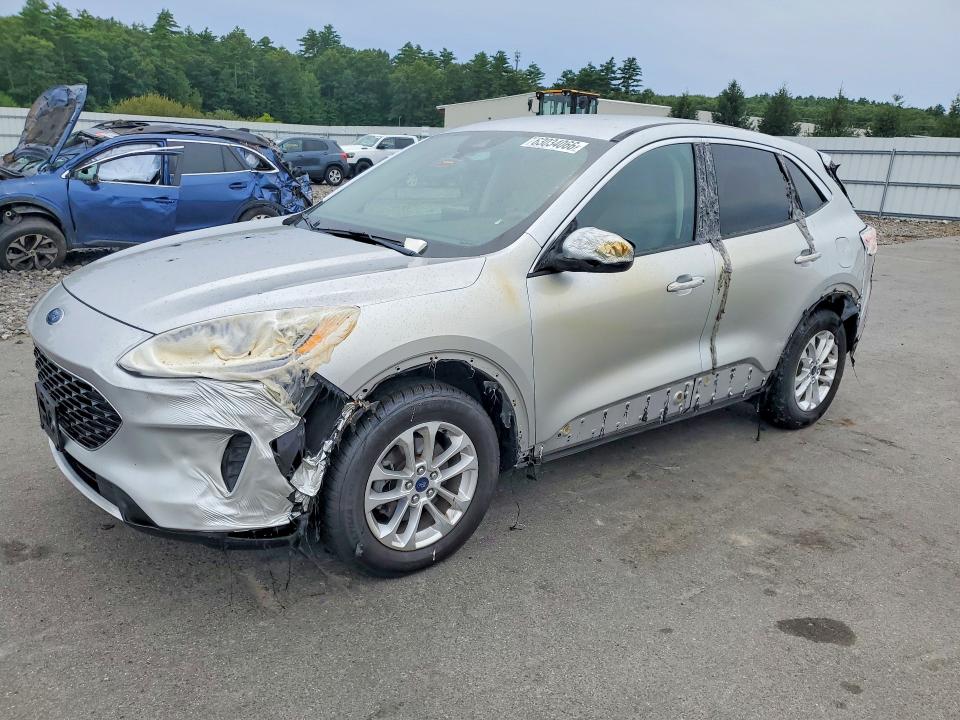
2020 Ford Escape SE: Salvage Title, Fire Damage, No Keys, $0 Bid
No keys means no inspection. Fire means wiring. Wiring means the damage is everywhere you can't see.
How is the Shame Score calculated?
The Shame Score (1–10) combines five signals: damage-type severity, title-condition risk, the gap between ACV (Actual Cash Value — the car's pre-damage market price) and AI max bid, listing red flags (run/drive status, secondary damage), and misleading-listing signals from AI photo analysis. A score of 8+ means the model found no financially defensible reason to bid. ACV is pulled from auction listing data; repair costs reference industry body-shop benchmarks. All figures are directional estimates, not binding quotes. Repair costs reference CCC Intelligent Solutions benchmarks and regional body-shop averages.
Would you bid?
Vehicle
2020 FORD ESCAPE
Title
salvage
Damage
BURN
State
Maine
Mileage
25-50k
Runs/drives
—
Approx ACV
~$15,000
AI max bid
$0
ACV from auction listing data · Repair costs via CCC benchmarks + body-shop averages
In plain numbers: Someone is bidding ~$13,500+ on this vehicle. AI analysis says it's worth at most $0 as a project. That's a $15,000gap. Here's why.
A 2020 Ford Escape SE at 35,047 miles is a car that should have a decade left in it. That mileage is barely broken in. The SE trim gets you sync connectivity, a turbocharged 1.5-liter, decent fuel economy — this was someone's reliable daily driver, and at $0 current bid it looks like the deal of the decade. You can see why fingers hover over the bid button.
The listing says primary damage: burn. It does not say where. It does not say how bad. It does not say whether the fire started in the engine bay, the cabin, the trunk, or the wiring harness behind the dash. That silence is doing a lot of work. Fire damage on a modern vehicle with a CAN bus system (the network of computers that runs everything from your brakes to your windows) doesn't stay where the flames were — heat travels wiring, wiring touches every module, and modules on a 2020 Escape run $400 to $1,800 apiece. There are dozens of them. The listing also has no keys. You cannot start this car. You cannot hear it run. You cannot scan it for codes. You are bidding on a burned box.
Salvage title (legally declared a total loss by an insurance company) on a fire-damaged vehicle is a specific kind of trap. Insurers totaled this at $15,050 ACV (Actual Cash Value — what it was worth before the fire). That number tells you they looked at the repair estimate and walked away. Fire remediation on a modern crossover runs $3,000 to $6,000 just for cleaning and odor before a single part is replaced. Wiring harness replacement, if the main harness is compromised, is $2,500 to $4,500 in parts alone plus 20 to 40 labor hours. Add module replacements at $1,200, structural inspection for heat-warped components at $400, and a salvage-to-rebuilt title inspection fee that varies by state but guarantees nothing about insurability. You are at $10,000 before you've confirmed the engine didn't cook. And you still have no keys, which means a locksmith and a new ignition cylinder — call it another $600.
The verdict: an insurance company with professional adjusters and full access to this car decided it wasn't worth fixing. You have less information than they did and no keys to get more. Somebody is going to bid $2,500 thinking they're stealing it, and they are going to spend the next four months finding out what the fire actually ate. Derek in Marietta is going to pull the trigger on this one and name the tow truck driver by first name before spring.
“The car has no keys because the car has no future.”
What to watch for: BURN
- •With no keys, you cannot start or scan this vehicle — bring a handheld OBD-II reader anyway and try to pull codes through the port under the dash. If the port itself is dead, the main wiring harness is compromised and the repair bill just doubled.
- •Open every door and look at the weatherstripping and headliner edges. Fire heat rises and pools — if the headliner is bubbled, stained brown, or pulling away from the roof, the fire burned long enough to warp structural adhesives throughout the cabin.
- •Find the main wiring harness where it passes through the firewall — the rubber grommet between the engine bay and the cabin. If the insulation on those wires is cracked, brittle, or melted together, you are looking at a full harness replacement, not a spot repair.
- •Check the fuse box under the hood for heat discoloration — melted plastic, fuses that have partially liquefied, or corrosion on the terminals. Any of that means the fire reached electrical distribution, and you will be chasing phantom faults for the life of the car.
- •Smell the carpet and seats before you look at anything else. Smoke odor in fabric after a fire is nearly impossible to fully eliminate — professional ozone treatment runs $500 to $1,500 and usually has to be repeated. If it still smells in the auction yard, it will still smell in your garage.
Tomorrow’s lot. Before the auction. Free.
One lot. AI verdict. Max bid. The numbers that matter — before you bid.
Not bidding? Same email — one lot, one roast, every morning. Join readers who watch so they never bid blind.
Not ready? Browse all entries →TL;DR — copy & share
2020 FORD ESCAPE / BURN / Maine / ACV ~$15,000 Shame Score: 9.2/10 | AI Max Bid: $0 The car has no keys because the car has no future. vetmyride.com/hall-of-shame/2020-ford-escape-se-salvage-title-fire-damage-no-keys-bid-63034066
Previous entry
2025 AMERICAN CARGO GRP INC UNKNOWN · Shame 7.8
“It's a box that got hit on top and now has a salvage title and more unknowns than a missing persons report.”
Lot identifying info (lot number, VIN, seller, exact sale date) scrubbed. AI commentary is opinion based on publicly listed damage + auction signals. Always inspect in person before bidding.
AI-generated opinion based on publicly listed auction data. Not a factual vehicle assessment. Actual vehicle condition may differ from listing description. All figures are directional estimates, not binding quotes. VetMyRide is not affiliated with, endorsed by, or sponsored by any auction platform. Not a substitute for professional inspection.