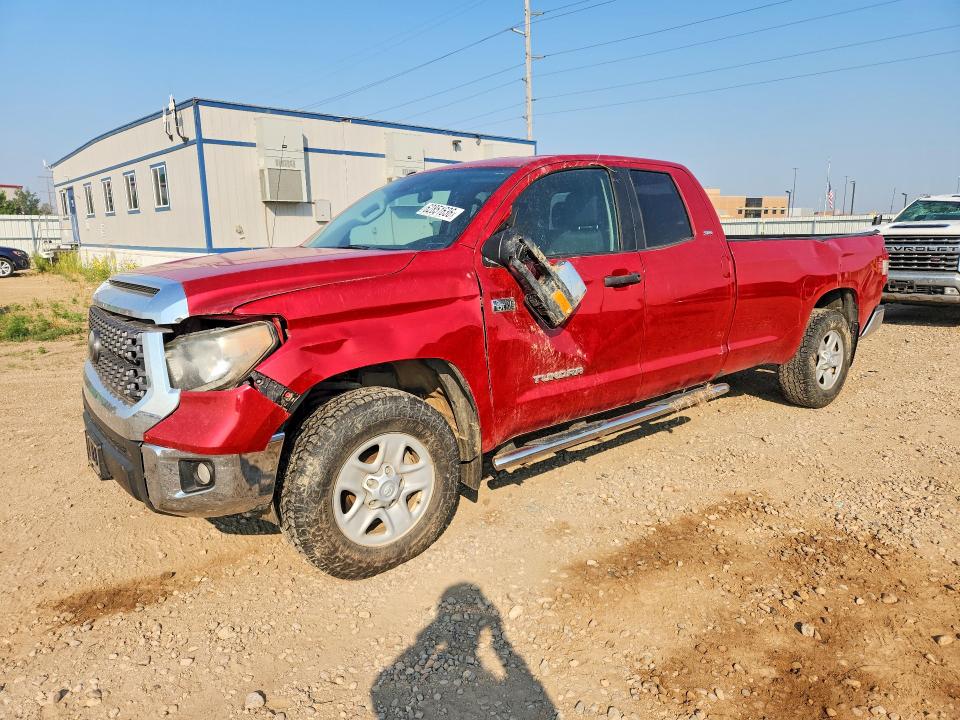
2018 Toyota Tundra SR5 'All Over' Damage Hides Behind a Clean Title
When the damage field says 'All Over,' that's not a location. That's a confession.
How is the Shame Score calculated?
The Shame Score (1–10) combines five signals: damage-type severity, title-condition risk, the gap between ACV (Actual Cash Value — the car's pre-damage market price) and AI max bid, listing red flags (run/drive status, secondary damage), and misleading-listing signals from AI photo analysis. A score of 8+ means the model found no financially defensible reason to bid. ACV is pulled from auction listing data; repair costs reference industry body-shop benchmarks. All figures are directional estimates, not binding quotes. Repair costs reference CCC Intelligent Solutions benchmarks and regional body-shop averages.
Would you bid?
Vehicle
2018 TOYOTA TUNDRA
Title
clean
Damage
ALL OVER
State
North Dakota
Mileage
50-100k
Runs/drives
Yes
Approx ACV
~$25,000
AI max bid
$0
ACV from auction listing data · Repair costs via CCC benchmarks + body-shop averages
In plain numbers: Someone is bidding ~$22,500+ on this vehicle. AI analysis says it's worth at most $0 as a project. That's a $25,000gap. Here's why.
A 2018 Tundra SR5 with 73,490 miles and a clean title sitting at $0 current bid. No buy-now price. No reserve pressure. Just a full-size Toyota truck — one of the most reliable platforms ever bolted together — sitting there looking like a deal that finally found you. The SR5 trim means you're not slumming it: power everything, tow package almost certainly, the kind of truck people keep for 200,000 miles without drama. At a $24,850 ACV (Actual Cash Value — what the truck was worth before whatever happened to it), even a significant discount feels like money left on the table by someone else's misfortune.
The damage field says 'All Over.' Toyota didn't build a damage category called 'All Over.' Copart didn't either. That designation appears when the person doing the intake form runs out of boxes to check. Front end. Rear end. Both sides. Roof. Undercarriage. Some combination that doesn't fit neatly into 'front' or 'rear' or 'side' — so they write 'All Over' and move on with their day. The photos will show you what they want you to see. The frame rails won't be in the photos. The rocker panels won't be in the photos. The cab mounts, the bed floor, the suspension pickup points — none of that is in the photos.
A Tundra frame is boxed steel, and that's a feature until someone introduces it to a rollover or a multi-impact collision, at which point it becomes a liability because boxed frames don't straighten — they replace. Frame replacement on a Tundra runs $6,000–$9,000 in parts alone before a single labor hour. Add $3,500–$5,000 for the straightening attempt you'll pay for before they tell you it needs replacement. Cab damage that touches the A or B pillar means structural repair at $4,000–$7,000 minimum. Airbag deployment — and 'All Over' damage almost guarantees it — adds $2,500–$4,500 for bags, clockspring, seatbelt pretensioners, and the module reset. That's $16,000–$25,500 in a range that starts at 'bad' and ends at 'more than you paid for the truck.' Frame straightening $7,500 + cab structural $5,500 + airbag system $3,500 + suspension rebuild $2,800 = $19,300 before you've replaced a single body panel.
The clean title (a title showing no prior insurance total-loss declaration) is doing a lot of heavy lifting here. It's the one number in this listing that looks normal, and it will make people bid like the truck is normal. It is not normal. 'All Over' damage on a full-size truck with a clean title means one of two things: the owner settled with the insurance company and kept the truck, or this crossed state lines before the title caught up with what happened to it. Either way, you are not buying a truck. Donna in Clarksville is going to see 'clean title, runs and drives, Tundra' and bid $14,000, and she's going to spend the next six months finding out what 'All Over' meant.
“'All Over' is not a damage category. It's a eulogy.”
What to watch for: ALL OVER
- •Get under the truck and sight down both frame rails from the rear toward the front. They should be parallel and level. Any bow, twist, or crinkle in the steel — even a subtle one — means the frame took a load it wasn't designed for. Bring a flashlight and look at the welds at the cab mounts specifically.
- •Open every door and check the gaps. On a truck with 'All Over' damage, door gaps go uneven when the cab has twisted. Run your finger along the gap between the door and the cab — if it's tight at the top and wide at the bottom on any door, the structure has moved.
- •Check the headliner at every corner and the A-pillar trim on both sides. Airbag deployment leaves wrinkles, stress marks, or reglued trim that doesn't sit flush. If the trim looks factory-perfect on a truck with this damage description, someone spent money making it look that way.
- •Look at the bed floor from inside the bed. 'All Over' damage often includes a rear impact that buckles the bed floor at the cab wall. Ripples in the bed floor near the front mean the frame behind the cab took a hit.
- •Pull the carpet back at the base of the B-pillar on both sides. Structural repair in that area leaves grind marks, weld spatter, or filler that the carpet hides. If the carpet is glued down tighter than factory or won't pull back easily, someone didn't want you looking there.
Tomorrow’s lot. Before the auction. Free.
One lot. AI verdict. Max bid. The numbers that matter — before you bid.
Not bidding? Same email — one lot, one roast, every morning. Join readers who watch so they never bid blind.
Not ready? Browse all entries →TL;DR — copy & share
2018 TOYOTA TUNDRA / ALL OVER / North Dakota / ACV ~$25,000 Shame Score: 9.2/10 | AI Max Bid: $0 'All Over' is not a damage category. It's a eulogy. vetmyride.com/hall-of-shame/2018-toyota-tundra-sr5-all-over-damage-hides-behind-a-clean-title-62851636
Previous entry
2023 MERCEDES-BENZ CLA-CLASS · Shame 9.2
“The only thing this CLA 250 is guaranteed to deliver is a second fire — at the DMV.”
Lot identifying info (lot number, VIN, seller, exact sale date) scrubbed. AI commentary is opinion based on publicly listed damage + auction signals. Always inspect in person before bidding.
AI-generated opinion based on publicly listed auction data. Not a factual vehicle assessment. Actual vehicle condition may differ from listing description. All figures are directional estimates, not binding quotes. VetMyRide is not affiliated with, endorsed by, or sponsored by any auction platform. Not a substitute for professional inspection.