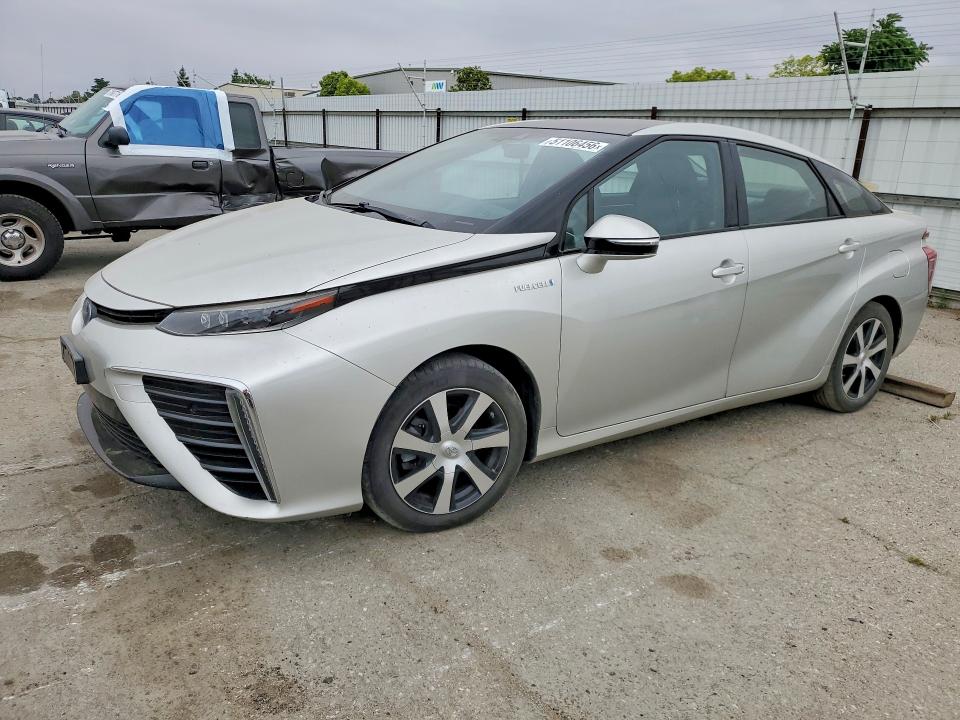
2017 Toyota Mirai: $1,400 Buy-Now on a Car That Needs a $9K Battery
That $1,400 price is real. The $9,000–$18,000 fuel cell stack replacement is also real. One of these will matter more.
How is the Shame Score calculated?
The Shame Score (1–10) combines five signals: damage-type severity, title-condition risk, the gap between ACV (Actual Cash Value — the car's pre-damage market price) and AI max bid, listing red flags (run/drive status, secondary damage), and misleading-listing signals from AI photo analysis. A score of 8+ means the model found no financially defensible reason to bid. ACV is pulled from auction listing data; repair costs reference industry body-shop benchmarks. All figures are directional estimates, not binding quotes. Repair costs reference CCC Intelligent Solutions benchmarks and regional body-shop averages.
Would you bid?
Vehicle
2017 TOYOTA MIRAI BASE
Title
clean
Damage
NORMAL WEAR
State
California
Mileage
25-50k
Runs/drives
Yes
Approx ACV
~$5,000
AI max bid
$0
ACV from auction listing data · Repair costs via CCC benchmarks + body-shop averages
In plain numbers: Someone is bidding ~$4,500+ on this vehicle. AI analysis says it's worth at most $0 as a project. That's a $5,000gap. Here's why.
A 2017 Toyota Mirai for $1,400 buy-now. Clean title. Runs and drives. 47,813 miles on a car that had a sticker north of $57,000 new. That's a 97% depreciation cliff, and for one shining second it looks like opportunity. Toyota build quality, a genuinely futuristic drivetrain, leather interior, and a clean title sitting there like a dare. The ACV (Actual Cash Value — what the car is worth before any auction math) is $4,575, which means you're buying at a third of that. The spreadsheet almost makes sense.
The listing says "normal wear." No collision. No flood. No fire. Just a car that aged out of its usefulness in a world that didn't finish building the infrastructure it requires. The Mirai runs on hydrogen. Not gasoline. Not electricity from a plug in your garage. Compressed hydrogen gas, dispensed at dedicated stations that exist in meaningful numbers in exactly one state. California. If you are not in California, you are not driving this car. You are storing it.
The fuel cell stack (the component that converts hydrogen to electricity — it is the engine) has a finite service life and a replacement cost between $9,000 and $18,000 depending on whether Toyota is feeling generous with parts availability on a seven-year-old platform they've since redesigned entirely. The high-pressure hydrogen tanks have a mandatory retirement date — 15 years from manufacture, non-negotiable, not a suggestion. That's 2032. You are buying a car with a built-in expiration date and no way to refuel it outside a 50-mile radius of a handful of California ZIP codes. Fuel cell stack $9,000 + tank inspection and recertification $1,200 + transport to a functioning hydrogen market $800 = $11,000 before you've sat in the driver's seat with anywhere to go.
Someone in Fresno is going to buy this for $1,400 and spend three weeks convinced they got away with something. Sandra in Modesto is going to bid on this and discover that the closest hydrogen station closed six months ago. The Mirai is not a bad car. It is a car that requires an ecosystem, and that ecosystem is a science project. $1,400 is not a deal. It is the price of a very stylish driveway ornament with a 15-year countdown timer bolted underneath it.
“The tank is empty and so is the hydrogen infrastructure.”
What to watch for: NORMAL WEAR
- •Before anything else, look up every hydrogen fueling station within 100 miles of where this car will live. Go to cafcp.org or the DOE's station locator. If you count fewer than three open stations, stop reading and close the tab.
- •The high-pressure hydrogen storage tanks (there are two) carry a 15-year manufacturer retirement date from the build date — not purchase date, not first registration. A 2017 Mirai's tanks expire in 2032. Ask for the tank certification paperwork and verify the manufacture date stamped on the tank itself.
- •The fuel cell stack degrades over time and use. A healthy stack should produce consistent voltage under load. Any independent EV or hydrogen specialist can run a stack health diagnostic — this is not a standard OBD-II pull, it requires Toyota-specific software or a shop that has worked on Mirais before. There are not many of them.
- •Check the lease return history. The vast majority of first-gen Mirais were leased, not purchased, because Toyota offered free hydrogen fuel as an incentive. When the lease ended and the fuel subsidy expired, owners returned them. A car returned because fueling it became the owner's problem is a car that will become your problem the same way.
- •Call your state's DMV and confirm the car can be registered and inspected where you live. Some states have no mechanism to inspect hydrogen vehicles and will not issue a safety sticker. Finding this out after you've transported it home is a $1,400 lesson with no upside.
Tomorrow’s lot. Before the auction. Free.
One lot. AI verdict. Max bid. The numbers that matter — before you bid.
Not bidding? Same email — one lot, one roast, every morning. Join readers who watch so they never bid blind.
Not ready? Browse all entries →TL;DR — copy & share
2017 TOYOTA MIRAI BASE / NORMAL WEAR / California / ACV ~$5,000 Shame Score: 7.5/10 | AI Max Bid: $0 The tank is empty and so is the hydrogen infrastructure. vetmyride.com/hall-of-shame/2017-toyota-mirai-buy-now-on-a-car-that-needs-a-k-battery
Previous entry
2019 VOLKSWAGEN JETTA · Shame 6.5
“'Normal wear' is doing $7,625 worth of heavy lifting right now.”
Lot identifying info (lot number, VIN, seller, exact sale date) scrubbed. AI commentary is opinion based on publicly listed damage + auction signals. Always inspect in person before bidding.
AI-generated opinion based on publicly listed auction data. Not a factual vehicle assessment. Actual vehicle condition may differ from listing description. All figures are directional estimates, not binding quotes. VetMyRide is not affiliated with, endorsed by, or sponsored by any auction platform. Not a substitute for professional inspection.