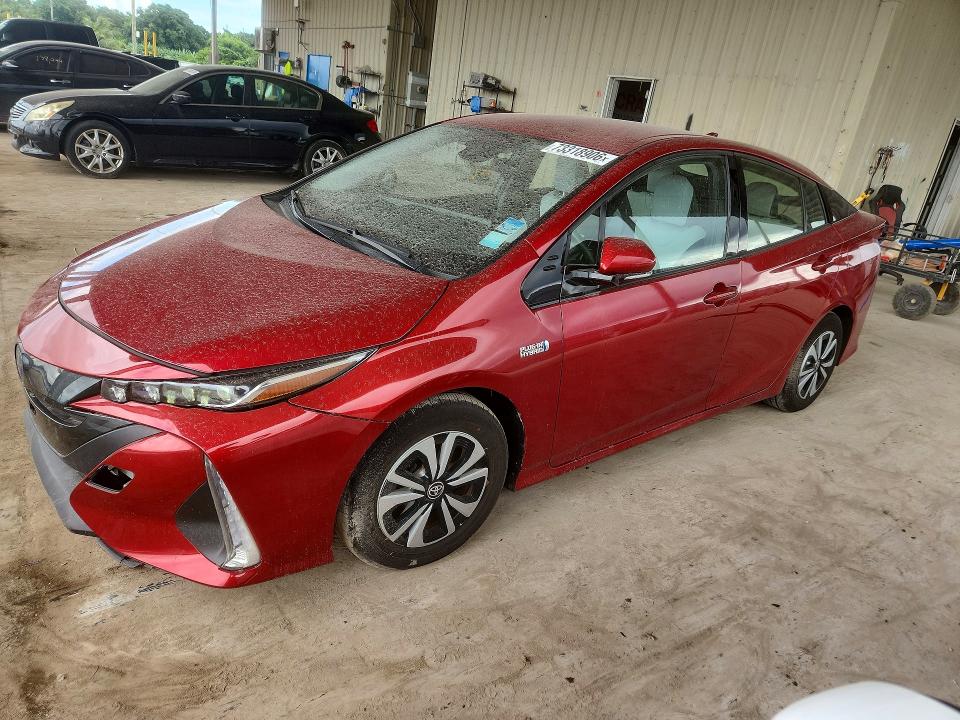
2017 Prius Prime Premium: Flood Salvage With a $9K Battery Surprise
Hybrid battery replacement runs $8,000–$11,000. Flood water doesn't care that it's a Premium trim.
How is the Shame Score calculated?
The Shame Score (1–10) combines five signals: damage-type severity, title-condition risk, the gap between ACV (Actual Cash Value — the car's pre-damage market price) and AI max bid, listing red flags (run/drive status, secondary damage), and misleading-listing signals from AI photo analysis. A score of 8+ means the model found no financially defensible reason to bid. ACV is pulled from auction listing data; repair costs reference industry body-shop benchmarks. All figures are directional estimates, not binding quotes. Repair costs reference CCC Intelligent Solutions benchmarks and regional body-shop averages.
Would you bid?
Vehicle
2017 TOYOTA PRIUS
Title
salvage
Damage
WATER/FLOOD
State
Florida
Mileage
50-100k
Runs/drives
Yes
Approx ACV
~$16,000
AI max bid
$0
ACV from auction listing data · Repair costs via CCC benchmarks + body-shop averages
In plain numbers: Someone is bidding ~$14,400+ on this vehicle. AI analysis says it's worth at most $0 as a project. That's a $16,000gap. Here's why.
A 2017 Prius Prime Premium at zero dollars bid sounds like the kind of deal you text your brother-in-law about at 11pm. Premium trim means the heated seats, the 8.8 kWh plug-in battery, the leatherette, the JBL sound. A clean one retails around $19,000 right now. The ACV (Actual Cash Value — what it was worth before the wreck) is $15,700. The current bid is zero. You're doing the math and the math looks good. That's the trap working exactly as designed.
The listing says water/flood. It does not say how much water, how long it sat, or what depth the cabin reached. It does not say whether the 201.6-volt high-voltage battery pack — which sits under the rear cargo floor in this generation — was submerged. It does not say whether Toyota's Battery Management System threw codes before someone dried it out, cleared them, and ran it long enough to show 'starts and drives' on the auction sheet. What the listing says is: runs. Drives. Has key. That's it. A car can run for three weeks after a flood and then strand you on an interstate when the hybrid system decides it's done.
The Prius Prime's high-voltage battery replacement is $8,000–$11,000 in parts alone, plus four to six hours of labor at a Toyota dealer. The 12-volt auxiliary battery, which floods kill separately, is another $200–$400. The hybrid control module corrodes from the inside out and doesn't fail immediately — it fails at 91,000 miles, six months after you thought you got away with it, and that's $1,500–$3,200 depending on whether anyone will touch a salvage title unit. Add mold remediation $1,800, new carpeting and padding $900, brake actuator inspection and likely replacement $600, all four wheel bearing repacks because standing water destroys them $800 — and you're at $13,300–$18,200 before you've addressed whatever the inverter absorbed. The ACV is $15,700. You see the problem.
This car has a salvage title (legally declared a total loss by an insurance company), which means you cannot get standard financing, most insurers will only offer you actual cash value coverage at a steep surcharge, and resale is a conversation that ends badly. Danielle in Smyrna is going to bid on this because the EV range numbers still show up on the dash and she'll convince herself the water was shallow. The water is never shallow.
“The fish are gone but the moisture stayed.”
What to watch for: WATER/FLOOD
- •Pull the rear cargo floor mat and press your palm flat against the foam padding underneath. If it's cold, damp, or smells like anything other than car, the high-voltage battery housing has been wet. Don't guess — that padding holds moisture for months.
- •Look at the orange high-voltage cables running under the center console and along the rocker panels. Any white powdery residue or green corrosion at the connectors means water got into the HV system. This is not a negotiating point. This is a walkaway.
- •Pop the hood and find the 12-volt auxiliary battery terminals. Flood cars almost always show corrosion here — white or blue-green crust at the posts. If someone cleaned it, look at the battery tray itself for waterline staining or rust bloom.
- •Sit in the driver's seat and turn the key to ON without starting. Count how many warning lights appear and how long they stay on. A healthy Prius Prime clears to one or two lights in under ten seconds. A flood car's instrument cluster looks like a Christmas tree that can't decide what it wants to be.
- •Check the seat rail bolts at floor level with a flashlight. Rust on those bolts in a car this age means the floorpan was submerged long enough to matter — and if the floor rusted, the battery enclosure below it had company.
Tomorrow’s lot. Before the auction. Free.
One lot. AI verdict. Max bid. The numbers that matter — before you bid.
Not bidding? Same email — one lot, one roast, every morning. Join readers who watch so they never bid blind.
Not ready? Browse all entries →TL;DR — copy & share
2017 TOYOTA PRIUS / WATER/FLOOD / Florida / ACV ~$16,000 Shame Score: 9.2/10 | AI Max Bid: $0 The fish are gone but the moisture stayed. vetmyride.com/hall-of-shame/2017-prius-prime-premium-flood-salvage-with-a-k-battery-surprise-73318906
Previous entry
2007 TOYOTA CAMRY · Shame 7.8
“The roof is now the lowest point of the car.”
Lot identifying info (lot number, VIN, seller, exact sale date) scrubbed. AI commentary is opinion based on publicly listed damage + auction signals. Always inspect in person before bidding.
AI-generated opinion based on publicly listed auction data. Not a factual vehicle assessment. Actual vehicle condition may differ from listing description. All figures are directional estimates, not binding quotes. VetMyRide is not affiliated with, endorsed by, or sponsored by any auction platform. Not a substitute for professional inspection.