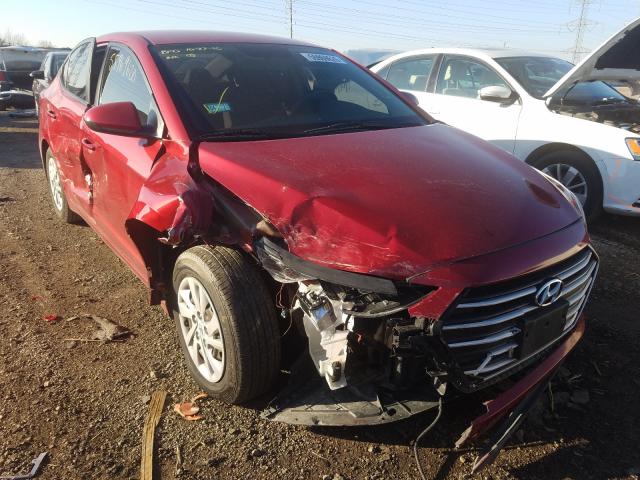
2017 Hyundai Elantra Salvage: Front End Hit at 94K Miles Isn't Worth $9,400
Salvage title means an insurer already did this math and walked away. Now it's your turn to repeat the mistake.
How is the Shame Score calculated?
The Shame Score (1–10) combines five signals: damage-type severity, title-condition risk, the gap between ACV (Actual Cash Value — the car's pre-damage market price) and AI max bid, listing red flags (run/drive status, secondary damage), and misleading-listing signals from AI photo analysis. A score of 8+ means the model found no financially defensible reason to bid. ACV is pulled from auction listing data; repair costs reference industry body-shop benchmarks. All figures are directional estimates, not binding quotes. Repair costs reference CCC Intelligent Solutions benchmarks and regional body-shop averages.
Would you bid?
Vehicle
2017 HYUNDAI ELANTRA
Title
salvage
Damage
FRONT END
State
Illinois
Mileage
50-100k
Runs/drives
—
Approx ACV
~$9,000
AI max bid
$0
ACV from auction listing data · Repair costs via CCC benchmarks + body-shop averages
In plain numbers: Someone is bidding ~$8,100+ on this vehicle. AI analysis says it's worth at most $0 as a project. That's a $9,000gap. Here's why.
A 2017 Elantra SE at $0 current bid sounds like the setup to a good story. Reliable platform, reasonable parts availability, nothing exotic under the hood — a 2.0-liter four-cylinder that Hyundai built about four million of. At 94,023 miles there's life left. The ACV (Actual Cash Value — what it was worth before the wreck) sits at $9,400, which means a clean example of this car is still worth real money. You're looking at a bid sheet with no competition and a car that, in another life, would have been somebody's dependable Tuesday.
The listing says front end damage and then goes quiet. No secondary damage listed, no run/drive status, no explanation of what 'front end' means on a scale from 'kissed a bumper' to 'met a telephone pole at 45 mph.' That silence is doing a lot of work. Copart (the salvage auction platform where this vehicle is listed) does not withhold run/drive status because the car runs fine — they withhold it because nobody tested it, which usually means nobody could. The airbags may or may not have deployed. The radiator support, the subframe, the steering rack — all of it is hiding behind that word 'front end,' and none of it is described.
Front end reconstruction on a 2017 Elantra with unknown impact depth: hood $400, bumper assembly $350, radiator $280, condenser $200, headlights $600 for the pair, airbag replacement $1,200–$2,400 depending on how many went off, airbag control module $800, front subframe inspection and potential replacement $1,500–$3,200, alignment $120, and a diagnostic scan to find whatever the impact scrambled in the electronics — call it $200. That's $5,650 on the low end before you've confirmed the engine mounts are intact, the transmission didn't absorb the hit, or the cooling system holds pressure. Salvage title (legally declared a total loss by an insurance company) means you'll register it at a reduced value, pay higher insurance rates if you find coverage at all, and sell it someday to someone who will lowball you because of the title — which you will deserve, because you bought a salvage title.
The insurer looked at this car, did the math, and paid the owner to walk away. That's not a formality — that's a professional organization with actuaries and repair estimates deciding the car wasn't worth saving at market rate. You are not smarter than their adjuster. Somebody named Derek in a polo shirt with a clipboard already stood where you're standing, and he said no.
Kevin in Shreveport is going to bid $1,200 on this, spend $6,800 fixing it, and list it six months later for $7,500 with 'runs great, minor history' in the description.
“The insurance company said no. The auction is asking if you're dumber than an insurance company.”
What to watch for: FRONT END
- •Stand in front of the car and sight down the hood line to both front fenders — if the gaps are uneven or the hood sits crooked, the radiator support or subframe took a hit that goes beyond cosmetic repair
- •Open the hood and look at the front subframe rails (the two horizontal metal channels running front to back on either side of the engine) — if they're creased, buckled, or show fresh undercoating sprayed over bare metal, the frame is bent and repair costs triple
- •Check whether the airbag warning light is on or whether the steering wheel airbag cover is cracked or reseated — deployed airbags on a 2017 Elantra run $1,200 to $2,400 to replace and require module reprogramming
- •Pull the front carpet back at the firewall and feel for crumpling or sharp ridges in the metal — intrusion into the firewall means the impact reached the cabin and the car may not pass a rebuilt title safety inspection
- •Ask for a pre-bid inspection slot and bring a code reader — a front-end impact on a modern Hyundai will throw codes for the SRS (airbag) system, ABS, and forward collision sensors even if none of those parts look visibly damaged
Tomorrow’s lot. Before the auction. Free.
One lot. AI verdict. Max bid. The numbers that matter — before you bid.
Not bidding? Same email — one lot, one roast, every morning. Join readers who watch so they never bid blind.
Not ready? Browse all entries →TL;DR — copy & share
2017 HYUNDAI ELANTRA / FRONT END / Illinois / ACV ~$9,000 Shame Score: 7.2/10 | AI Max Bid: $0 The insurance company said no. The auction is asking if you're dumber than an insurance company. vetmyride.com/hall-of-shame/2017-hyundai-elantra-salvage-front-end-hit-at-isn-t-worth
Previous entry
2022 MAZDA CX-5 PREMI · Shame 8.2
“8,520 miles and it's already someone else's insurance dispute.”
Lot identifying info (lot number, VIN, seller, exact sale date) scrubbed. AI commentary is opinion based on publicly listed damage + auction signals. Always inspect in person before bidding.
AI-generated opinion based on publicly listed auction data. Not a factual vehicle assessment. Actual vehicle condition may differ from listing description. All figures are directional estimates, not binding quotes. VetMyRide is not affiliated with, endorsed by, or sponsored by any auction platform. Not a substitute for professional inspection.