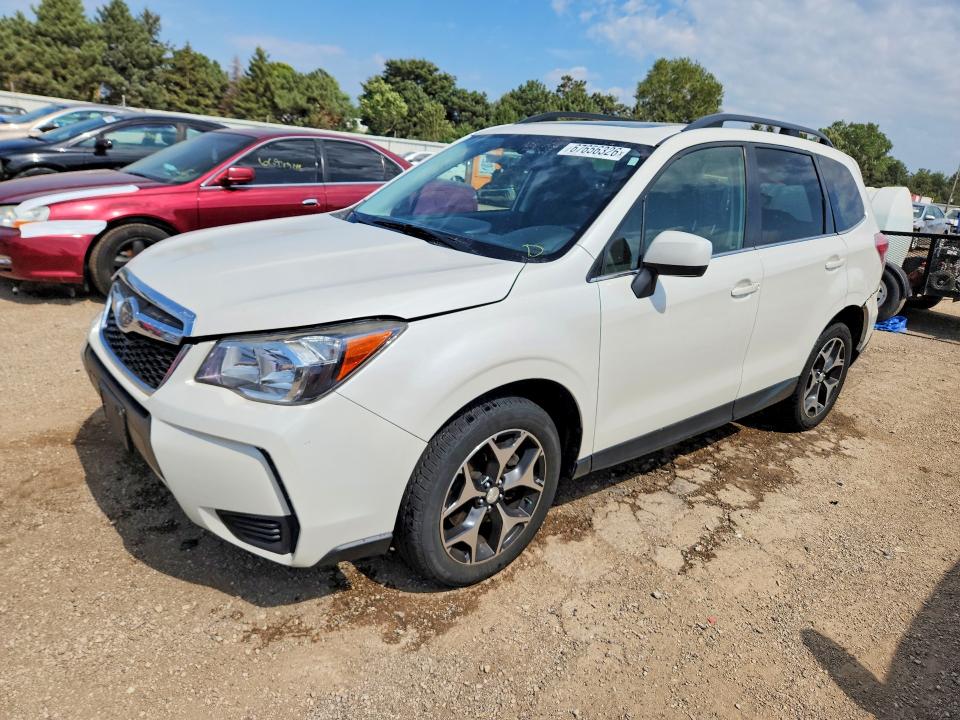
2016 Subaru Forester 2.0XT Flood Salvage: $15K Car, $0 Bid, Infinite Problems
CVT + flood water + 124K miles = the transmission is already planning its exit speech.
How is the Shame Score calculated?
The Shame Score (1–10) combines five signals: damage-type severity, title-condition risk, the gap between ACV (Actual Cash Value — the car's pre-damage market price) and AI max bid, listing red flags (run/drive status, secondary damage), and misleading-listing signals from AI photo analysis. A score of 8+ means the model found no financially defensible reason to bid. ACV is pulled from auction listing data; repair costs reference industry body-shop benchmarks. All figures are directional estimates, not binding quotes. Repair costs reference CCC Intelligent Solutions benchmarks and regional body-shop averages.
Would you bid?
Vehicle
2016 SUBARU FORESTER
Title
salvage
Damage
WATER/FLOOD
State
Illinois
Mileage
100-150k
Runs/drives
Yes
Approx ACV
~$15,000
AI max bid
$0
ACV from auction listing data · Repair costs via CCC benchmarks + body-shop averages
In plain numbers: Someone is bidding ~$13,500+ on this vehicle. AI analysis says it's worth at most $0 as a project. That's a $15,000gap. Here's why.
A 2016 Forester 2.0XT Premium is genuinely a good car. Turbocharged 2.0-liter, Subaru's symmetrical AWD, EyeSight driver assist, panoramic moonroof — this is the trim people actually wanted. At $0 current bid against a $15,350 ACV (Actual Cash Value — what it was worth before the water got in), the math looks like a gift. It has a key. It runs and drives. Someone is going to see this and think they found the one.
The listing says water/flood and then stops talking. That silence is the tell. There's no secondary damage listed, which doesn't mean there isn't any — it means nobody finished looking. Flood cars don't announce their damage; they schedule it. The Forester 2.0XT runs a CVT (Continuously Variable Transmission — a belt-and-pulley unit that cannot be rebuilt, only replaced) paired to a turbocharged engine that already runs hot. Water intrusion into a CVT doesn't kill it on contact. It corrodes the internals over six to eighteen months while the car drives fine, right up until the moment it doesn't. At 124,739 miles, this CVT was already in the window where Subaru owners hold their breath. Add flood contamination and that window just slammed shut.
The EyeSight system — Subaru's camera-based collision avoidance — lives behind the rearview mirror and is extraordinarily sensitive to moisture damage. Recalibration alone runs $500 to $1,200, and that's assuming the cameras and control module survived. They frequently don't. CVT replacement on this platform: $4,800 to $6,500 at an independent shop, $7,500+ at a dealer. Turbo intercooler inspection and potential replacement if water was ingested through the intake: $800 to $1,500. Full wiring harness assessment and remediation for flood corrosion: $1,500 to $3,000, and that number grows every month the car sits. Mold remediation if the cabin soaked: $1,200 to $2,500. That's $4,800 + $1,500 + $3,000 + $2,500 = $11,800 before you've touched the brakes, the wheel bearings, or whatever bent or broke when the water was high enough to total it.
This is a salvage title (legally declared a total loss by an insurance company) on a flood car with a CVT at 124K. Three of those four facts are individually enough to walk away. Together they are a financial event. Whoever bids on this will drive it for four months, feel great about themselves, and then watch the CVT shudder on a Tuesday morning with $6,200 between them and mobility. Diane from Chattanooga is going to win this at $1,800 and call it a steal until the transmission invoice arrives.
“The car runs. So did the water through every wire harness in it.”
What to watch for: WATER/FLOOD
- •Pull the carpet padding under both front seats — not the carpet itself, the foam underneath. Press it with your hand. If it's damp, cold, or smells like dirt, the floor pan has been holding water and the car is actively rotting. No amount of drying fixes what's already in the foam.
- •Find the CVT fluid dipstick or check port and look at the fluid color. It should be a clear reddish pink. If it's brown, milky, or smells burnt, water got into the transmission. A CVT that has seen flood water will not announce failure during a test drive — it fails under load, usually on a highway.
- •Pull the EyeSight camera housing cover above the rearview mirror. Look for fogging, water stains, or corrosion on the bracket. If you see any of those, the calibration is gone and the module may be fried — budget $1,200 minimum and assume the worst.
- •Check every fuse box — there are three on this platform, one under the hood, one under the driver's dash, and one in the cargo area. Look for white or green corrosion on the fuse legs and relay terminals. Corrosion here means the electrical gremlins haven't started yet, but they've bought their tickets.
- •Shine a flashlight into the turbo intake pipe with the airbox removed. Any silt, grit, or waterline residue inside the intercooler piping means the engine ingested water. Hydrolocked engines can sometimes survive; turbos that swallowed sediment-laden floodwater usually don't, and replacement runs $1,800 to $3,200 on this engine.
Tomorrow’s lot. Before the auction. Free.
One lot. AI verdict. Max bid. The numbers that matter — before you bid.
Not bidding? Same email — one lot, one roast, every morning. Join readers who watch so they never bid blind.
Not ready? Browse all entries →TL;DR — copy & share
2016 SUBARU FORESTER / WATER/FLOOD / Illinois / ACV ~$15,000 Shame Score: 8.7/10 | AI Max Bid: $0 The car runs. So did the water through every wire harness in it. vetmyride.com/hall-of-shame/2016-subaru-forester-2-0xt-flood-salvage-k-car-bid-infinite-problems-67656326
Previous entry
2015 HARLEY-DAVIDSON FL · Shame 9.2
“The only thing hotter than this bike's resale value was the bike.”
Lot identifying info (lot number, VIN, seller, exact sale date) scrubbed. AI commentary is opinion based on publicly listed damage + auction signals. Always inspect in person before bidding.
AI-generated opinion based on publicly listed auction data. Not a factual vehicle assessment. Actual vehicle condition may differ from listing description. All figures are directional estimates, not binding quotes. VetMyRide is not affiliated with, endorsed by, or sponsored by any auction platform. Not a substitute for professional inspection.