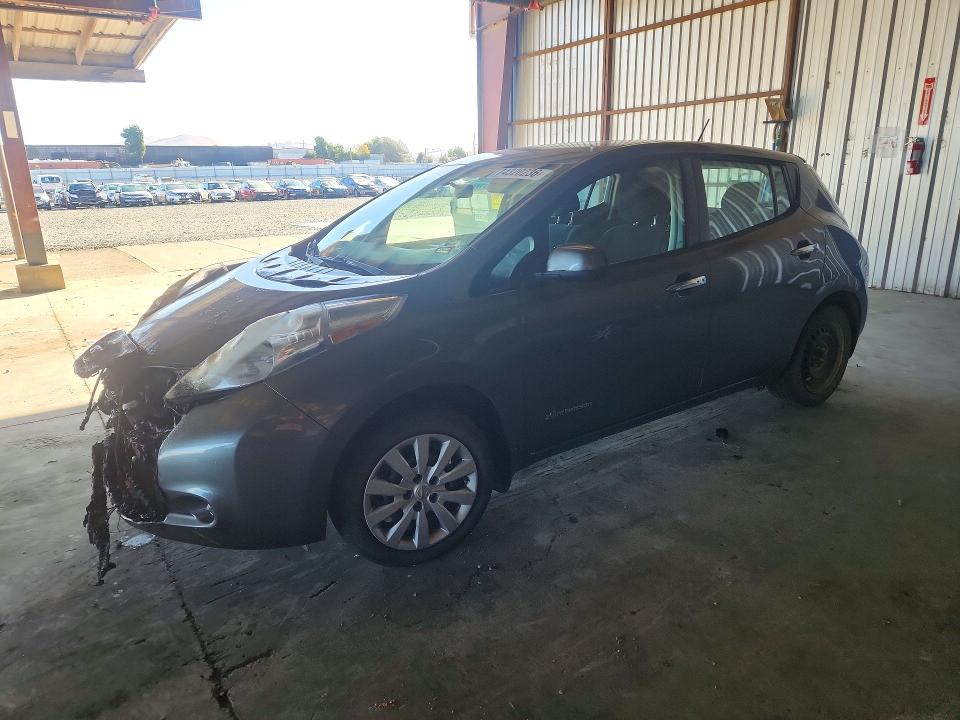
2016 Nissan Leaf S-30: Burned EV With Salvage Title and $0 Bid for a Reason
Battery replacement on a Leaf is $5,500–$8,500. That's if the pack isn't the thing that burned.
How is the Shame Score calculated?
The Shame Score (1–10) combines five signals: damage-type severity, title-condition risk, the gap between ACV (Actual Cash Value — the car's pre-damage market price) and AI max bid, listing red flags (run/drive status, secondary damage), and misleading-listing signals from AI photo analysis. A score of 8+ means the model found no financially defensible reason to bid. ACV is pulled from auction listing data; repair costs reference industry body-shop benchmarks. All figures are directional estimates, not binding quotes. Repair costs reference CCC Intelligent Solutions benchmarks and regional body-shop averages.
Would you bid?
Vehicle
2016 NISSAN LEAF S-30
Title
salvage
Damage
BURN
State
California
Mileage
—
Runs/drives
—
Approx ACV
~$5,000
AI max bid
$0
ACV from auction listing data · Repair costs via CCC benchmarks + body-shop averages
In plain numbers: Someone is bidding ~$4,500+ on this vehicle. AI analysis says it's worth at most $0 as a project. That's a $5,000gap. Here's why.
A 2016 Nissan Leaf S-30 at $0 current bid sounds like the EV deal that makes you feel smart. No gas. No oil changes. Salvage title, sure, but the ACV (Actual Cash Value — what it was worth before the damage) is sitting at $4,750, and you're thinking: what if I get this thing for eight hundred bucks, swap the pack, and drive it for free for three years? The math feels close enough to dangerous.
The primary damage is burn. Not hail. Not a fender bender. Fire. On an electric vehicle, fire does not mean what it means on a Camry. On a Camry, burn damage means you're replacing carpet and a melted dashboard. On a Leaf, burn means the 24 kWh lithium-ion battery pack — the thing the entire car is built around, mounted flat under the floor, running the full length of the cabin — was potentially the fuel source, the ignition point, or both. The listing doesn't say where the fire started. That silence is not an accident.
Replacement battery pack for a 2016 Leaf: $5,500 on the low end, $8,500 if you're buying new, and that's before labor, before the battery management system gets inspected, before anyone looks at the high-voltage wiring harness that ran through whatever burned. Fire warps aluminum. It degrades insulation on wiring you cannot see without disassembly. Structural repair on a burned unibody starts at $3,000 and climbs the moment they find heat damage in the B-pillar. Mileage is unknown, which means the existing battery degradation — already a known issue on 30-kWh Leaf packs from this era — is also unknown. Battery pack $7,000 + high-voltage harness $1,800 + structural assessment $3,200 + title transfer fees and transport $600 = $12,600 before you've confirmed the motor controller didn't cook. The ACV is $4,750. The math doesn't work. The math has never worked.
Someone is going to look at that $0 bid and feel like they found a loophole. They didn't find a loophole. They found a burned electric car with a salvage title (legally declared a total loss by an insurance company) and no mileage on record and no run/drive confirmation and a battery chemistry that, when it decides to reignite, does so with enthusiasm. Sandra in Albuquerque is going to bid $400 on this thinking she'll figure out the battery situation later, and later is going to cost her $9,000 in a parking lot she no longer feels safe using.
“The only thing this Leaf ever ran on was optimism, and that's gone too.”
What to watch for: BURN
- •Look at the undercarriage photos for the battery enclosure — any discoloration, warping, or melted seals on the flat silver pack under the floor means the cells themselves were exposed to heat, and no amount of cleaning fixes that
- •Check the area around the 12V auxiliary battery and the front trunk for heat damage — Leaf fires that start in the charging port or DC fast-charge system show scorching in the front compartment first, and that tells you whether the main pack was the source or the victim
- •If you can get near the car, look at the orange high-voltage cables running along the rocker panels — any cracking, melting, or exposed copper means the entire HV harness needs replacement before the car can be safely powered on, and that job requires a certified EV technician, not a general shop
- •Ask for the Carfax or any insurance total-loss documentation and find the fire origin listed — 'electrical fire' originating in the battery pack is a different animal than a fire that started in the cabin and spread down; one is repairable in theory, the other is a parts car at best
Tomorrow’s lot. Before the auction. Free.
One lot. AI verdict. Max bid. The numbers that matter — before you bid.
Not bidding? Same email — one lot, one roast, every morning. Join readers who watch so they never bid blind.
Not ready? Browse all entries →TL;DR — copy & share
2016 NISSAN LEAF S-30 / BURN / California / ACV ~$5,000 Shame Score: 9.2/10 | AI Max Bid: $0 The only thing this Leaf ever ran on was optimism, and that's gone too. vetmyride.com/hall-of-shame/2016-nissan-leaf-s-30-burned-ev-with-salvage-title-and-bid-for-a-reason-74320236
Previous entry
2022 KIA SOUL · Shame 9.2
“The key works. Nothing else about this car is confirmed.”
Lot identifying info (lot number, VIN, seller, exact sale date) scrubbed. AI commentary is opinion based on publicly listed damage + auction signals. Always inspect in person before bidding.
AI-generated opinion based on publicly listed auction data. Not a factual vehicle assessment. Actual vehicle condition may differ from listing description. All figures are directional estimates, not binding quotes. VetMyRide is not affiliated with, endorsed by, or sponsored by any auction platform. Not a substitute for professional inspection.