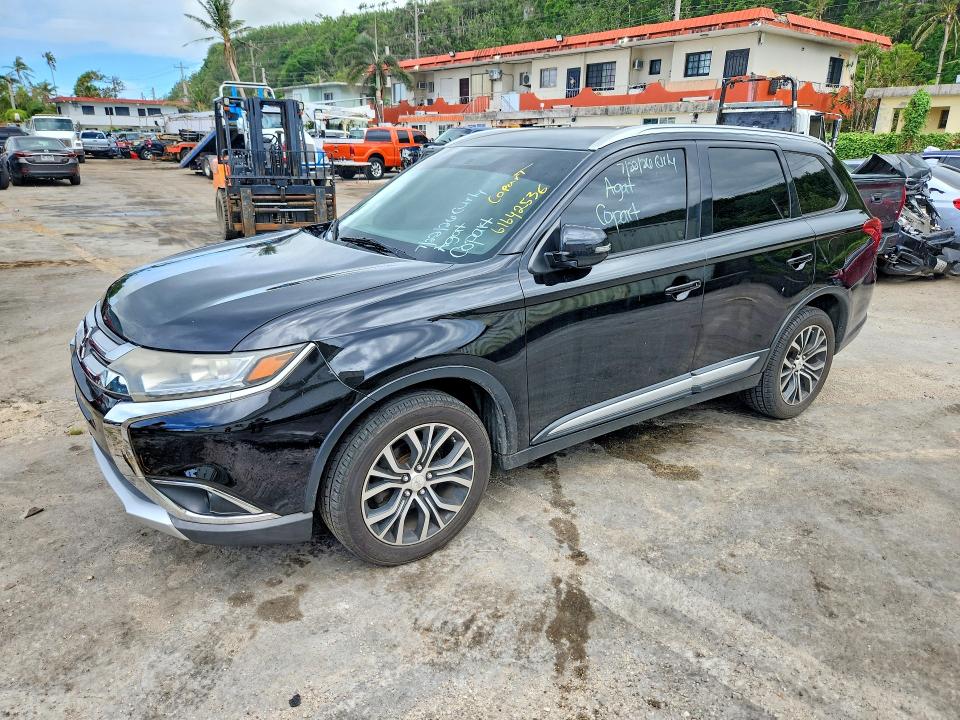
2016 Mitsubishi Outlander Flood Salvage: $8,525 Car, $0 Bid, Infinite Problems
Salvage flood title means an insurer already did the math and walked away. Now it's your turn to inherit their decision.
How is the Shame Score calculated?
The Shame Score (1–10) combines five signals: damage-type severity, title-condition risk, the gap between ACV (Actual Cash Value — the car's pre-damage market price) and AI max bid, listing red flags (run/drive status, secondary damage), and misleading-listing signals from AI photo analysis. A score of 8+ means the model found no financially defensible reason to bid. ACV is pulled from auction listing data; repair costs reference industry body-shop benchmarks. All figures are directional estimates, not binding quotes. Repair costs reference CCC Intelligent Solutions benchmarks and regional body-shop averages.
Would you bid?
Vehicle
2016 MITSUBISHI OUTLANDER
Title
salvage
Damage
WATER/FLOOD
State
Hawaii
Mileage
100-150k
Runs/drives
Yes
Approx ACV
~$9,000
AI max bid
$0
ACV from auction listing data · Repair costs via CCC benchmarks + body-shop averages
In plain numbers: Someone is bidding ~$8,100+ on this vehicle. AI analysis says it's worth at most $0 as a project. That's a $9,000gap. Here's why.
A 2016 Mitsubishi Outlander SE with AWD, a seven-passenger layout, and a $0 opening bid. The ACV (Actual Cash Value — what it was worth before the water got in) sits at $8,525, which on paper sounds like a deal with room to breathe. It runs. It has a key. Someone drove it onto the lot. For thirty seconds, this looks like the kind of underdog flip that pays for a weekend trip.
Then you notice what the listing doesn't say. There's no secondary damage listed, which sounds reassuring until you realize flood damage doesn't need a secondary category — water is already doing five jobs at once. It's in the carpet, the wiring harness, the ECU, the CVT (Continuously Variable Transmission — a sealed, fluid-dependent unit that Mitsubishi used in this generation and that reacts to contaminated fluid the way a cat reacts to a bath). The Outlander ran when it came in. CVT damage doesn't always show up at idle in a staging lane. It shows up at 65 mph, six weeks after you've registered it.
Here's what flood on a 134,000-mile Mitsubishi actually costs: CVT rebuild or replacement $4,800–$6,200, wiring harness inspection and repair $1,200–$2,800 depending on how deep the water sat, mold remediation $800–$1,500 if the padding had time to culture, ECU replacement $600–$900, plus the rotted brake lines and wheel bearings that 134K miles and a flood bath produce together like a science experiment. That's $7,400–$11,400 before you've replaced a single wearable item. The ACV is $8,525. The math doesn't work. It has never worked. The insurance adjuster who totaled this vehicle already ran it.
Someone bids on this, clears it for $2,000 feeling clever, spends $4,500 on a CVT when it grenades on the interstate, discovers the HVAC blower smells like a basement in August, and lists it on Facebook Marketplace six months later for $5,500 with the phrase 'runs great, minor issues.' The salvage title (legally declared a total loss by an insurance company) follows this car forever — into every registration, every insurance quote, every CarFax a future buyer pulls. You don't buy a flood Outlander. You adopt its problems.
“The insurance company said no. The auction says your turn.”
What to watch for: WATER/FLOOD
- •Pull the driver's seat and press your palm into the carpet padding underneath. If it's cold, damp, or compresses and releases moisture, the floor pan never dried — and the wiring harness running along the sills is already corroding from the inside.
- •Find the CVT dipstick or fluid check port and look at the fluid color. Pink or red means it's been changed since the flood and someone tried to save it. Brown, milky, or gray means water got into the transmission and no amount of fluid changes fixes internal bearing corrosion.
- •Pull every fuse block cover — there are usually two, one under the dash and one in the engine bay — and look for white mineral deposits or rust staining on the fuse terminals. That's the waterline. It tells you exactly how deep the car sat.
- •Check the seatbelt pretensioner bolts on the B-pillar for rust streaking. Pretensioners are explosive charges and they corrode unpredictably after flood exposure. A shop will charge $400–$700 per side to replace them, and an insurer may require it before coverage.
- •Smell the HVAC on recirculate with the blower on high for 60 seconds. Flood mold lives in the evaporator box behind the dash. If it smells like wet cardboard or a crawl space, the evaporator housing has to come out — that's a four-hour labor job on this platform.
Tomorrow’s lot. Before the auction. Free.
One lot. AI verdict. Max bid. The numbers that matter — before you bid.
Not bidding? Same email — one lot, one roast, every morning. Join readers who watch so they never bid blind.
Not ready? Browse all entries →TL;DR — copy & share
2016 MITSUBISHI OUTLANDER / WATER/FLOOD / Hawaii / ACV ~$9,000 Shame Score: 7.8/10 | AI Max Bid: $0 The insurance company said no. The auction says your turn. vetmyride.com/hall-of-shame/2016-mitsubishi-outlander-flood-salvage-car-bid-infinite-problems-61642536
Previous entry
2018 VOLKSWAGEN GOLF · Shame 8.2
“The roof is where the structural engineering lives. It's also where the damage is.”
Lot identifying info (lot number, VIN, seller, exact sale date) scrubbed. AI commentary is opinion based on publicly listed damage + auction signals. Always inspect in person before bidding.
AI-generated opinion based on publicly listed auction data. Not a factual vehicle assessment. Actual vehicle condition may differ from listing description. All figures are directional estimates, not binding quotes. VetMyRide is not affiliated with, endorsed by, or sponsored by any auction platform. Not a substitute for professional inspection.