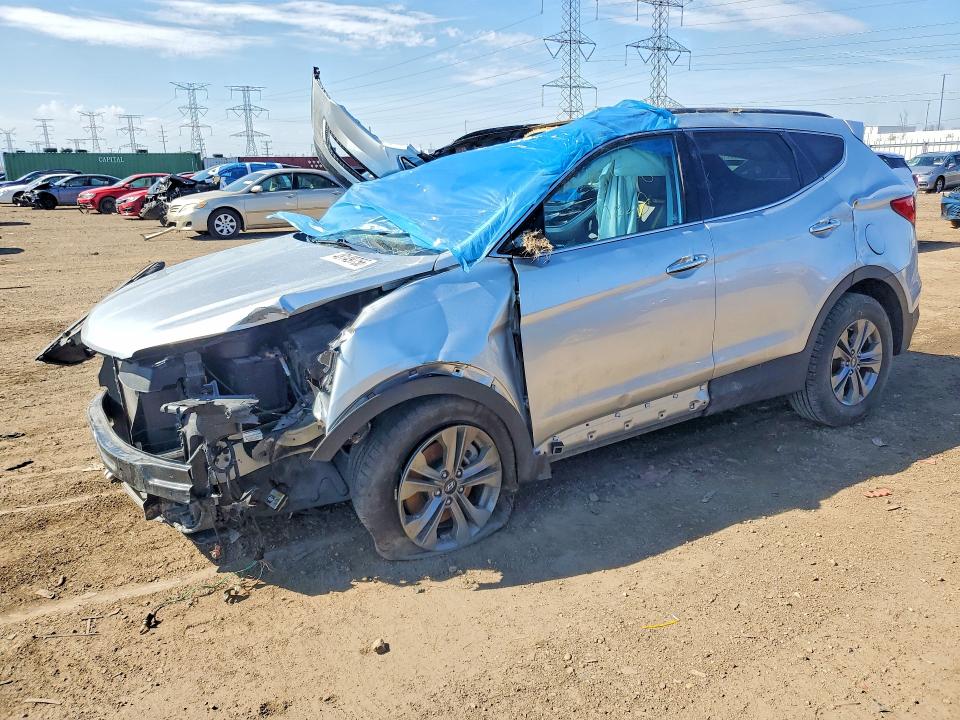
2016 Hyundai Santa Fe Sport Rollover: Salvage Title, $0 Bid, $0 Sense
Salvage title on a rollover means every pillar, every weld, every door gap is a question you can't answer without a frame rack.
How is the Shame Score calculated?
The Shame Score (1–10) combines five signals: damage-type severity, title-condition risk, the gap between ACV (Actual Cash Value — the car's pre-damage market price) and AI max bid, listing red flags (run/drive status, secondary damage), and misleading-listing signals from AI photo analysis. A score of 8+ means the model found no financially defensible reason to bid. ACV is pulled from auction listing data; repair costs reference industry body-shop benchmarks. All figures are directional estimates, not binding quotes. Repair costs reference CCC Intelligent Solutions benchmarks and regional body-shop averages.
Would you bid?
Vehicle
2016 HYUNDAI SANTA FE
Title
salvage
Damage
ROLLOVER
State
Illinois
Mileage
—
Runs/drives
—
Approx ACV
~$7,000
AI max bid
$0
ACV from auction listing data · Repair costs via CCC benchmarks + body-shop averages
In plain numbers: Someone is bidding ~$6,300+ on this vehicle. AI analysis says it's worth at most $0 as a project. That's a $7,000gap. Here's why.
A 2016 Santa Fe Sport 2.4L at zero dollars sounds like the setup to a good story. Seven-thousand-dollar ACV, no competing bids, keys in hand — for someone who knows what they're doing, that spread looks like margin. The Santa Fe Sport was a solid mid-size crossover, decent reliability record, nothing exotic under the hood. You could see it: clean it up, flip it, walk away with a few thousand dollars and a good weekend.
The primary damage is rollover. Not a fender tap. Not a deer strike on the quarter panel. The vehicle went over — roof to ground, glass to asphalt, pillars to pavement. Rollover damage is the category that makes frame shops quote slowly and carefully, because the force doesn't travel in one direction. It travels in all of them. The A-pillars, B-pillars, C-pillars, roof rails, door frames — every structural member that keeps a car from crushing its occupants took a load it was never designed to survive twice. And mileage is unknown, which means the odometer either stopped working in the event or someone decided you didn't need to know.
Rocker panel replacement runs $800–$1,400 per side. Roof skin and rail repair on a rolled vehicle starts at $2,500 and climbs fast if the press work is extensive. A-pillar straightening — if it's even possible — adds another $1,500–$2,200. Figure $1,200 for the windshield, $600–$900 per door that won't close square, and $3,500–$5,000 for a full structural alignment on a frame rack before anyone touches cosmetics. That's $10,100–$13,200 before paint, before airbag module replacement ($800–$1,200), before whatever the suspension geometry looks like after the car spent time on its roof. The ACV is $7,125. The math doesn't care about your optimism.
Derek in Marietta is going to open at $500, tell himself he'll part it out, and spend the next four months finding out that nobody wants pillars from a rolled car. Salvage title (legally declared a total loss by an insurance company) follows this vehicle forever — no lender will finance it, no rideshare platform will certify it, and every future buyer will offer you half of what you paid to fix it. The rollover already happened. Now it happens to your bank account.
“The mileage is unknown because the odometer had other things to worry about.”
What to watch for: ROLLOVER
- •Stand at each corner of the car and look down the roofline. Any ripple, crease, or shadow that doesn't match the opposite side means the roof structure absorbed impact. On a rollover, expect it — the question is how much.
- •Open all four doors and check the gap between door edge and frame. Gaps that are wider at the top than the bottom, or that taper unevenly, mean the B-pillar or rocker moved. A door that opens and closes but sits crooked is not a hinge problem — it's a structural problem.
- •Get under the car and look at the rocker panels (the metal tubes running along the bottom between the front and rear wheels). Rolled vehicles almost always crease or collapse the rockers. A rocker that's been pushed inward even half an inch means the unibody took a load through its spine.
- •Check the headliner mounting points around the sunroof opening and at the rear corners. Torn headliner clips, cracked plastic at the C-pillar, or a sunroof that won't close flush are all evidence of roof deformation that a quick visual inspection of the exterior won't catch.
- •Pull the cargo area carpet and look at the spare tire well. In a rollover, the rear corners of the unibody often buckle inward. Wrinkled metal in the spare well that doesn't match the factory pressed pattern means the rear structure is compromised — and that's before you've looked at anything else.
Tomorrow’s lot. Before the auction. Free.
One lot. AI verdict. Max bid. The numbers that matter — before you bid.
Not bidding? Same email — one lot, one roast, every morning. Join readers who watch so they never bid blind.
Not ready? Browse all entries →TL;DR — copy & share
2016 HYUNDAI SANTA FE / ROLLOVER / Illinois / ACV ~$7,000 Shame Score: 8.7/10 | AI Max Bid: $0 The mileage is unknown because the odometer had other things to worry about. vetmyride.com/hall-of-shame/2016-hyundai-santa-fe-sport-rollover-salvage-title-bid-sense-48149756
Previous entry
2015 INTERNATIONAL ALL OTHER · Shame 9.2
“The drum survived. The frame did not. Guess which one you need.”
Lot identifying info (lot number, VIN, seller, exact sale date) scrubbed. AI commentary is opinion based on publicly listed damage + auction signals. Always inspect in person before bidding.
AI-generated opinion based on publicly listed auction data. Not a factual vehicle assessment. Actual vehicle condition may differ from listing description. All figures are directional estimates, not binding quotes. VetMyRide is not affiliated with, endorsed by, or sponsored by any auction platform. Not a substitute for professional inspection.