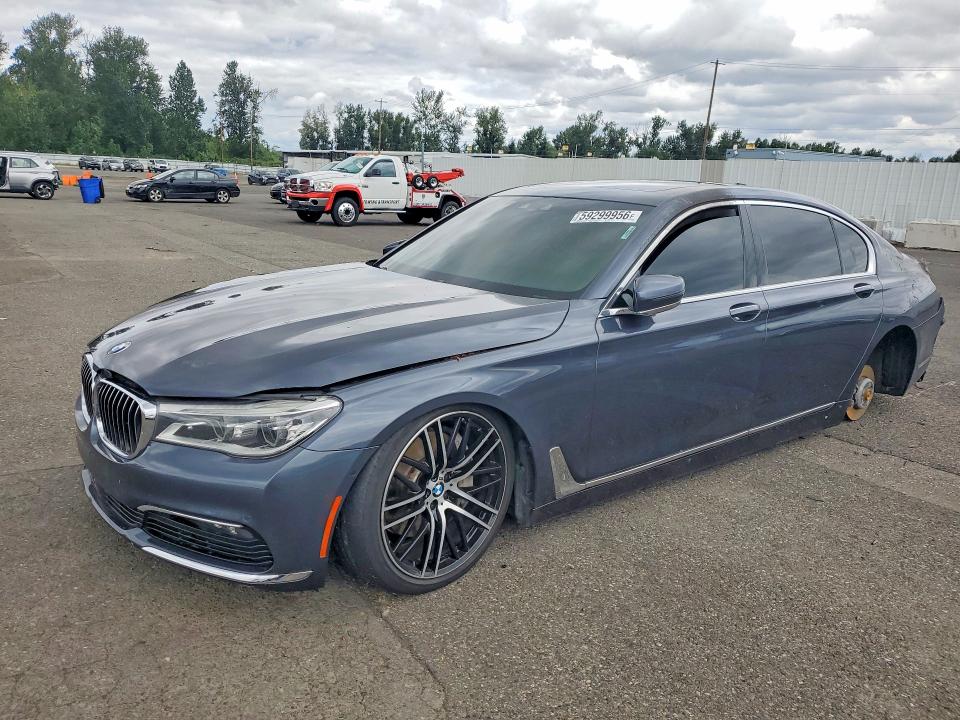
2016 BMW 750i Salvage: Fire Damage, Unknown Miles, $0 Bid Trap
Wiring harness replacement on a 750i runs $8K before labor. Fire finds every wire in the car.
How is the Shame Score calculated?
The Shame Score (1–10) combines five signals: damage-type severity, title-condition risk, the gap between ACV (Actual Cash Value — the car's pre-damage market price) and AI max bid, listing red flags (run/drive status, secondary damage), and misleading-listing signals from AI photo analysis. A score of 8+ means the model found no financially defensible reason to bid. ACV is pulled from auction listing data; repair costs reference industry body-shop benchmarks. All figures are directional estimates, not binding quotes. Repair costs reference CCC Intelligent Solutions benchmarks and regional body-shop averages.
Would you bid?
Vehicle
2016 BMW 7 SERIES
Title
salvage
Damage
BURN
State
Oregon
Mileage
—
Runs/drives
—
Approx ACV
~$20,000
AI max bid
$0
ACV from auction listing data · Repair costs via CCC benchmarks + body-shop averages
In plain numbers: Someone is bidding ~$18,000+ on this vehicle. AI analysis says it's worth at most $0 as a project. That's a $20,000gap. Here's why.
A 2016 BMW 750i is a serious machine — twin-turbo 4.4-liter V8, air suspension, night vision, a massage function in the seats, and a base price north of $93,000 new. Even damaged, $19,800 ACV (Actual Cash Value — what the car was worth before the fire) sounds like an opening. Zero current bids. No buy-now pressure. A flagship sedan sitting there waiting for someone smart enough to move first.
The listing says burn damage and then stops talking. No secondary damage listed. No mileage. No key. Run and drive: unknown. That silence is not an accident — it is the listing doing exactly as much work as the seller wants it to do. Fire in a 750i does not stay where it started. The 7 Series routes wiring looms through the door pillars, under the floor, behind the dash, and into a central gateway module that manages roughly forty separate control units. Heat finds all of it. The difference between 'fire near the engine bay' and 'fire inside the cabin for twenty minutes' is the difference between a hard restoration and a parts car. You will not know which until you own it.
Here is what fire does to a 750i in dollar terms. Main wiring harness replacement: $6,000–$9,000 in parts alone, $3,000–$5,000 in labor because every connector in this car is behind something else. Central gateway module: $1,200–$2,400, and it has to be coded to the car. Air suspension control unit: $800–$1,500. If the fire reached the cabin, add full interior removal and replacement — headliner, door cards, carpeting, seats — which runs $8,000–$15,000 on a 7 Series because nothing in this car is cheap to source or install. If the engine bay burned: turbos, intercooler piping, engine wiring sub-harness, potentially the valve cover and intake manifold. That is another $6,000–$12,000 before you find out what the heat did to the aluminum. $9,000 wiring + $2,000 modules + $10,000 interior + $8,000 engine bay = $29,000 before you've turned the key, assuming a key exists, which is listed as unknown.
Somebody is going to see a 750i at zero bids and feel their pulse go up. Destiny in Marietta is going to bid on this, spend four months sourcing parts from three different countries, and end up with a car that throws twelve fault codes every cold start. The ACV is $19,800. The repair floor — not ceiling, floor — is $29,000. This is not a project. This is a structure fire with a BMW badge still attached.
“The only thing this 750i has in common with a working car is the badge.”
What to watch for: BURN
- •Trace the wiring harness from the fire origin point in both directions before you assess anything else. On a 750i, the main loom runs under the carpet along the transmission tunnel — pull the floor mat and press the carpet down hard. If it crunches instead of flexes, the harness insulation melted.
- •Open every fuse box in the car — there are three on a 750i: engine bay, trunk, and under the rear seat. Look for melted plastic, discolored terminals, or fuses that have partially liquefied. Any of those means the fire had current running through it when it burned, which means the damage is systemic.
- •Check the firewall where wiring passes from the engine bay into the cabin. On a 750i this is behind the glove box on the passenger side. Char or heat bubbling on the firewall insulation means the fire crossed into the cabin, and the restoration cost just doubled.
- •Smell the interior with the doors closed for sixty seconds. Smoke odor in a luxury cabin means the headliner, seat foam, and carpet padding absorbed it. Ozone treatment does not fix structural smoke damage — it masks it for about three weeks.
Tomorrow’s lot. Before the auction. Free.
One lot. AI verdict. Max bid. The numbers that matter — before you bid.
Not bidding? Same email — one lot, one roast, every morning. Join readers who watch so they never bid blind.
Not ready? Browse all entries →TL;DR — copy & share
2016 BMW 7 SERIES / BURN / Oregon / ACV ~$20,000 Shame Score: 9.2/10 | AI Max Bid: $0 The only thing this 750i has in common with a working car is the badge. vetmyride.com/hall-of-shame/2016-bmw-750i-salvage-fire-damage-unknown-miles-bid-trap-59299956
Previous entry
2020 BMW X5 · Shame 8.2
“BMW parts pricing + unknown undercarriage damage = a math problem with no good answers.”
Lot identifying info (lot number, VIN, seller, exact sale date) scrubbed. AI commentary is opinion based on publicly listed damage + auction signals. Always inspect in person before bidding.
AI-generated opinion based on publicly listed auction data. Not a factual vehicle assessment. Actual vehicle condition may differ from listing description. All figures are directional estimates, not binding quotes. VetMyRide is not affiliated with, endorsed by, or sponsored by any auction platform. Not a substitute for professional inspection.