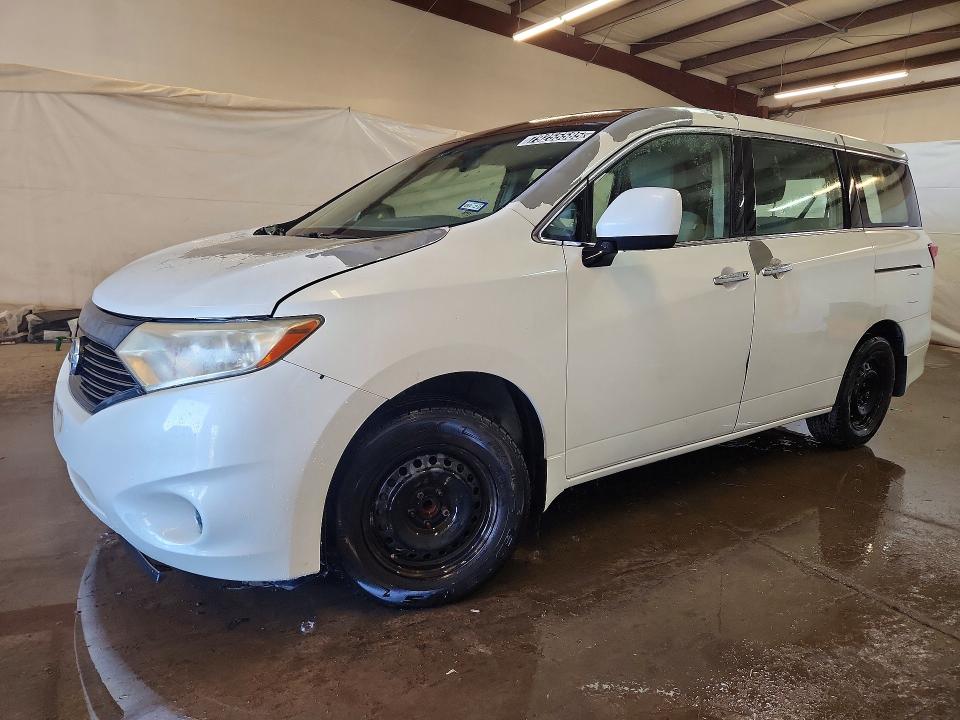
2015 Nissan Quest With Roof Damage and a CVT That's Already On Borrowed Time
CVT replacement on a Quest runs $4,500–$6,000. The roof damage gets you there faster.
How is the Shame Score calculated?
The Shame Score (1–10) combines five signals: damage-type severity, title-condition risk, the gap between ACV (Actual Cash Value — the car's pre-damage market price) and AI max bid, listing red flags (run/drive status, secondary damage), and misleading-listing signals from AI photo analysis. A score of 8+ means the model found no financially defensible reason to bid. ACV is pulled from auction listing data; repair costs reference industry body-shop benchmarks. All figures are directional estimates, not binding quotes. Repair costs reference CCC Intelligent Solutions benchmarks and regional body-shop averages.
Would you bid?
Vehicle
2015 NISSAN QUEST 3.5
Title
clean
Damage
TOP/ROOF
State
Texas
Mileage
50-100k
Runs/drives
—
Approx ACV
~$6,000
AI max bid
$0
ACV from auction listing data · Repair costs via CCC benchmarks + body-shop averages
In plain numbers: Someone is bidding ~$5,400+ on this vehicle. AI analysis says it's worth at most $0 as a project. That's a $6,000gap. Here's why.
A 2015 Nissan Quest S with a clean title, a key in hand, and 75,101 miles on the clock. Fleet-maintained, which usually means oil changes on schedule and nobody's teenager doing donuts in a parking lot. The bid is $525. The ACV (Actual Cash Value — what this van was worth before something fell on it, hit it, or rolled it) is $5,975. That spread looks like an opportunity. It is not an opportunity.
The damage is listed as TOP/ROOF with no secondary damage recorded. No secondary damage doesn't mean no secondary damage — it means nobody looked hard enough, or nobody wanted to write it down. A roof event on a minivan is not a hailstorm. Hailstorm damage gets its own category. TOP/ROOF on a Quest means something structural happened: a rollover, a tree, a parking garage, a load that shifted. The Quest's roof is load-bearing in ways a sedan's isn't — those sliding door tracks, the B-pillar, the C-pillar, the rails that keep the roof from folding into the cabin. When the roof moves, everything attached to it moves with it.
Roof structural repair on a full-size minivan starts at $3,500 and climbs fast depending on how far the deformation traveled into the pillars. If either B-pillar is compromised, add $2,000–$4,000 and a frame machine. Airbag replacement — curtain airbags run the length of the Quest's roofline — is $1,200–$2,400 depending on what deployed. The airbag control module, which almost certainly threw codes the moment impact occurred, is another $400–$800 to replace and reprogram. Then there's the CVT (Continuously Variable Transmission — a belt-and-pulley unit that Nissan used in the Quest and that has a documented failure pattern between 80,000 and 120,000 miles). This van has 75,101 miles. The CVT is not a question of if. Replacement runs $4,500–$6,000 at an independent shop, more at a dealer. Roof repair $3,500 + pillar work $3,000 + airbags $1,800 + CVT $5,000 = $13,300 on a van with a $5,975 ACV, and you haven't replaced a single tire.
Run/drive is listed as unknown. On a roof-damage vehicle with an already-fragile CVT, unknown means the person who wrote the listing didn't want to find out. Someone is going to bid $525 on this van, tow it home, discover the roof won't seal in rain, find out the CVT slips under load, and spend the next six months explaining to their family why the minivan they were going to use for soccer practice is sitting in the driveway with a blue tarp on it. Deanna in Clarksville is going to buy this for her sister and feel terrible about it by March.
“The roof caved in and the transmission is already planning its exit.”
What to watch for: TOP/ROOF
- •Stand at the rear of the van and sight down both sides of the roofline. Any ripple, wave, or asymmetry between the driver and passenger side means the roof structure moved — and probably took the C-pillar with it.
- •Open both sliding doors and look at the top of the door opening — the rail that the door hangs from. If it's bent, creased, or the door doesn't slide smoothly on its track, the B or C pillar was loaded during the impact.
- •Check all four corners of the windshield and rear glass for stress cracks radiating from the corners. Roof deformation transfers directly into glass — cracks there mean the roof frame is no longer square.
- •Sit in the driver's seat and look up at the headliner. Pull it back at the edges near the B-pillar. If you see wrinkled metal, foam that's been compressed, or any sign the interior trim was removed and reinstalled, someone already knew what they were looking at.
- •Pull the OBD-II port (under the dash, driver's side) with a scanner and look for any transmission-related codes — P0868, P17F0, P17F1 are CVT distress signals on Nissan. A van sitting at auction with an unknown run/drive status and a CVT at 75K will often be holding codes it can't clear.
Tomorrow’s lot. Before the auction. Free.
One lot. AI verdict. Max bid. The numbers that matter — before you bid.
Not bidding? Same email — one lot, one roast, every morning. Join readers who watch so they never bid blind.
Not ready? Browse all entries →TL;DR — copy & share
2015 NISSAN QUEST 3.5 / TOP/ROOF / Texas / ACV ~$6,000 Shame Score: 8.2/10 | AI Max Bid: $0 The roof caved in and the transmission is already planning its exit. vetmyride.com/hall-of-shame/2015-nissan-quest-with-roof-damage-and-a-cvt-that-s-already-on-borrowed-time
Previous entry
2015 ACURA MDX · Shame 8.2
“Congratulations, you bought a driveway ornament with a lien-free certificate.”
Lot identifying info (lot number, VIN, seller, exact sale date) scrubbed. AI commentary is opinion based on publicly listed damage + auction signals. Always inspect in person before bidding.
AI-generated opinion based on publicly listed auction data. Not a factual vehicle assessment. Actual vehicle condition may differ from listing description. All figures are directional estimates, not binding quotes. VetMyRide is not affiliated with, endorsed by, or sponsored by any auction platform. Not a substitute for professional inspection.