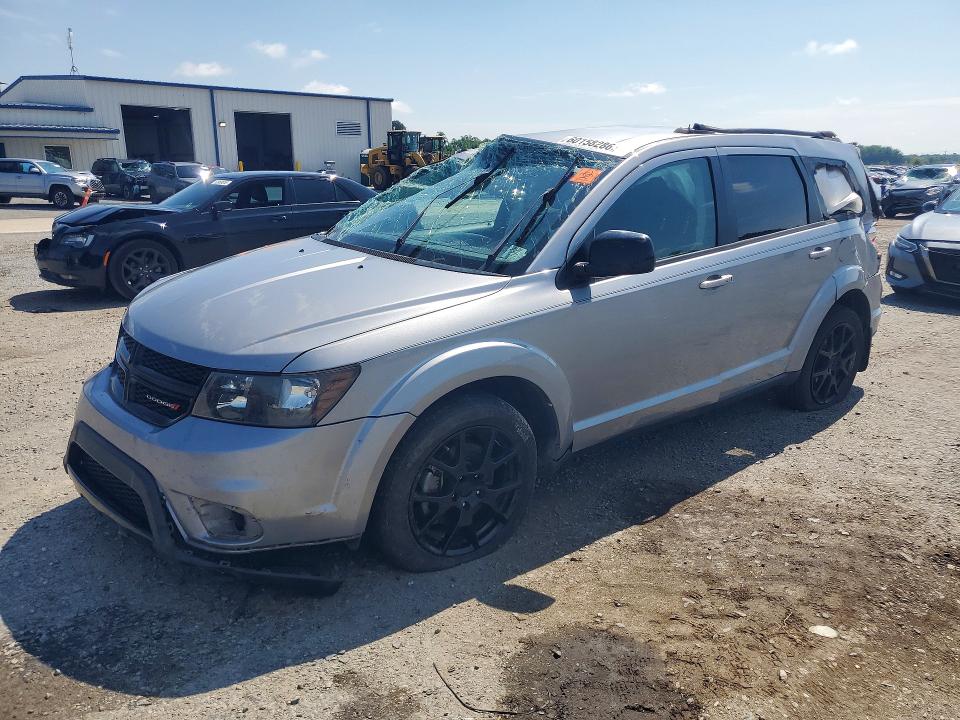
2015 Dodge Journey SXT: Salvage Title, Roof Damage, $5,950 ACV You'll Never See
Roof damage means bent pillars — and bent pillars mean this thing fails a rollover test it already failed.
How is the Shame Score calculated?
The Shame Score (1–10) combines five signals: damage-type severity, title-condition risk, the gap between ACV (Actual Cash Value — the car's pre-damage market price) and AI max bid, listing red flags (run/drive status, secondary damage), and misleading-listing signals from AI photo analysis. A score of 8+ means the model found no financially defensible reason to bid. ACV is pulled from auction listing data; repair costs reference industry body-shop benchmarks. All figures are directional estimates, not binding quotes. Repair costs reference CCC Intelligent Solutions benchmarks and regional body-shop averages.
Would you bid?
Vehicle
2015 DODGE JOURNEY
Title
salvage
Damage
TOP/ROOF
State
North Carolina
Mileage
50-100k
Runs/drives
Yes
Approx ACV
~$6,000
AI max bid
$0
ACV from auction listing data · Repair costs via CCC benchmarks + body-shop averages
In plain numbers: Someone is bidding ~$5,400+ on this vehicle. AI analysis says it's worth at most $0 as a project. That's a $6,000gap. Here's why.
Seventy-five thousand miles on a seven-seat family hauler, runs and drives, current bid zero dollars. The 2015 Dodge Journey SXT is not a glamorous car, but it moves people, it's cheap to insure when it's clean, and parts are everywhere. At zero bid against a $5,950 ACV (Actual Cash Value — what it was worth before the wreck), you're staring at what looks like free money. A running, driving SUV for a few hundred bucks. You could flip it. You could drive it. You could tell yourself you found the one.
The damage category is TOP/ROOF. That sounds almost polite, like a sunroof leak or a hail dent. It is not. Roof damage on a unibody (a vehicle where the body and frame are one welded structure, not separate) means the energy from whatever hit this car traveled directly into the A-pillars, B-pillars, and C-pillars — the vertical columns that hold the roof up and, more relevantly, hold the roof up during a rollover. The listing shows it runs and drives. Running and driving has nothing to do with whether the structural cage around your family's heads is still intact. Those are two completely separate questions.
A proper roof repair on a unibody SUV is not a body shop Tuesday. Pillar straightening or replacement runs $3,500–$6,000 depending on which ones moved. If the windshield frame is compromised — and with top damage it frequently is — add $800 for the glass plus another $400–$600 in labor to reseal it correctly. Airbag sensors and curtain airbags run along the roofline; if they deployed or were damaged, figure $1,200–$2,400 to restore them. That's $5,900–$9,000 in structural and safety repairs on a car with a $5,950 ACV and a salvage title (legally declared a total loss by an insurance company) that will cut the resale value by 40–60% permanently. The math doesn't work at zero bid. It works even less if you pay anything.
The salvage title is the nail in the lid. Most major insurers won't write a full coverage policy on a salvage-titled vehicle, and the ones that will charge a premium while capping the payout at rebuilt value — which on a repaired 2015 Journey is somewhere around $3,200–$3,800. You will spend more fixing the roof than the car will ever be worth with that title. Destiny in Clarksville is going to bid $600 on this because it runs, and then find out her insurance agent won't touch it and her mechanic won't sign off on the pillars. The Journey will sit in her driveway for four months before she sells it to someone else for $400.
“The roof gave up before the odometer hit 75K.”
What to watch for: TOP/ROOF
- •Stand outside the car and sight down each door gap from the front bumper to the rear. If the gaps are uneven — wider at top than bottom, or pinched on one side — the pillars moved when the roof took the hit.
- •Open every door and check the hinges. Doors that sag, bind, or won't latch flush are telling you the door frame is no longer the shape it was built to be. This is a pillar problem, not a hinge problem.
- •Press firmly on the headliner at each corner where it meets the pillars. Any flex, crunch, or soft spot means the inner structure behind it is compromised — possibly cracked, possibly just bent, definitely not what it was.
- •Check the windshield for stress cracks running from the corners. A shifted A-pillar puts tension on the glass. A crack that starts at the corner and runs diagonally is the roof damage talking.
- •Ask for or pull the CCC / insurance total-loss report if available. It will itemize what the adjuster found. 'Top/roof' as a category can mean a softball-sized dent or it can mean the whole greenhouse folded — the report tells you which one this was.
Tomorrow’s lot. Before the auction. Free.
One lot. AI verdict. Max bid. The numbers that matter — before you bid.
Not bidding? Same email — one lot, one roast, every morning. Join readers who watch so they never bid blind.
Not ready? Browse all entries →TL;DR — copy & share
2015 DODGE JOURNEY / TOP/ROOF / North Carolina / ACV ~$6,000 Shame Score: 8.2/10 | AI Max Bid: $0 The roof gave up before the odometer hit 75K. vetmyride.com/hall-of-shame/2015-dodge-journey-sxt-salvage-title-roof-damage-acv-you-ll-never-see-60158286
Previous entry
2016 RAM 1500 · Shame 9.1
“The damage category is 'ALL OVER' — Copart ran out of checkboxes.”
Lot identifying info (lot number, VIN, seller, exact sale date) scrubbed. AI commentary is opinion based on publicly listed damage + auction signals. Always inspect in person before bidding.
AI-generated opinion based on publicly listed auction data. Not a factual vehicle assessment. Actual vehicle condition may differ from listing description. All figures are directional estimates, not binding quotes. VetMyRide is not affiliated with, endorsed by, or sponsored by any auction platform. Not a substitute for professional inspection.