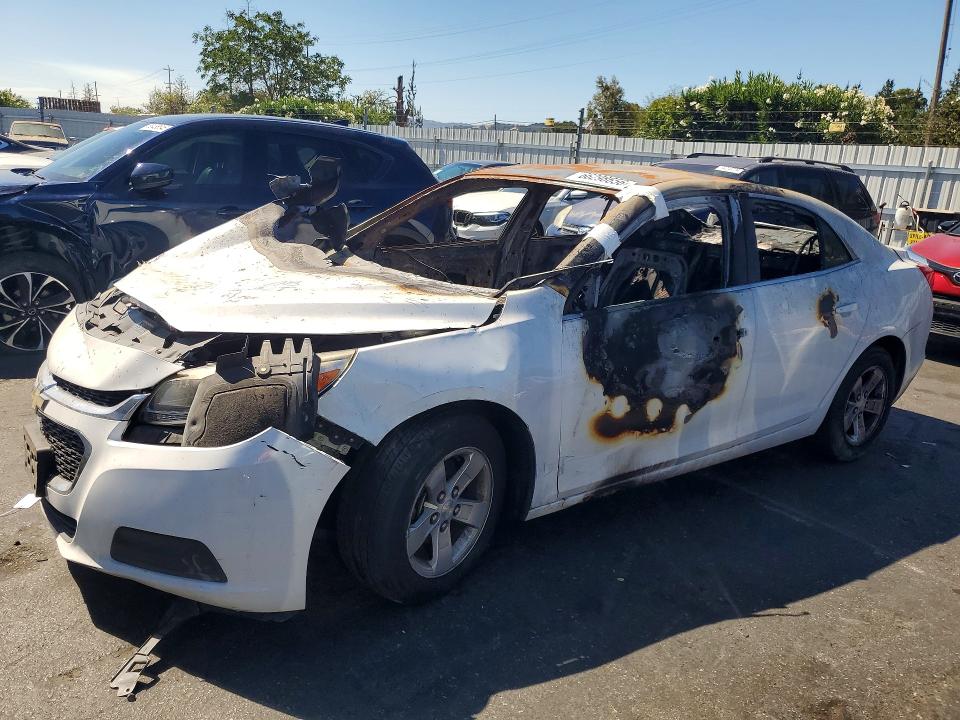
2015 Chevy Malibu LS: Fire Damage, Unknown Title, Zero Answers
No title means no plates. No plates means this $8,525 ACV car sits in your driveway forever.
How is the Shame Score calculated?
The Shame Score (1–10) combines five signals: damage-type severity, title-condition risk, the gap between ACV (Actual Cash Value — the car's pre-damage market price) and AI max bid, listing red flags (run/drive status, secondary damage), and misleading-listing signals from AI photo analysis. A score of 8+ means the model found no financially defensible reason to bid. ACV is pulled from auction listing data; repair costs reference industry body-shop benchmarks. All figures are directional estimates, not binding quotes. Repair costs reference CCC Intelligent Solutions benchmarks and regional body-shop averages.
Would you bid?
Vehicle
2015 CHEVROLET MALIBU
Title
unknown
Damage
BURN
State
California
Mileage
—
Runs/drives
—
Approx ACV
~$9,000
AI max bid
$0
ACV from auction listing data · Repair costs via CCC benchmarks + body-shop averages
In plain numbers: Someone is bidding ~$8,100+ on this vehicle. AI analysis says it's worth at most $0 as a project. That's a $9,000gap. Here's why.
A 2015 Malibu LS at zero dollars bid sounds like the setup to a good story. Malibus are boring in the best way — parts everywhere, mechanics know them cold, insurance fleets ran them into the ground so the repair ecosystem is deep. The ACV (Actual Cash Value — what the car was worth before the damage) sits at $8,525, which is real money for a ten-year-old family sedan. At the right number, a burned Malibu could make sense. That's the trap.
The listing has five unknown fields. Not four. Five. Title status unknown. Mileage unknown. Run and drive unknown. Keys unknown. Primary damage: burn. That last one is the only fact this listing offers, and it is doing a tremendous amount of work. A fire doesn't just destroy what you can see — it migrates. It travels wiring harnesses like a highway, cooks connectors, turns plastic clips to carbon, and leaves behind a smell that no detailer on earth has ever fully removed. The listing shows you nothing about where the fire started, how long it burned, or whether the fire department used water or foam. Each of those answers changes the repair math by thousands.
Here's what fire does to a Malibu specifically. The 2.5-liter engine sits in a tight bay — if the fire started under the hood, you're looking at a new engine ($2,800–$4,200 used, installed), a wiring harness ($1,100–$1,900), ECM (Engine Control Module — the car's brain) replacement ($400–$800 plus programming), and a full interior strip and replacement if smoke penetrated the cabin ($3,000–$5,500 depending on how far it got). Add an unknown-title (a title with unclear ownership history, possibly flagged by insurance or crossed state lines before paperwork caught up) resolution that may require a bonded title process in your state ($300–$800 and three to six months of paperwork). That's $7,600–$12,200 before you've confirmed the frame didn't warp from heat stress — and heat-warped unibody frames on a Malibu are not straightened, they're replaced, which means the car is done.
You are bidding on a confirmed fire, an unknown title, and four other unknowns, against an ACV that assumes none of those problems exist. Somebody is going to open this lot, smell it, and bid anyway. That person is going to lose several thousand dollars learning that 'unknown' is not a neutral word — it's a warning dressed up as a blank.
“Every field says 'unknown' except the fire.”
What to watch for: BURN
- •Stand at the driver's door and look at the wiring harness running along the firewall — if the insulation is bubbled, cracked, or has turned from black to gray-brown, the electrical system is compromised from the firewall inward and no amount of splicing fixes that cleanly
- •Open every door and push on the headliner — fire heat warps the roof structure and causes the headliner to separate or feel soft; if it gives under light pressure, the roof panel absorbed enough heat to check for metal distortion at the A and B pillars
- •Pull the hood and look at the brake fluid reservoir and any rubber vacuum lines near the engine — rubber melts at lower temperatures than metal, so melted or missing vacuum lines tell you how hot the engine bay got even if the engine itself looks intact
- •Check the carpet at the base of the rear seats — smoke and fire suppression water both travel to the lowest point of the cabin; if the padding is stiff, discolored, or smells like char six months after a fire, the floor pan has been compromised and may be rusting from underneath
- •Run a VIN check before you bid a single dollar — an unknown title on a fire car often means the insurance company filed a total-loss claim and the title is already in transit to a salvage brand; you may be bidding on a car that will never carry a clean title in any state
Tomorrow’s lot. Before the auction. Free.
One lot. AI verdict. Max bid. The numbers that matter — before you bid.
Not bidding? Same email — one lot, one roast, every morning. Join readers who watch so they never bid blind.
Not ready? Browse all entries →TL;DR — copy & share
2015 CHEVROLET MALIBU / BURN / California / ACV ~$9,000 Shame Score: 9.2/10 | AI Max Bid: $0 Every field says 'unknown' except the fire. vetmyride.com/hall-of-shame/2015-chevy-malibu-ls-fire-damage-unknown-title-zero-answers-66298656
Previous entry
2007 HRLD TRAILERS · Shame 8.2
“The only dry thing in this camper is the listing.”
Lot identifying info (lot number, VIN, seller, exact sale date) scrubbed. AI commentary is opinion based on publicly listed damage + auction signals. Always inspect in person before bidding.
AI-generated opinion based on publicly listed auction data. Not a factual vehicle assessment. Actual vehicle condition may differ from listing description. All figures are directional estimates, not binding quotes. VetMyRide is not affiliated with, endorsed by, or sponsored by any auction platform. Not a substitute for professional inspection.