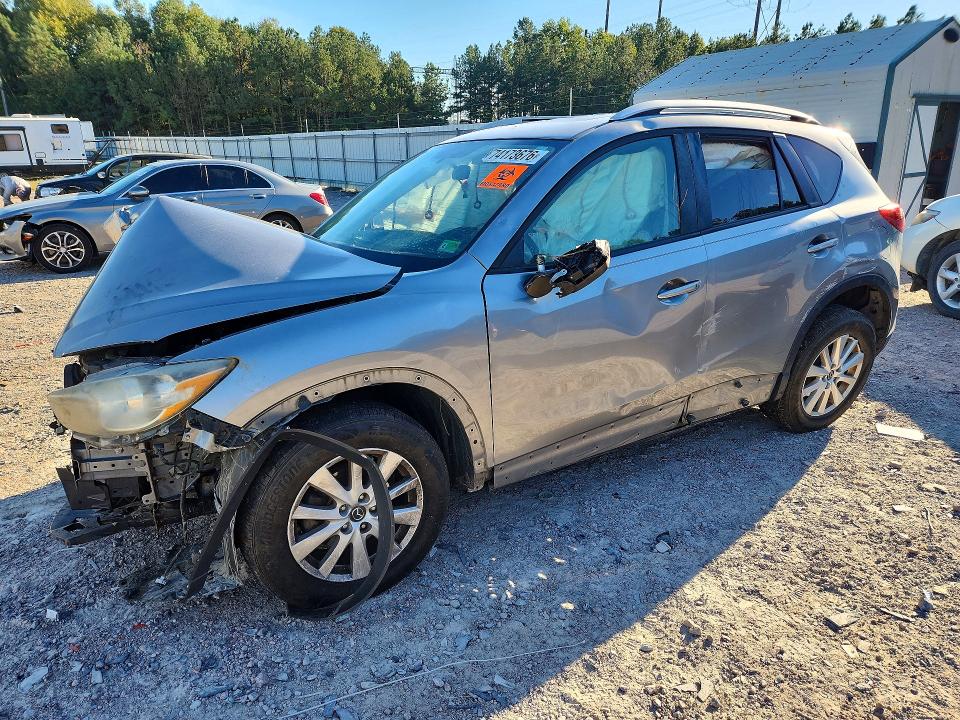
2014 Mazda CX-5 Rollover at 183K Miles: Clean Title, Crushed Roof
Rollover at 183K means every pillar, every weld, every seam took the hit. You can't see bent structure. It doesn't announce itself.
How is the Shame Score calculated?
The Shame Score (1–10) combines five signals: damage-type severity, title-condition risk, the gap between ACV (Actual Cash Value — the car's pre-damage market price) and AI max bid, listing red flags (run/drive status, secondary damage), and misleading-listing signals from AI photo analysis. A score of 8+ means the model found no financially defensible reason to bid. ACV is pulled from auction listing data; repair costs reference industry body-shop benchmarks. All figures are directional estimates, not binding quotes. Repair costs reference CCC Intelligent Solutions benchmarks and regional body-shop averages.
Would you bid?
Vehicle
2014 MAZDA CX-5
Title
clean
Damage
ROLLOVER
State
Virginia
Mileage
150-200k
Runs/drives
—
Approx ACV
~$10,000
AI max bid
$0
ACV from auction listing data · Repair costs via CCC benchmarks + body-shop averages
In plain numbers: Someone is bidding ~$9,000+ on this vehicle. AI analysis says it's worth at most $0 as a project. That's a $10,000gap. Here's why.
A 2014 Mazda CX-5 Touring with a clean title and a $0 opening bid. AWD, decent fuel economy, a platform that earned its reputation — and at under ten grand ACV (Actual Cash Value — what the car was worth before the wreck), you're looking at a number that makes the math seem possible. People have flipped CX-5s for profit. People have daily-driven them past 200K. The bid sheet is empty. You start thinking about what you'd offer.
Then you look at the damage column. Rollover. Not a fender tap, not a deer strike — a rollover. The car went over on its side or its roof, which means the A-pillar, B-pillar, and C-pillar absorbed a load they were never designed to survive twice. The roof rail, the door frames, the windshield pinch welds — all of it deformed under impact. A clean title (no prior salvage branding, transferred clean through the chain of ownership) tells you nothing about what the structure looks like underneath the headliner. The title reflects paperwork. The pillars reflect physics.
Structural repair on a rollover isn't a body shop weekend job. Frame and unibody straightening runs $3,500–$6,000 before you've touched glass. Roof skin replacement, if it's caved, adds $1,800–$2,800 in labor alone. All four door gaps will need realignment — figure $400–$800 per door to get them sealing again. Airbags almost certainly deployed: side curtains, possibly fronts — $800–$1,500 per bag plus $600–$900 for the module reset. Suspension geometry on the high side of the rollover is compromised until proven otherwise; an alignment won't fix a bent control arm. You're at $9,000–$13,000 in structural and safety work on a car with an ACV of $9,825 and 183,872 miles on the clock. The math doesn't approach working. It doesn't even wave at working from across the room.
Someone bids $1,200, drives it home because it started, and discovers at the first pothole that the B-pillar flex they couldn't see has been cracking the windshield seal since the rollover. Sandra in Chattanooga is going to put new tires on this thing and call it a deal. The car will pass every visual inspection it ever gets and fail every occupant it ever carries.
“The roof is the cheapest thing wrong with this car.”
What to watch for: ROLLOVER
- •Stand at each corner of the car and sight down the roofline. A rollover that deformed the structure will show a subtle bow or crease in the roof rail — it won't be flat. If the headliner is still up, push on it in the center. It should feel rigid. If it flexes or crinkles, the roof skin buckled.
- •Open all four doors and look at the gap between the door edge and the body frame. Gaps should be even, parallel, and consistent top to bottom. Rollover damage pulls door frames out of square — you'll see gaps that are wider at the top than the bottom, or doors that don't latch without lifting.
- •Check the A-pillar (the post between the windshield and the front door) on both sides for cracking paint, rippled metal, or misaligned seams where it meets the roof rail. Repaired pillars often show filler under paint — run your hand along the seam and feel for waviness that doesn't belong on stamped steel.
- •Look under the rocker panels (the metal sill running under the doors between the front and rear wheels) on the side the car landed on. Rockers crush in rollovers and are expensive to replace — $1,200–$2,500 per side — and a crushed rocker means the unibody took a direct load hit at its stiffest point.
- •If the car runs, drive it ten feet and brake hard. A rollover that bent the subframe will pull hard to one side under braking — not a shimmy, a pull. That's not an alignment problem. That's a bent cradle, and no alignment rack fixes a bent cradle.
Tomorrow’s lot. Before the auction. Free.
One lot. AI verdict. Max bid. The numbers that matter — before you bid.
Not bidding? Same email — one lot, one roast, every morning. Join readers who watch so they never bid blind.
Not ready? Browse all entries →TL;DR — copy & share
2014 MAZDA CX-5 / ROLLOVER / Virginia / ACV ~$10,000 Shame Score: 8.2/10 | AI Max Bid: $0 The roof is the cheapest thing wrong with this car. vetmyride.com/hall-of-shame/2014-mazda-cx-5-rollover-at-clean-title-crushed-roof-74173676
Previous entry
2017 TOYOTA CAMRY · Shame 8.2
“54,462 miles and every single one of them is now underwater.”
Lot identifying info (lot number, VIN, seller, exact sale date) scrubbed. AI commentary is opinion based on publicly listed damage + auction signals. Always inspect in person before bidding.
AI-generated opinion based on publicly listed auction data. Not a factual vehicle assessment. Actual vehicle condition may differ from listing description. All figures are directional estimates, not binding quotes. VetMyRide is not affiliated with, endorsed by, or sponsored by any auction platform. Not a substitute for professional inspection.