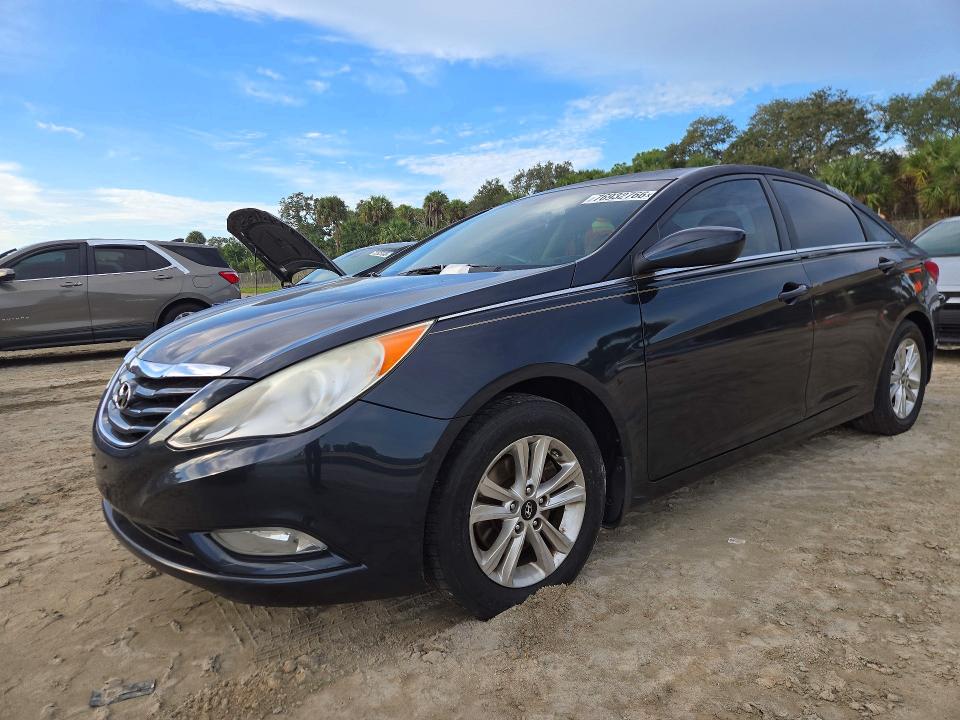
2013 Hyundai Sonata GLS: Flood Salvage, Unknown Miles, $0 Bid — Don't Touch It
You can't register a salvage title in 11 states. You definitely can't register one with unknown mileage. Both problems. One car.
How is the Shame Score calculated?
The Shame Score (1–10) combines five signals: damage-type severity, title-condition risk, the gap between ACV (Actual Cash Value — the car's pre-damage market price) and AI max bid, listing red flags (run/drive status, secondary damage), and misleading-listing signals from AI photo analysis. A score of 8+ means the model found no financially defensible reason to bid. ACV is pulled from auction listing data; repair costs reference industry body-shop benchmarks. All figures are directional estimates, not binding quotes. Repair costs reference CCC Intelligent Solutions benchmarks and regional body-shop averages.
Would you bid?
Vehicle
2013 HYUNDAI SONATA
Title
salvage
Damage
WATER/FLOOD
State
Florida
Mileage
—
Runs/drives
—
Approx ACV
~$6,000
AI max bid
$0
ACV from auction listing data · Repair costs via CCC benchmarks + body-shop averages
In plain numbers: Someone is bidding ~$5,400+ on this vehicle. AI analysis says it's worth at most $0 as a project. That's a $6,000gap. Here's why.
A 2013 Sonata GLS for zero dollars. That's the bid. Zero. The car has a key, which means someone could theoretically drive it away, and the GLS trim isn't stripped — you get the 2.4-liter four-cylinder, automatic, the whole respectable mid-size sedan package. Eleven years old, sure, but these things run to 200,000 miles when they're maintained. The price of entry is nothing. Your brain starts doing the math and the math looks good.
Then you notice what the listing doesn't say. No mileage. Not 'exempt' — unknown. On an eleven-year-old car, unknown mileage means the instrument cluster either drowned or was swapped, and neither answer is good. Flooded cars don't just get wet — they get submerged long enough that the electronics absorb water like a sponge, and the ECU (Engine Control Unit — the car's brain) logs errors it will keep throwing for the rest of its life. The listing also doesn't mention secondary damage, which sounds like good news until you realize flood cars rarely have a clean secondary category because the water is the secondary damage. It's everywhere. It doesn't stop at the floorboards.
Here's what a 2013 Sonata needs after a flood: ECU replacement or rebuild $800–$1,400, wiring harness inspection and likely partial replacement $1,200–$2,800, transmission flush and inspection $400–$600 (and if water got in, full rebuild at $2,500–$3,500), mold remediation $1,500–$2,100, brake system inspection and probable caliper/rotor replacement from corrosion $600–$900, and a salvage title (legally declared a total loss) inspection and re-registration fees that vary by state but average $300–$700. Conservative math: $4,800 + $2,800 + $3,500 + $2,100 + $900 + $700 = $10,800 in repairs on a car with an ACV (Actual Cash Value — what it was worth before the water got it) of $6,350. You are paying to go backwards. And that's before you find out what the unknown mileage actually is.
The salvage title alone cuts resale value by 40–60% on a car this age. After repairs, you own a $3,800 car that cost you $11,000 to build. Destiny in Riverside is going to bid $200 on this because the key works and the seats look dry, and she's going to spend the next four months watching warning lights appear in alphabetical order.
“The odometer is unknown because the odometer is probably underwater.”
What to watch for: WATER/FLOOD
- •Pull the carpet padding under the driver and passenger seats — not the carpet itself, the foam underneath. Press it. If it holds moisture or smells like mildew six months after a flood, the floor pan is corroding beneath it and the smell will never leave.
- •Find the ECU, usually behind the glove box or under the dash on the passenger side. Look for a white mineral crust or green corrosion on the connector pins. That residue is what flood water leaves behind when it dries. One corroded pin means the whole connector is compromised.
- •Check the seat belt pretensioners — the mechanisms at the base of each belt. Flood water ruins them silently. They look fine, they won't deploy in a crash. There's no warning light for this.
- •Look at the brake calipers and rotors. Submersion accelerates rust inside the caliper pistons in ways that don't show up until the brakes drag or seize. If the rotors have deep rust grooves after sitting, the calipers are probably next.
- •On any automatic transmission that's been flooded, pull the dipstick and look at the fluid. It should be red or pink. If it's brown, milky, or smells burnt, water got in and the fluid emulsified. A fluid change won't fix this — the clutch packs are already degraded.
Tomorrow’s lot. Before the auction. Free.
One lot. AI verdict. Max bid. The numbers that matter — before you bid.
Not bidding? Same email — one lot, one roast, every morning. Join readers who watch so they never bid blind.
Not ready? Browse all entries →TL;DR — copy & share
2013 HYUNDAI SONATA / WATER/FLOOD / Florida / ACV ~$6,000 Shame Score: 9.1/10 | AI Max Bid: $0 The odometer is unknown because the odometer is probably underwater. vetmyride.com/hall-of-shame/2013-hyundai-sonata-gls-flood-salvage-unknown-miles-bid-don-t-touch-it-76932766
Previous entry
2022 BMW X6 · Shame 9.2
“The key works. That's the only thing anyone confirmed about this car.”
Lot identifying info (lot number, VIN, seller, exact sale date) scrubbed. AI commentary is opinion based on publicly listed damage + auction signals. Always inspect in person before bidding.
AI-generated opinion based on publicly listed auction data. Not a factual vehicle assessment. Actual vehicle condition may differ from listing description. All figures are directional estimates, not binding quotes. VetMyRide is not affiliated with, endorsed by, or sponsored by any auction platform. Not a substitute for professional inspection.