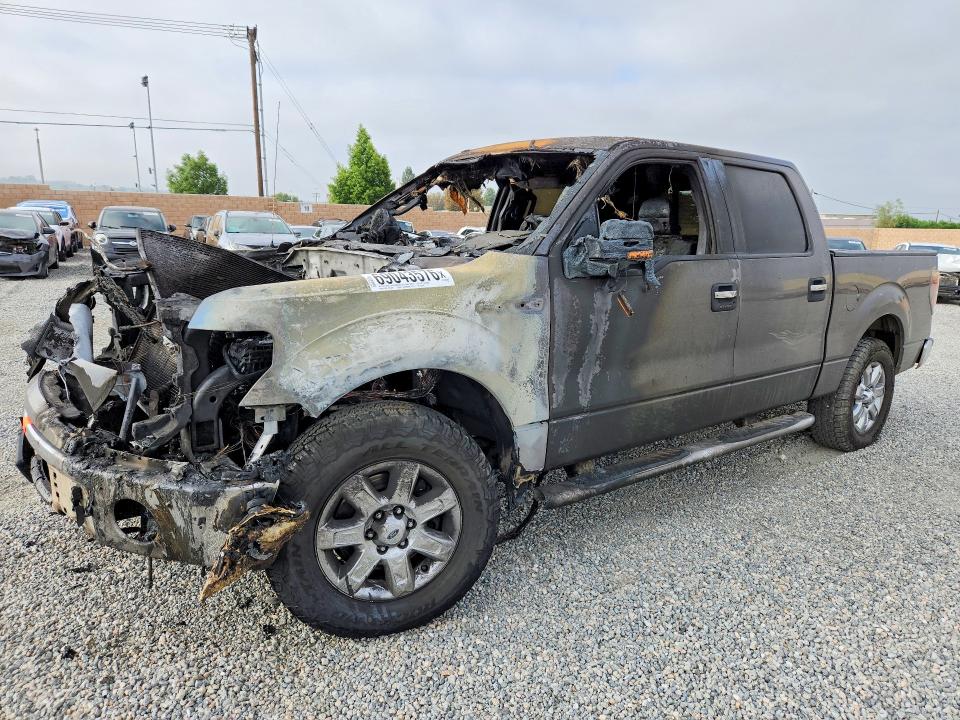
2013 Ford F-150 SuperCrew: Salvage Title, Fire Damage, Zero Answers
Fire doesn't stop at the paint. Wiring harnesses melt, fuel lines crack, and the frame hides stress you can't see.
How is the Shame Score calculated?
The Shame Score (1–10) combines five signals: damage-type severity, title-condition risk, the gap between ACV (Actual Cash Value — the car's pre-damage market price) and AI max bid, listing red flags (run/drive status, secondary damage), and misleading-listing signals from AI photo analysis. A score of 8+ means the model found no financially defensible reason to bid. ACV is pulled from auction listing data; repair costs reference industry body-shop benchmarks. All figures are directional estimates, not binding quotes. Repair costs reference CCC Intelligent Solutions benchmarks and regional body-shop averages.
Would you bid?
Vehicle
2013 FORD F-150
Title
salvage
Damage
BURN
State
California
Mileage
—
Runs/drives
—
Approx ACV
~$12,000
AI max bid
$0
ACV from auction listing data · Repair costs via CCC benchmarks + body-shop averages
In plain numbers: Someone is bidding ~$10,800+ on this vehicle. AI analysis says it's worth at most $0 as a project. That's a $12,000gap. Here's why.
A 2013 F-150 SuperCrew with a 5.0 is the kind of truck that still commands real money a decade out. Tow capacity, crew cab room, Ford's most reliable engine family from that generation — on paper this is the used truck everyone is looking for right now. The ACV (Actual Cash Value — what the truck was worth before the fire) sits at $12,100, which means someone insured this thing for a reason. At $0 current bid, the floor is open. That price is doing a lot of seductive work.
The listing says burn damage. It does not say where. It does not say how big. It does not say whether the fire started in the cab, the engine bay, or the bed — and that gap is not an oversight. A cab fire and an engine fire are completely different disasters wearing the same label. Mileage is unknown. Keys are unknown. Run and drive is unknown. Every field that would help you price this truck is blank, which means the seller either doesn't know or knows and isn't saying. Neither answer is good.
Fire damage in a vehicle does not respect boundaries. A cab fire melts the entire wiring harness — $3,500 to $6,000 in parts alone, plus 40 hours of labor to route and reconnect. It destroys the airbag system ($1,200–$2,400 to replace, and it will not pass inspection without it). It compromises the headliner, the dash, the HVAC ducting, the seats, and every sensor behind the dash that Ford's computer talks to. An engine bay fire adds fuel line replacement ($400–$800), intake and injector inspection, and the real nightmare: heat-stressed aluminum components that look fine and crack six months later. Frame inspection for heat distortion runs $300–$500 just to look. Remediation if the cab is involved adds $1,500 for odor and soot. Conservative repair floor on a fire truck with zero information: $8,000. Realistic number if the harness is gone: $14,000–$18,000, on a truck with an ACV of $12,100.
The salvage title (legally declared a total loss — an insurer paid out and the state rebranded the title) alone cuts resale value by 40–60% after repairs. So you spend $15,000 fixing a $12,100 truck and sell it for $7,000 because no lender will finance a fire salvage F-150 for the next buyer. Derek in Knoxville is going to bid $800 on this because the body looks intact in the photos, and he's going to spend the next fourteen months finding out what burned.
“The listing has fewer answers than the fire marshal's report.”
What to watch for: BURN
- •Find the fire's origin point before you touch anything else. Look for the deepest charring — paint bubbles outward from the source. If the heaviest damage is under the dash or behind the glove box, the wiring harness is gone and you're starting a $5,000 conversation before the engine turns.
- •Pull back any surviving carpet or floor mat and look at the wiring bundles running along the rocker panels. Melted insulation that's been re-wrapped in electrical tape is a red flag someone tried a field repair. Brittle, cracked, or discolored insulation means the heat got further than the visible burn area.
- •Check every fuse box — there are three on a 2013 F-150 (cab, engine bay, and the auxiliary box under the rear seat on SuperCrew models). Heat-damaged fuse boxes don't always look burned. Look for discolored plastic, warped relay slots, or fuses that slide out too easily because the housing expanded.
- •If the fire was in the engine bay, pull the intake boot and look inside the throttle body for soot. Soot past the throttle body means the engine ingested combustion byproduct, and you need a compression test and injector inspection before this truck runs.
- •Smell the cab with the doors closed for five minutes. Smoke odor in a vehicle is not cosmetic — it lives in the foam padding of every seat, the headliner backing, and the HVAC evaporator. Ozone treatment masks it for 30 days. After that, the smell comes back and you're looking at $1,500–$2,500 in interior remediation.
Tomorrow’s lot. Before the auction. Free.
One lot. AI verdict. Max bid. The numbers that matter — before you bid.
Not bidding? Same email — one lot, one roast, every morning. Join readers who watch so they never bid blind.
Not ready? Browse all entries →TL;DR — copy & share
2013 FORD F-150 / BURN / California / ACV ~$12,000 Shame Score: 9.2/10 | AI Max Bid: $0 The listing has fewer answers than the fire marshal's report. vetmyride.com/hall-of-shame/2013-ford-f-150-supercrew-salvage-title-fire-damage-zero-answers-69043576
Previous entry
2025 HONDA CRV · Shame 9.2
“The only thing they know about this car is that someone hated it.”
Lot identifying info (lot number, VIN, seller, exact sale date) scrubbed. AI commentary is opinion based on publicly listed damage + auction signals. Always inspect in person before bidding.
AI-generated opinion based on publicly listed auction data. Not a factual vehicle assessment. Actual vehicle condition may differ from listing description. All figures are directional estimates, not binding quotes. VetMyRide is not affiliated with, endorsed by, or sponsored by any auction platform. Not a substitute for professional inspection.