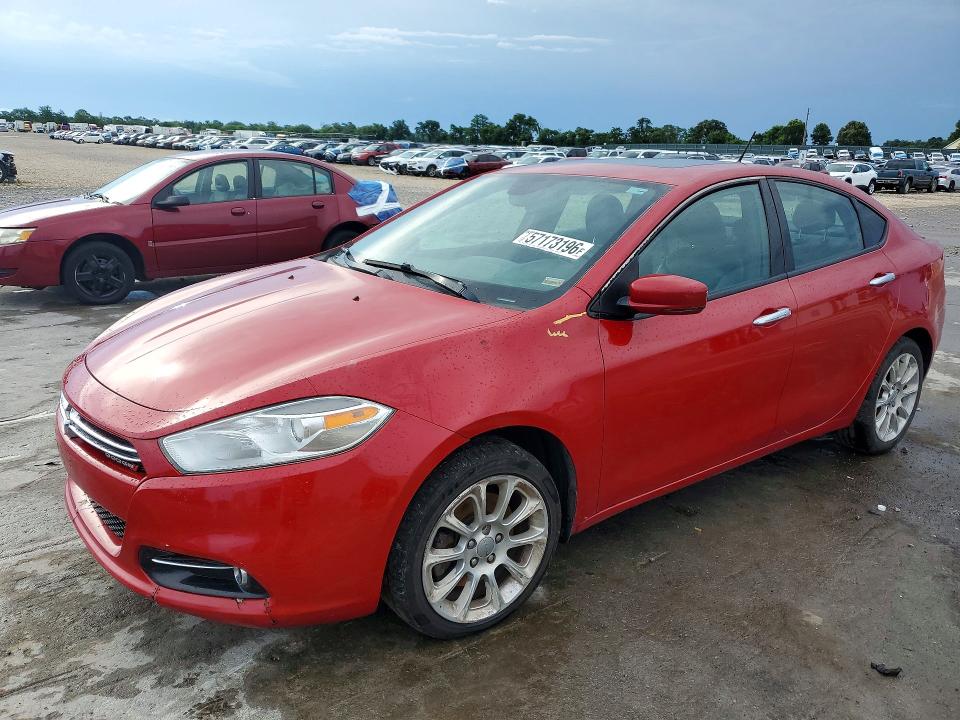
2013 Dodge Dart Flood Salvage: 167K Miles, $0 Bid, Still Too Expensive
Salvage flood title on a Dart with 167K miles. The ECU is already corroded. You just don't know it yet.
How is the Shame Score calculated?
The Shame Score (1–10) combines five signals: damage-type severity, title-condition risk, the gap between ACV (Actual Cash Value — the car's pre-damage market price) and AI max bid, listing red flags (run/drive status, secondary damage), and misleading-listing signals from AI photo analysis. A score of 8+ means the model found no financially defensible reason to bid. ACV is pulled from auction listing data; repair costs reference industry body-shop benchmarks. All figures are directional estimates, not binding quotes. Repair costs reference CCC Intelligent Solutions benchmarks and regional body-shop averages.
Would you bid?
Vehicle
2013 DODGE DART
Title
salvage
Damage
WATER/FLOOD
State
Missouri
Mileage
150-200k
Runs/drives
—
Approx ACV
~$6,000
AI max bid
$0
ACV from auction listing data · Repair costs via CCC benchmarks + body-shop averages
In plain numbers: Someone is bidding ~$5,400+ on this vehicle. AI analysis says it's worth at most $0 as a project. That's a $6,000gap. Here's why.
The 2013 Dodge Dart had a rough reputation even when it was dry. But look past that for a second — $0 current bid on a car with a key, 167,085 miles, and a $5,575 ACV (Actual Cash Value — what Copart estimates it was worth before the flood). For someone who needs a cheap commuter and has a little mechanical confidence, that gap looks like opportunity. The Dart's 2.0L Tigershark was a decent enough engine. Parts are accessible. The platform isn't exotic. You could almost talk yourself into it.
The listing says water damage. It does not say when. It does not say how deep. It does not say how long it sat. That silence is doing a lot of work. Flood cars don't announce their rot — they hide it in the wiring harness, in the ECU connectors, in the ABS module, in the TIPM (Totally Integrated Power Module — Dodge's famously failure-prone electrical brain, located low in the engine bay where water pools first). The Dart's TIPM was already a known problem on clean, dry examples. On a flooded one, it's not a question of whether it fails. It's a question of what it takes with it when it does.
The math here is not kind. Flood remediation on a car this far gone starts at $1,500 and climbs fast — carpet, padding, seats, and headliner alone run $800 to $1,200 in materials if you do it yourself, double that if you don't. TIPM replacement is $600 to $900 for the part, another $200 in labor. If the ECU (Engine Control Unit — the computer that runs the engine) absorbed water, add $400 to $700 for a used unit and pray it's compatible. ABS module failure is another $350. Corrosion in the wiring harness is the one that ends the conversation — a full harness replacement on a Dart runs $1,800 to $2,400 and requires a technician who actually wants to do it, which narrows the field considerably. Salvage title (legally declared a total loss by an insurance company) means financing is gone, most insurers won't touch full coverage, and resale value is roughly 40 to 60 percent of a clean comparable. The ACV is $5,575 on a salvage flood car with 167K miles. Repairs to make it roadworthy and trustworthy could run $3,500 to $6,000 before you've replaced a single wear item. That's $9,000 to $11,000 into a car worth $2,800 on a generous day with a salvage title.
Someone is going to bid on this because the current bid is $0 and it feels like stealing. Diane in Shreveport is going to drive it home, park it in the driveway, and spend four months chasing electrical gremlins that move every time she thinks she's caught one. The Dart was discontinued in 2016 partly because nobody trusted it. This one spent time underwater. That's not a project. That's a eulogy with wheels.
“The fish got out. The water didn't.”
What to watch for: WATER/FLOOD
- •Pull the driver's side carpet back at the front corner and press the padding underneath. If it's damp, cold, or smells like mud six weeks after a flood, the floor pan is holding moisture and the subfloor is already starting to rust from the inside out.
- •Find the TIPM — on the 2013 Dart it's in the engine bay near the battery. Look for white or green corrosion on the connector pins. Even one corroded pin can cause random stalling, windows that won't close, and a horn that honks at 2am. Replacement is not optional, it's when.
- •Pull every fuse block cover and shine a light into the fuse cavities. Flood water carries silt that packs into fuse sockets and causes intermittent shorts that no code reader will ever catch — the car just does random things until it stops doing things.
- •Check the brake fluid reservoir. Flood water that enters the master cylinder contaminates the entire brake system. Fluid that looks milky, gray, or has visible separation means a full brake flush at minimum — $150 — and possible master cylinder replacement at $300 to $500.
- •Sit in the driver's seat and smell the HVAC on full blast with the recirculate off. Flood mold colonizes the evaporator core and the blower housing. If it smells like a basement, the entire HVAC box needs to come out — that's a 6-hour job on a Dart and a $400 to $700 repair before you've bought a single part.
Tomorrow’s lot. Before the auction. Free.
One lot. AI verdict. Max bid. The numbers that matter — before you bid.
Not bidding? Same email — one lot, one roast, every morning. Join readers who watch so they never bid blind.
Not ready? Browse all entries →TL;DR — copy & share
2013 DODGE DART / WATER/FLOOD / Missouri / ACV ~$6,000 Shame Score: 7.2/10 | AI Max Bid: $0 The fish got out. The water didn't. vetmyride.com/hall-of-shame/2013-dodge-dart-flood-salvage-bid-still-too-expensive-57173196
Previous entry
2015 TOYOTA RAV4 · Shame 8.2
“The RAV4 survived 146,000 miles and then the river got a vote.”
Lot identifying info (lot number, VIN, seller, exact sale date) scrubbed. AI commentary is opinion based on publicly listed damage + auction signals. Always inspect in person before bidding.
AI-generated opinion based on publicly listed auction data. Not a factual vehicle assessment. Actual vehicle condition may differ from listing description. All figures are directional estimates, not binding quotes. VetMyRide is not affiliated with, endorsed by, or sponsored by any auction platform. Not a substitute for professional inspection.