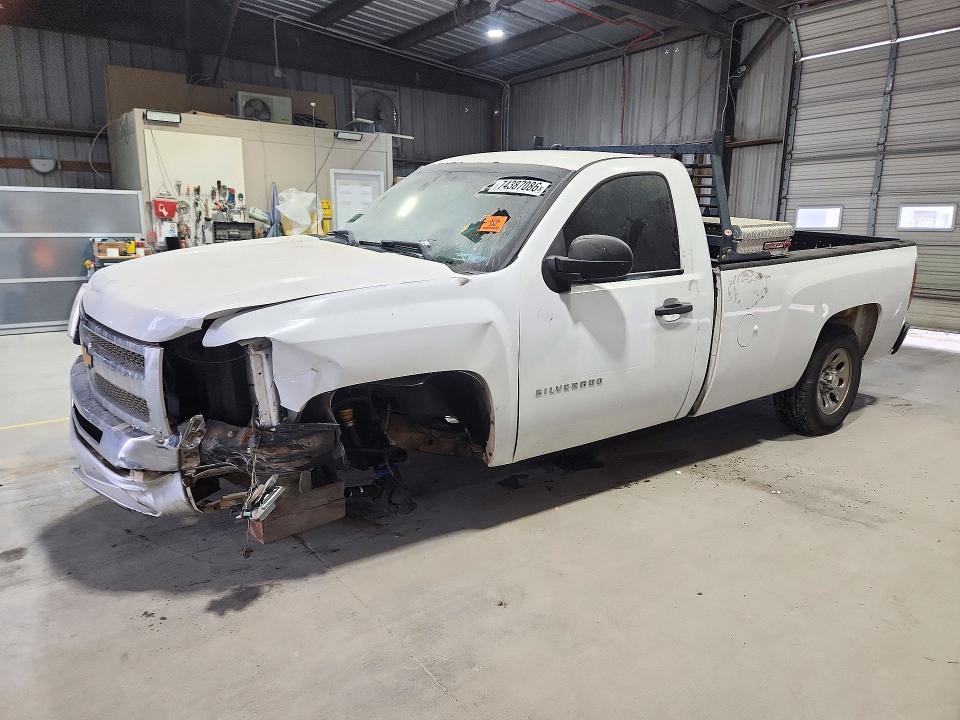
2013 Chevy Silverado Rollover at 218K: Salvage Title, $0 Bid, Zero Survivors
Rollover at 218K means every weld, every pillar, every frame rail absorbed that impact. You can't see where.
How is the Shame Score calculated?
The Shame Score (1–10) combines five signals: damage-type severity, title-condition risk, the gap between ACV (Actual Cash Value — the car's pre-damage market price) and AI max bid, listing red flags (run/drive status, secondary damage), and misleading-listing signals from AI photo analysis. A score of 8+ means the model found no financially defensible reason to bid. ACV is pulled from auction listing data; repair costs reference industry body-shop benchmarks. All figures are directional estimates, not binding quotes. Repair costs reference CCC Intelligent Solutions benchmarks and regional body-shop averages.
Would you bid?
Vehicle
2013 CHEVROLET SILVERADO
Title
salvage
Damage
ROLLOVER
State
Missouri
Mileage
over 200k
Runs/drives
—
Approx ACV
~$8,000
AI max bid
$0
ACV from auction listing data · Repair costs via CCC benchmarks + body-shop averages
In plain numbers: Someone is bidding ~$7,200+ on this vehicle. AI analysis says it's worth at most $0 as a project. That's a $8,000gap. Here's why.
Eight grand. For a full-size Chevy Silverado with a working key in hand and a V8 that — on paper — has no reason it couldn't haul something. The 5.3 in these trucks is a cockroach. People daily-drive them past 300K. The body is big, the bed is real, and at ACV (Actual Cash Value — what it was worth before the wreck) of $8,225, the number almost makes sense. Almost. You start doing the math in your head, the way everyone does at zero bids, and you think: what if the damage is cosmetic?
The damage is not cosmetic. Rollover damage is the category that ends conversations between experienced buyers. When a truck this size goes over — and at 218,000 miles, we don't know the speed, the surface, or how many times it rotated — the A-pillars compress, the B-pillars flex, the cab twists on the frame, and the roof folds. The listing shows you what it shows you. It does not show you the frame rails under load. It does not show you whether the cab sits square. It does not show you the firewall. Run/drive is listed as unknown, which at a rollover site means one of two things: either nobody tried, or somebody tried and stopped talking about it.
Frame straightening on a half-ton after a rollover runs $2,800 to $4,500 — and that's if the frame is salvageable, which a visual inspection at the lot cannot confirm. Roof replacement or repair on a Silverado crew cab: $1,800 to $3,200 in sheet metal alone, before paint. If the A-pillars need replacement, add $1,200 per side. Suspension geometry check and correction after a rollover: $600 to $900. Airbags — and in a rollover, at least the side curtains fired — run $800 to $1,500 per unit plus $1,000+ to reset the SRS (Supplemental Restraint System — the airbag computer that won't let the truck pass inspection until it's cleared). That's $8,200 to $11,300 in structural and safety repairs on a truck with an $8,225 ACV and a salvage title (legally declared a total loss by an insurance company) that will follow this VIN forever. You will not insure it for full value. You will not sell it easily. You will not forget you bought it.
Devin in Knoxville is going to see that zero bid and think he's found something everyone else missed. The truck has 218,699 miles, a bent cab, unknown running condition, and a title that closes doors at every dealership and every lender in the country. Nobody missed it. They read the damage category and kept scrolling.
“The truck survived 218,699 miles just to get its roof pushed in.”
What to watch for: ROLLOVER
- •Stand at the rear of the truck and sight down both frame rails toward the cab. They should run parallel and level. Any bow, twist, or vertical deviation means the frame took the rollover load and didn't give it back.
- •Open all four doors and check the gap between each door and its frame. Uneven gaps — wider at the top than the bottom, or mismatched side to side — mean the cab twisted on impact. A twisted cab cannot be made square without a frame machine and significant money.
- •Check the roofline from the front and rear with your eye at hood height. The roof should be flat across the width. Any ripple, crease, or low spot in the center means the pillars compressed. Compressed pillars on a salvage rollover are a structural failure, not cosmetic damage.
- •Look at the SRS warning light the moment the key hits the on position. If it stays on, the airbag system has not been reset. Resetting it requires a scan tool and replacement of every deployed unit — and in a rollover, assume the side curtains fired even if they're not visible in photos.
- •Get under the rear axle and look at the leaf spring perches and U-bolts. Rollovers frequently bend or crack the rear axle housing where it meets the springs — damage that causes handling pull and tire wear but doesn't prevent the truck from moving under its own power at the lot.
Tomorrow’s lot. Before the auction. Free.
One lot. AI verdict. Max bid. The numbers that matter — before you bid.
Not bidding? Same email — one lot, one roast, every morning. Join readers who watch so they never bid blind.
Not ready? Browse all entries →TL;DR — copy & share
2013 CHEVROLET SILVERADO / ROLLOVER / Missouri / ACV ~$8,000 Shame Score: 7.8/10 | AI Max Bid: $0 The truck survived 218,699 miles just to get its roof pushed in. vetmyride.com/hall-of-shame/2013-chevy-silverado-rollover-at-218k-salvage-title-bid-zero-survivors-74387086
Previous entry
2019 BUICK ENVISION · Shame 8.2
“29,731 miles and the roof already gave up before the warranty did.”
Lot identifying info (lot number, VIN, seller, exact sale date) scrubbed. AI commentary is opinion based on publicly listed damage + auction signals. Always inspect in person before bidding.
AI-generated opinion based on publicly listed auction data. Not a factual vehicle assessment. Actual vehicle condition may differ from listing description. All figures are directional estimates, not binding quotes. VetMyRide is not affiliated with, endorsed by, or sponsored by any auction platform. Not a substitute for professional inspection.