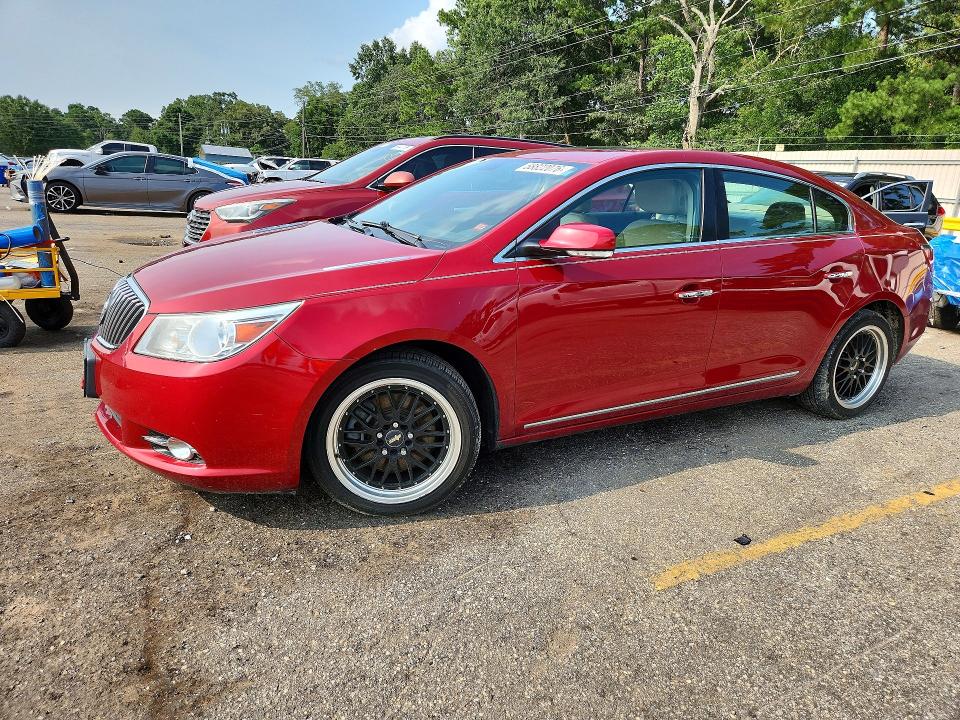
2013 Buick LaCrosse Touring: Flood Salvage at 99K Miles, Bid Is $0 for a Reason
Salvage title on a flood car means the insurer already did the math — and walked away. Now it's your turn.
How is the Shame Score calculated?
The Shame Score (1–10) combines five signals: damage-type severity, title-condition risk, the gap between ACV (Actual Cash Value — the car's pre-damage market price) and AI max bid, listing red flags (run/drive status, secondary damage), and misleading-listing signals from AI photo analysis. A score of 8+ means the model found no financially defensible reason to bid. ACV is pulled from auction listing data; repair costs reference industry body-shop benchmarks. All figures are directional estimates, not binding quotes. Repair costs reference CCC Intelligent Solutions benchmarks and regional body-shop averages.
Would you bid?
Vehicle
2013 BUICK LACROSSE
Title
salvage
Damage
WATER/FLOOD
State
Alabama
Mileage
50-100k
Runs/drives
—
Approx ACV
~$9,000
AI max bid
$0
ACV from auction listing data · Repair costs via CCC benchmarks + body-shop averages
In plain numbers: Someone is bidding ~$8,100+ on this vehicle. AI analysis says it's worth at most $0 as a project. That's a $9,000gap. Here's why.
The 2013 Buick LaCrosse Touring is the kind of car that made sense when it was new — a proper American near-luxury sedan with a 3.6L V6, real leather, heated and cooled seats, a panoramic sunroof, and enough chrome to signal you had arrived somewhere. At 99,698 miles it's got life left, theoretically. The ACV (Actual Cash Value — what it was worth before the water got in) sits at $8,625, and the current bid is zero. Zero. You could be the only bidder. You could drive this home for almost nothing. The math is right there, practically writing itself.
The listing says water/flood damage. It does not say how much water, how long it sat, or what the water was — because none of those answers help the seller. What it also doesn't say: whether the 3.6L direct-injection engine hydrolocked (seized when water entered the cylinders), whether the six-speed automatic transmission was submerged long enough to contaminate the fluid and warp the clutch packs, or whether the body control module — the computer that runs the windows, locks, climate system, and half the comfort features that made this car worth buying — is now a $1,400 paperweight. The listing says "run/drive: unknown." That's not a gap in knowledge. That's an answer.
Flood cars on a salvage title (legally declared a total loss by an insurance company) have a specific failure sequence, and the LaCrosse Touring accelerates it. More luxury features means more modules, more wiring harnesses, more sensors corroding behind door panels where no one looks until the car starts throwing codes eighteen months later. Mold remediation on a car with real fabric headliner and carpet padding over sound deadening: $1,800 minimum, often $3,000. Transmission service and inspection: $400, and that's if it passes. If it doesn't, a remanufactured unit runs $2,800 to $3,500 installed. Engine inspection for hydrolocking damage — bent connecting rods don't announce themselves until the motor grenades at highway speed — another $300 in labor before anyone touches a part. Wiring harness corrosion repair is billed by the hour at $120–$150, and flood cars have a way of generating forty of those hours over two years. Mold remediation $2,100 + transmission $3,200 + engine diagnostic and potential repair $2,500 + electrical chase $1,800 = $9,600 before you've replaced a single exterior part or addressed the salvage title's effect on registration, insurance, and resale.
The salvage title is the part that doesn't wash off. Insuring a flood salvage for anything beyond liability is expensive when it's possible at all. Selling it later means disclosing the title, which cuts your buyer pool to people who think the same math works in their favor. It didn't work for you. It won't work for them. Donna in Shreveport is going to bid $600 on this, feel like she outsmarted the room, and spend the next two years outsmarting herself out of $11,000.
“The previous owner got a check. You get the car they got a check for.”
What to watch for: WATER/FLOOD
- •Pull the carpet padding under the driver and passenger seats — not the carpet itself, the padding underneath. If it's damp, discolored, or smells like a basement, the car has been holding water in its floor for months and the corrosion on the floor pan is already advanced.
- •Find the body control module, usually behind the driver's kick panel or under the dash. Look for white or green powder on the connector pins. That's oxidation. On a LaCrosse, the BCM talks to every comfort system in the car — one corroded pin and you're chasing ghost codes for years.
- •Check the seat track bolts on the driver's seat. They're low, they're steel, and they sit in a pocket that holds water. Heavy rust on those bolts tells you exactly how high the water got and how long it sat.
- •Look at the sunroof drain tubes — there are four of them, running down the A and C pillars. Flood debris clogs them. If they're blocked, every rainstorm after you buy this car will drain directly into the cabin and restart the mold cycle you just paid $2,000 to end.
- •If the car will start, turn on the climate system and set it to recirculate. Smell the air coming from the vents. Mold in the evaporator box and ductwork survives cleaning attempts and gets worse in humidity. If it smells like a wet dog or a locker room, no amount of ozone treatment fixes it permanently.
Tomorrow’s lot. Before the auction. Free.
One lot. AI verdict. Max bid. The numbers that matter — before you bid.
Not bidding? Same email — one lot, one roast, every morning. Join readers who watch so they never bid blind.
Not ready? Browse all entries →TL;DR — copy & share
2013 BUICK LACROSSE / WATER/FLOOD / Alabama / ACV ~$9,000 Shame Score: 8.2/10 | AI Max Bid: $0 The previous owner got a check. You get the car they got a check for. vetmyride.com/hall-of-shame/2013-buick-lacrosse-touring-flood-salvage-at-bid-is-for-a-reason-58822076
Previous entry
2011 HYUNDAI SONATA · Shame 7.2
“'All over' is not a damage category. It's a confession.”
Lot identifying info (lot number, VIN, seller, exact sale date) scrubbed. AI commentary is opinion based on publicly listed damage + auction signals. Always inspect in person before bidding.
AI-generated opinion based on publicly listed auction data. Not a factual vehicle assessment. Actual vehicle condition may differ from listing description. All figures are directional estimates, not binding quotes. VetMyRide is not affiliated with, endorsed by, or sponsored by any auction platform. Not a substitute for professional inspection.