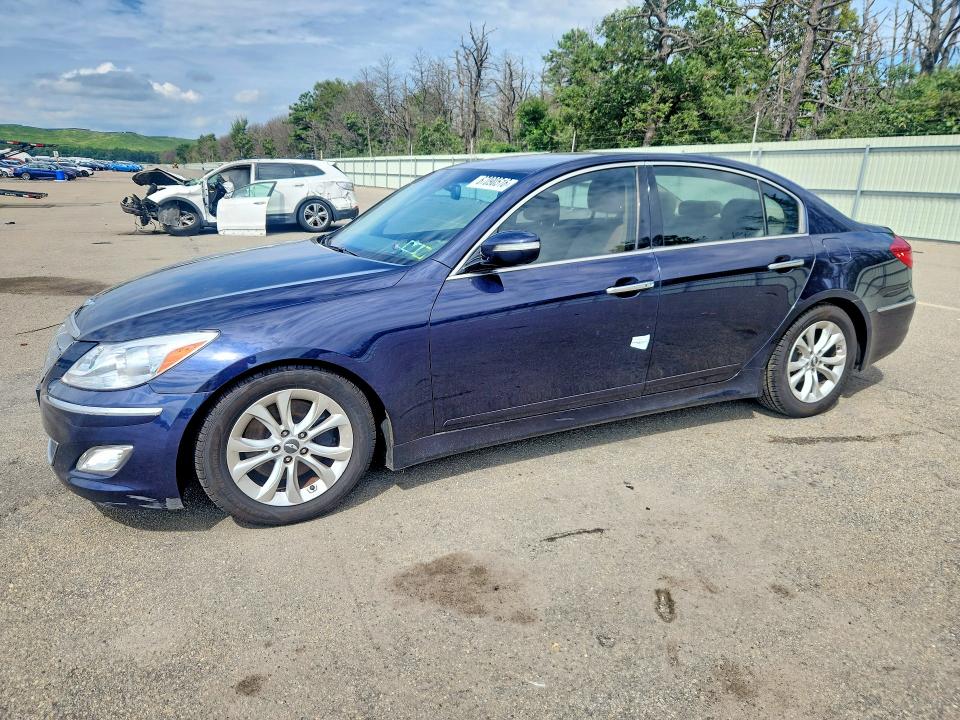
2012 Hyundai Genesis 3.8 Flood Salvage: $80 Bid, $6,825 ACV, Zero Mercy
Salvage flood Genesis: the ECU is corroded, the subframe is rusting, and you can't register it in 11 states.
How is the Shame Score calculated?
The Shame Score (1–10) combines five signals: damage-type severity, title-condition risk, the gap between ACV (Actual Cash Value — the car's pre-damage market price) and AI max bid, listing red flags (run/drive status, secondary damage), and misleading-listing signals from AI photo analysis. A score of 8+ means the model found no financially defensible reason to bid. ACV is pulled from auction listing data; repair costs reference industry body-shop benchmarks. All figures are directional estimates, not binding quotes. Repair costs reference CCC Intelligent Solutions benchmarks and regional body-shop averages.
Would you bid?
Vehicle
2012 HYUNDAI GENESIS
Title
salvage
Damage
WATER/FLOOD
State
New York
Mileage
50-100k
Runs/drives
—
Approx ACV
~$7,000
AI max bid
$0
ACV from auction listing data · Repair costs via CCC benchmarks + body-shop averages
In plain numbers: Someone is bidding ~$6,300+ on this vehicle. AI analysis says it's worth at most $0 as a project. That's a $7,000gap. Here's why.
Ninety-three thousand miles on a Genesis 3.8 and the thing still looks like a car. Rear-wheel drive, a 3.8-liter V6 that made 333 horsepower when it was new, and a cabin that was genuinely trying to be a poor man's BMW 5-series. The ACV (Actual Cash Value — what it was worth before the water got in) sits at $6,825, which means someone at Copart ran the numbers and decided this was a real car with real value. The bid is $80. Eighty dollars. For a moment — just a moment — you can see why a person's hand moves toward the keyboard.
The listing says water/flood damage and then goes quiet. No secondary damage listed. Run/drive status unknown. That silence is not reassuring — it is the sound of a seller who has decided not to know things. Flood damage on a 2012 Genesis means water found its way into a car packed with Hyundai's most ambitious electronics of that era — the multi-mode transmission controller, the adaptive suspension module, the climate system that runs through a separate CAN bus. These are not components that dry out. They corrode from the inside over six to eighteen months, failing in sequence, each one a surprise bill with no warning light because the warning light module is also wet.
Here is what buying this car actually costs: salvage-to-rebuilt title inspection fees vary by state but average $400-$800, and eleven states will not register a flood salvage at all — full stop. The 3.8's engine, if hydrolocked (water ingested while running, bending connecting rods), is a $3,500-$5,500 replacement. The 6-speed automatic transmission on this generation is a known weak point on a good day — flooded, figure $2,800-$3,800 to rebuild. Mold remediation on a flooded cabin runs $1,500-$2,500 if you catch it early, double that if you don't. Electrical diagnosis alone — just the labor to find what's dead — runs $800-$1,200 at a shop that knows Genesis electronics. That's $9,000-$13,900 before you've replaced a single rubber seal or touched the subframe, which is almost certainly showing early rust from the inside out where no inspector will see it on a quick walkaround.
Someone is going to win this auction for $400 after four other people talk themselves into it. They will drive it home on a transport, spend three weekends airing it out, replace the battery, and feel good for about six days. Then the transmission will shudder. Then the check engine light will come on for a code the parts store scanner can't read. Then they will call a Hyundai dealer and hear a number that makes them sit down. Sandra in Chattanooga is going to bid on this and refer to it as 'the project' until the day she lists it on Facebook Marketplace for $1,200 as 'needs work, ran when parked.'
“The most expensive $80 you will ever spend.”
What to watch for: WATER/FLOOD
- •Pull the driver's seat and press your palm flat into the carpet padding. If it's cold or damp — not just cool, but wet-cold — the car is still holding water in the floor foam. That foam never fully dries without extraction. It rots the floor pan from above while condensation rots it from below.
- •Find the OBD-II port under the dash and plug in a scanner before you do anything else. Flood cars accumulate dozens of stored fault codes across multiple modules. If the scanner can't communicate with the transmission control module or the ABS module, those units are corroded internally and replacement is the only fix.
- •Shine a flashlight into the seat belt pretensioner housings on both B-pillars. If you see a tide line — a faint horizontal stain marking the high-water level — you know exactly how deep the flood was. On a Genesis sedan, waterline above the door sills means the instrument cluster, HVAC blower, and both front-door window regulators were submerged.
- •Check the differential fluid on this RWD platform. Water infiltrates the rear diff through the breather tube during a flood. Pull the fill plug — if the fluid looks milky or gray instead of dark amber, the diff has water in it and the bearings are already starting to pit.
- •Look at the spare tire well in the trunk. Flood water pools there and sits longest because it's the lowest point and the most ignored. If there's silt, rust staining, or a watermark in the spare tire well, the water was deep enough to compromise the trunk wiring harness that runs along the rear quarter panels.
Tomorrow’s lot. Before the auction. Free.
One lot. AI verdict. Max bid. The numbers that matter — before you bid.
Not bidding? Same email — one lot, one roast, every morning. Join readers who watch so they never bid blind.
Not ready? Browse all entries →TL;DR — copy & share
2012 HYUNDAI GENESIS / WATER/FLOOD / New York / ACV ~$7,000 Shame Score: 7.8/10 | AI Max Bid: $0 The most expensive $80 you will ever spend. vetmyride.com/hall-of-shame/2012-hyundai-genesis-3-8-flood-salvage-bid-acv-zero-mercy-67090516
Previous entry
2010 FORD FOCUS · Shame 7.2
“The undercarriage is damaged but hey, the keys work.”
Lot identifying info (lot number, VIN, seller, exact sale date) scrubbed. AI commentary is opinion based on publicly listed damage + auction signals. Always inspect in person before bidding.
AI-generated opinion based on publicly listed auction data. Not a factual vehicle assessment. Actual vehicle condition may differ from listing description. All figures are directional estimates, not binding quotes. VetMyRide is not affiliated with, endorsed by, or sponsored by any auction platform. Not a substitute for professional inspection.