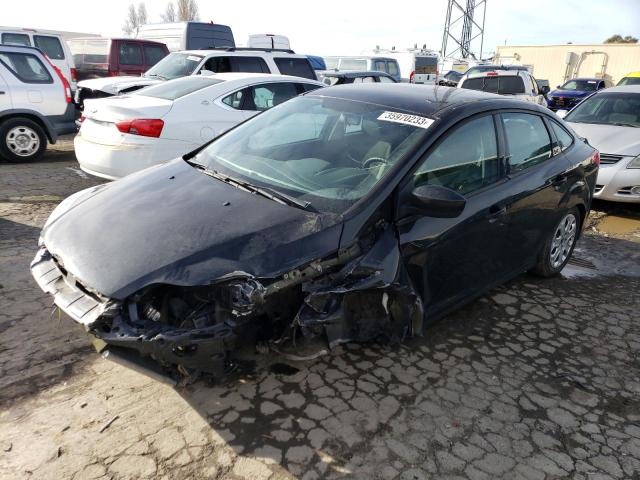
2012 Ford Focus SE Salvage: Front End Wreck at 23K Miles
Salvage Focus with unknown run/drive means you're bidding on a parts car priced like a commuter.
How is the Shame Score calculated?
The Shame Score (1–10) combines five signals: damage-type severity, title-condition risk, the gap between ACV (Actual Cash Value — the car's pre-damage market price) and AI max bid, listing red flags (run/drive status, secondary damage), and misleading-listing signals from AI photo analysis. A score of 8+ means the model found no financially defensible reason to bid. ACV is pulled from auction listing data; repair costs reference industry body-shop benchmarks. All figures are directional estimates, not binding quotes. Repair costs reference CCC Intelligent Solutions benchmarks and regional body-shop averages.
Would you bid?
Vehicle
2012 FORD FOCUS
Title
salvage
Damage
FRONT END
State
California
Mileage
under 25k
Runs/drives
—
Approx ACV
~$13,000
AI max bid
$0
ACV from auction listing data · Repair costs via CCC benchmarks + body-shop averages
In plain numbers: Someone is bidding ~$11,700+ on this vehicle. AI analysis says it's worth at most $0 as a project. That's a $13,000gap. Here's why.
A 2012 Ford Focus SE with 23,705 miles. Stop. Read that again. Twenty-three thousand miles. That's barely broken in. The interior probably still smells like the original floor mats. At zero dollars bid with an ACV (Actual Cash Value — what the car was worth before the wreck) of $12,775, your brain starts doing the math it wants to do: low miles, low bid, decent bones. You start thinking about your commute. You start thinking about your nephew who needs a first car.
The listing says front end damage. It does not say the airbags deployed. It does not say run/drive condition. That silence is not an oversight — that silence is a confession. A car with front end damage that runs fine gets marked 'runs and drives.' Sellers know this. The 'unknown' tag on a low-mileage car means someone looked at it and decided not to answer the question. On a Ford Focus with front end impact, that question is whether the radiator support is folded, whether the subframe took the hit, and whether the transmission — a dry-clutch PowerShift dual-clutch (DCT) unit that Ford was actively being sued over in 2012 — absorbed any of that force.
The PowerShift transmission in this generation Focus is not a footnote. It is the story. Ford settled a class-action over it. The symptoms — shuddering, hesitation, slipping — appear in units with no accident history at all. Add front end trauma to a transmission already known for structural sensitivity and you have a repair bill that builds itself: front end collision repair $3,800-$5,200 depending on subframe involvement, airbag replacement if deployed $1,500-$2,800 per bag plus $800-$1,200 for the module, PowerShift transmission rebuild or replacement $2,500-$4,000, and a salvage title (legally declared a total loss by an insurance company) that cuts resale value by 30-50% permanently. That's $8,600 to $13,200 in repairs on a car whose ACV was $12,775 clean. You are not buying a car. You are buying a math problem with wheels.
Someone is going to bid on this because the mileage number is intoxicating and the current bid is zero. Priya in Columbus is going to win it for $1,400, spend $6,000 fixing the front end, discover the transmission shudder at 40 mph, and spend the next four months on Ford Focus forums learning vocabulary she never wanted to know. The salvage title means no standard financing, reduced insurance options, and a trade-in value that makes dealers laugh. Pass.
“23K miles and it already has a salvage title — the previous owner really committed.”
What to watch for: FRONT END
- •Pull the hood and look at the radiator support — it's the rectangular metal frame the radiator bolts to. If it's creased, bent, or shows fresh weld marks, the front end took a real hit and you're looking at frame work, not just bolt-on parts.
- •Get under the car and look at the front subframe — it's the large crossmember under the engine. Any cracking, bending, or misalignment means the repair bill just doubled. A bent subframe on a Focus is a $2,000-$4,000 fix before you touch anything else.
- •Sit in the driver's seat and check the steering wheel for centering with the wheels pointed straight. An off-center wheel means the steering rack or tie rods absorbed impact and were never properly aligned — or can't be.
- •Check both front wheel wells for paint overspray on the plastic liners. Fresh overspray on old plastic means bodywork was done and someone tried to hide how far back the damage went.
- •If you can get it running, put it in drive and feel for shuddering between 15-25 mph. That is the PowerShift transmission doing what it was already famous for before this car ever got hit. Any shudder means add $2,500-$4,000 to your mental repair budget immediately.
Tomorrow’s lot. Before the auction. Free.
One lot. AI verdict. Max bid. The numbers that matter — before you bid.
Not bidding? Same email — one lot, one roast, every morning. Join readers who watch so they never bid blind.
Not ready? Browse all entries →TL;DR — copy & share
2012 FORD FOCUS / FRONT END / California / ACV ~$13,000 Shame Score: 7.8/10 | AI Max Bid: $0 23K miles and it already has a salvage title — the previous owner really committed. vetmyride.com/hall-of-shame/2012-ford-focus-se-salvage-front-end-wreck-at
Previous entry
2015 VOLKSWAGEN GOLF · Shame 9.2
“The damage location field just said 'yes.'”
Lot identifying info (lot number, VIN, seller, exact sale date) scrubbed. AI commentary is opinion based on publicly listed damage + auction signals. Always inspect in person before bidding.
AI-generated opinion based on publicly listed auction data. Not a factual vehicle assessment. Actual vehicle condition may differ from listing description. All figures are directional estimates, not binding quotes. VetMyRide is not affiliated with, endorsed by, or sponsored by any auction platform. Not a substitute for professional inspection.