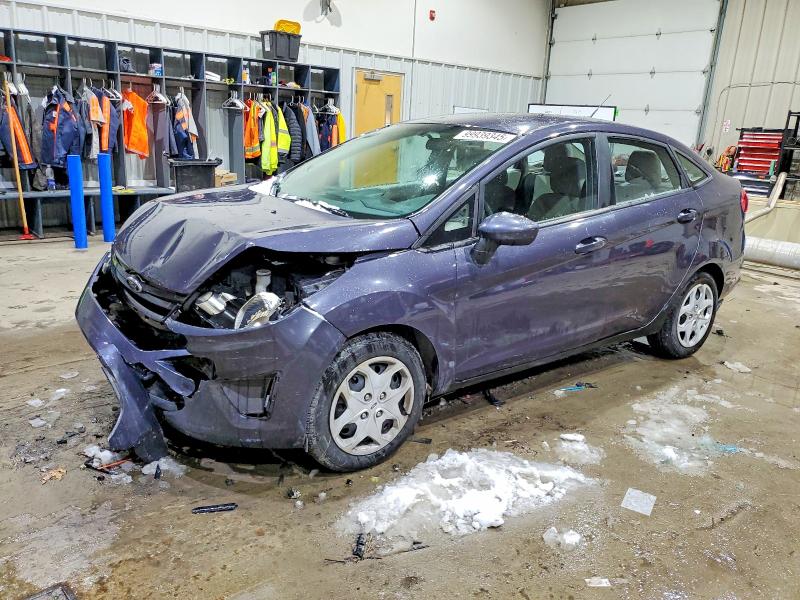
2012 Ford Fiesta S Salvage: $100 Bid, $4K ACV, Zero Upside
You can't register a salvage Fiesta in 11 states. The ones that let you will want an inspection it won't pass.
How is the Shame Score calculated?
The Shame Score (1–10) combines five signals: damage-type severity, title-condition risk, the gap between ACV (Actual Cash Value — the car's pre-damage market price) and AI max bid, listing red flags (run/drive status, secondary damage), and misleading-listing signals from AI photo analysis. A score of 8+ means the model found no financially defensible reason to bid. ACV is pulled from auction listing data; repair costs reference industry body-shop benchmarks. All figures are directional estimates, not binding quotes. Repair costs reference CCC Intelligent Solutions benchmarks and regional body-shop averages.
Would you bid?
Vehicle
2012 FORD FIESTA
Title
salvage
Damage
FRONT END
State
New Hampshire
Mileage
100-150k
Runs/drives
Yes
Approx ACV
~$4,000
AI max bid
$0
ACV from auction listing data · Repair costs via CCC benchmarks + body-shop averages
In plain numbers: Someone is bidding ~$3,600+ on this vehicle. AI analysis says it's worth at most $0 as a project. That's a $4,000gap. Here's why.
A hundred dollars. You read that right. A running, driving 2012 Ford Fiesta with a key in hand, and someone has bid exactly one hundred dollars on it. The ACV (Actual Cash Value — what it was worth before the wreck) sits at $4,025, which means even Copart thinks there's a car here. It drives. It has a key. The mileage is high but not catastrophic for a Fiesta. You start doing the math in your head and the math almost works.
Then you look at what the listing doesn't say. There's no secondary damage listed, which sounds like good news until you remember that front-end hits on a subcompact don't stop at the bumper cover. The Fiesta's engine sits close to the nose. The radiator support, the transmission mount, the steering rack — all of it lives in the same zip code as whatever hit this car. The listing tells you it runs and drives. It does not tell you for how long, or in a straight line, or without the temperature gauge climbing.
Here's where the math stops working. A salvage title (legally declared a total loss by an insurance company) on a $4,025 car means the rebuild cost will exceed what you recover. Airbag replacement on a Fiesta — if they deployed — runs $1,800 to $2,400 just for the bags, before you touch the clock spring, the seatbelt pretensioners, or the module. Front-end structural repair starts at $1,200 and climbs fast if the radiator support is kinked. Alignment after a front-end hit: $150, assuming the subframe isn't tweaked, which you won't know until it's on the rack. Salvage title inspection fees, re-titling, and the insurance premium markup you'll eat for the life of the car add another layer the bid price never accounts for. Airbags $2,100 + structural $1,500 + alignment $150 + title and inspection $400 = $4,150 before you've replaced the bumper or found out what the coolant is doing.
The bid is $100. The car will sell for more than that, and every dollar above $100 is a dollar chasing a salvage title on a 138,000-mile economy car that someone else's insurance company already wrote off. Destiny in Riverside is going to win this auction for $375, spend $4,800 getting it roadworthy, and discover that no insurer in her state will write a full-coverage policy on it. The Fiesta will sit in a driveway depreciating. The $100 bid was the only honest price this car ever had.
“The airbags cost more than the car.”
What to watch for: FRONT END
- •Stand in front of the car and sight down both front fenders toward the windshield. If one side sits higher or the gap between the hood and fender is uneven, the radiator support is bent — and bent supports don't straighten cheaply on a unibody car.
- •Open the hood and look at the front frame rails — the rectangular metal channels running front to back on each side of the engine. Wrinkles, kinks, or fresh undercoating over bare metal mean the hit went structural. A cosmetic front-end fix doesn't touch those rails. A structural hit always does.
- •Check both front door gaps with the doors closed. If the driver's door gap is wider at the top than the bottom, or won't latch without lifting, the unibody is twisted. A twisted unibody on a Fiesta is a total loss disguised as a fender bender.
- •Ask for the CCC or Mitchell repair estimate from the insurance total-loss file. Copart sellers sometimes have it. That document will tell you exactly what the adjuster found, line by line, before they cut the check and handed you this problem.
Tomorrow’s lot. Before the auction. Free.
One lot. AI verdict. Max bid. The numbers that matter — before you bid.
Not bidding? Same email — one lot, one roast, every morning. Join readers who watch so they never bid blind.
Not ready? Browse all entries →TL;DR — copy & share
2012 FORD FIESTA / FRONT END / New Hampshire / ACV ~$4,000 Shame Score: 6.5/10 | AI Max Bid: $0 The airbags cost more than the car. vetmyride.com/hall-of-shame/2012-ford-fiesta-s-salvage-bid-k-acv-zero-upside
Previous entry
2017 JEEP WRANGLER · Shame 9.2
“No title. No key. No roof. Technically still has four wheels, so that's something.”
Lot identifying info (lot number, VIN, seller, exact sale date) scrubbed. AI commentary is opinion based on publicly listed damage + auction signals. Always inspect in person before bidding.
AI-generated opinion based on publicly listed auction data. Not a factual vehicle assessment. Actual vehicle condition may differ from listing description. All figures are directional estimates, not binding quotes. VetMyRide is not affiliated with, endorsed by, or sponsored by any auction platform. Not a substitute for professional inspection.