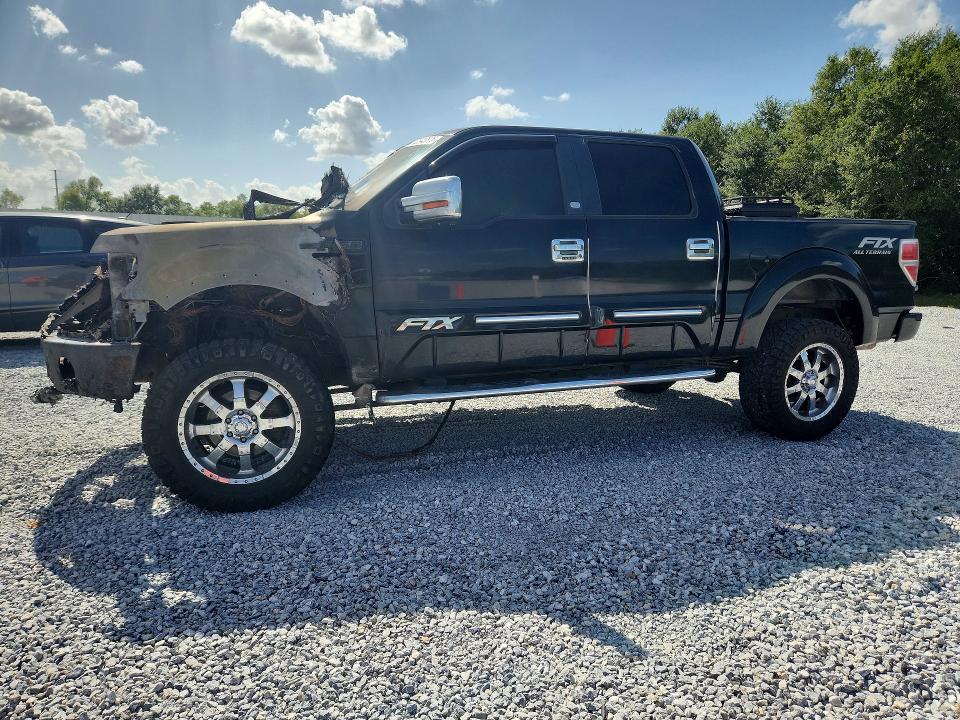
2010 Ford F-150 SuperCrew: Burn Damage, Salvage Title, $125 Bid
Salvage title on a burned truck means the harness is cooked — and you won't know which wire until something stops working at 65mph.
How is the Shame Score calculated?
The Shame Score (1–10) combines five signals: damage-type severity, title-condition risk, the gap between ACV (Actual Cash Value — the car's pre-damage market price) and AI max bid, listing red flags (run/drive status, secondary damage), and misleading-listing signals from AI photo analysis. A score of 8+ means the model found no financially defensible reason to bid. ACV is pulled from auction listing data; repair costs reference industry body-shop benchmarks. All figures are directional estimates, not binding quotes. Repair costs reference CCC Intelligent Solutions benchmarks and regional body-shop averages.
Would you bid?
Vehicle
2010 FORD F-150
Title
salvage
Damage
BURN
State
Louisiana
Mileage
—
Runs/drives
—
Approx ACV
~$9,000
AI max bid
$0
ACV from auction listing data · Repair costs via CCC benchmarks + body-shop averages
In plain numbers: Someone is bidding ~$8,100+ on this vehicle. AI analysis says it's worth at most $0 as a project. That's a $9,000gap. Here's why.
A 2010 F-150 SuperCrew with a 5.4L under the hood is genuinely one of the more capable trucks to come out of that era — tows well, seats five, parts are everywhere, and the platform has a cult following for a reason. The current bid is $125. One hundred and twenty-five dollars. For a crew cab Ford with keys in hand. The ACV (Actual Cash Value — what it was worth before the damage) sits at $9,225, which means someone's spreadsheet is already doing math that ends with 'profit.'
The primary damage is listed as BURN. No secondary damage declared, mileage unknown, run/drive unknown. That last part is where the floor disappears. A burned truck doesn't just have scorched paint and a melted dashboard — fire follows wiring. The entire harness in a 2010 F-150 runs through the firewall, under the cab, into the frame rails. Heat doesn't announce which circuits it destroyed. It just waits. You'll find out when the fuel pump relay fails on the highway, or when the ABS module throws a code that traces back to a connector that looks fine until you flex it.
Fire restoration on a truck this size is a parts-and-labor nightmare. Interior gutting and replacement runs $3,500–$6,000 depending on how far the fire traveled. Wiring harness replacement — if the main cab harness is compromised — is $2,800 to $4,500 in parts alone, plus 20+ hours of labor at $120/hr. If the fire originated in the engine bay, add a fuel system inspection, intake cleaning, and sensor replacement: another $1,200–$2,000. Frame inspection for heat warping adds a shop visit you can't skip. Call it $8,000–$13,000 in realistic repairs on a truck with a salvage title (legally declared a total loss) that will never carry a clean title again, insure at a fraction of ACV, and sell to exactly nobody when you're done.
Someone is going to win this at $875 after a bidding war and feel like a genius. They will not feel like a genius in month three when the BCM (Body Control Module) starts randomly locking the doors and the shop tells them the replacement module needs programming that requires a donor harness that also needs to be sourced. Darius in Memphis is going to bid on this and tell everyone at the shop it was a steal right up until the moment it isn't.
“The only thing this F-150 is hauling now is bad news.”
What to watch for: BURN
- •Look at the firewall from inside the cab. If the insulation is bubbled, brown, or missing in patches, the fire reached the main wiring trunk. That's a harness replacement, not a repair.
- •Pull every fuse from both fuse boxes and look at the plastic housing around each slot. Melted or discolored plastic means the box itself carried heat — the entire block needs replacement, not just the fuses.
- •Check the frame rails under the cab with a flashlight. Heat-warped steel loses its temper and won't show cracks until load stress finds them. Run your hand along the rail and feel for rippling or scale that doesn't match the opposite side.
- •Open every door and look at the wiring looms in the door jambs. Fire doesn't usually reach them, but if the cab burned hot enough, the insulation on those wires will be stiff and cracked — flex one and watch for flaking. Cracked insulation means shorts on a timer.
- •If the engine bay burned, pull the oil cap and look for a gray, chalky residue on the underside. Fire suppression foam or water used to kill the fire can enter the intake and contaminate the oil. Gray paste means the engine ingested something it shouldn't have.
Tomorrow’s lot. Before the auction. Free.
One lot. AI verdict. Max bid. The numbers that matter — before you bid.
Not bidding? Same email — one lot, one roast, every morning. Join readers who watch so they never bid blind.
Not ready? Browse all entries →TL;DR — copy & share
2010 FORD F-150 / BURN / Louisiana / ACV ~$9,000 Shame Score: 8.2/10 | AI Max Bid: $0 The only thing this F-150 is hauling now is bad news. vetmyride.com/hall-of-shame/2010-ford-f-150-supercrew-burn-damage-salvage-title-bid-62943526
Previous entry
2016 GMC SIERRA · Shame 8.2
“185,000 miles and a swim meet — pick one, this truck picked both.”
Lot identifying info (lot number, VIN, seller, exact sale date) scrubbed. AI commentary is opinion based on publicly listed damage + auction signals. Always inspect in person before bidding.
AI-generated opinion based on publicly listed auction data. Not a factual vehicle assessment. Actual vehicle condition may differ from listing description. All figures are directional estimates, not binding quotes. VetMyRide is not affiliated with, endorsed by, or sponsored by any auction platform. Not a substitute for professional inspection.