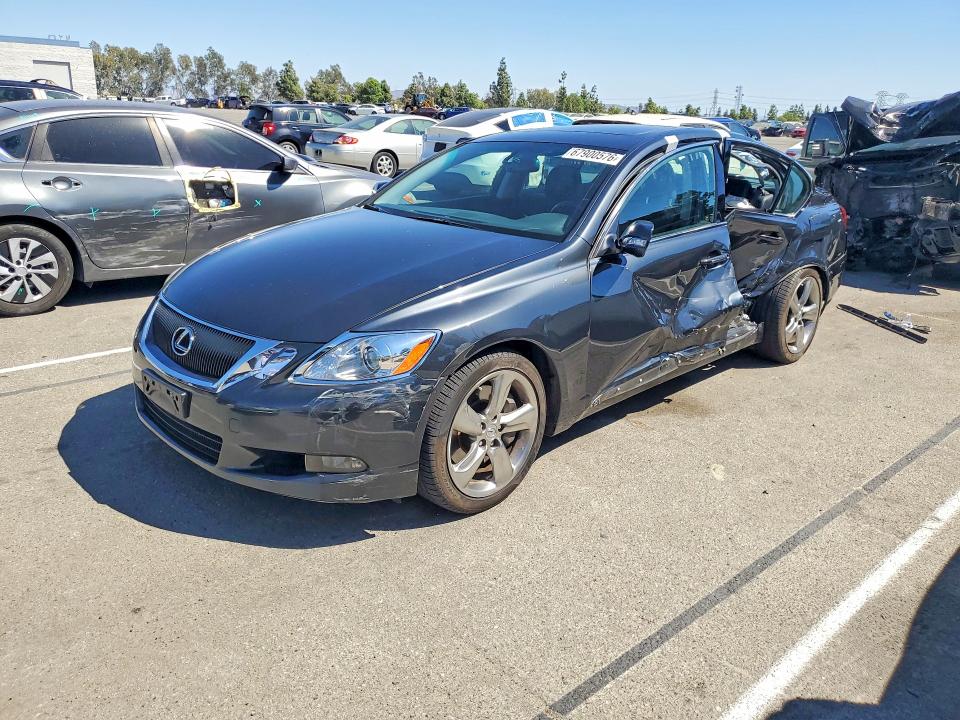
2009 Lexus GS350 Salvage: 'All Over' Damage at 35K Miles
When the damage field just says 'All Over,' the auction is telling you it ran out of checkboxes.
How is the Shame Score calculated?
The Shame Score (1–10) combines five signals: damage-type severity, title-condition risk, the gap between ACV (Actual Cash Value — the car's pre-damage market price) and AI max bid, listing red flags (run/drive status, secondary damage), and misleading-listing signals from AI photo analysis. A score of 8+ means the model found no financially defensible reason to bid. ACV is pulled from auction listing data; repair costs reference industry body-shop benchmarks. All figures are directional estimates, not binding quotes. Repair costs reference CCC Intelligent Solutions benchmarks and regional body-shop averages.
Would you bid?
Vehicle
2009 LEXUS GS350
Title
salvage
Damage
ALL OVER
State
California
Mileage
25-50k
Runs/drives
Yes
Approx ACV
~$7,000
AI max bid
$0
ACV from auction listing data · Repair costs via CCC benchmarks + body-shop averages
In plain numbers: Someone is bidding ~$6,300+ on this vehicle. AI analysis says it's worth at most $0 as a project. That's a $7,000gap. Here's why.
A 2009 GS350 with 35,636 miles is the kind of car that makes you stop scrolling. Lexus's rear-wheel-drive sport sedan, the one with the 303-horsepower 3.5-liter V6 that still pulls hard, the one with the Mark Levinson stereo and the adaptive suspension and the interior that made Germans nervous. Fifteen years old and barely broken in. The bid is sitting at zero. You're doing the math. You're already thinking about it.
The damage field says 'All Over.' Not front end. Not rear. Not side impact. All over. Copart uses specific damage categories for a reason — they have checkboxes for front, rear, both, rollover, flood, fire, mechanical. When a car clears all of those and they still type 'All Over,' something happened to this vehicle that didn't fit neatly into a category. A rollover that also hit something. A fire that followed a wreck. A flood that came after. The listing doesn't say. The salvage title (legally declared a total loss by the insurer) doesn't say either. That silence is the whole story.
The ACV (Actual Cash Value — what the car was worth before whatever happened to it) is $7,275. That number already has the salvage penalty baked in. A clean GS350 with this mileage trades between $12,000 and $15,000. So the insurer looked at this car, looked at the damage, and decided paying out was cheaper than fixing it. Whatever 'All Over' means in practice — and it means something specific and expensive — it was enough to total a car that should have 100,000 miles of life left. Frame straightening alone runs $3,500 to $6,000 if it's one section. Multiply that by 'All Over.' Add airbags at $800 to $1,500 per corner, and a GS350 of this vintage had them everywhere — side curtains, seat-mounted, knee bolsters. Add suspension geometry that won't align until bent subframe components are replaced. Add the electrical gremlins that follow any significant body damage on a car this computerized. You are not buying a project. You are buying a puzzle where several of the pieces are legally compromised and the rest are bent.
Someone is going to bid on this because the mileage is real and the price feels impossible to ignore. They will win it for $3,800, feel like a genius, and spend the next four months discovering what 'All Over' means one repair invoice at a time. The salvage title means most lenders won't finance it, most states will require a rebuilt inspection before it can be registered, and most buyers will walk when it comes time to sell. Janelle in Chattanooga is going to bid on this and then find out her insurance company won't write a comprehensive policy on a rebuilt GS350 with unknown structural history.
“35K miles and it's already been declared a total loss in every direction.”
What to watch for: ALL OVER
- •Pull up every corner of the carpet and floor mats and press the padding hard with your palm. 'All Over' damage on a car this age often means a rollover, and rollovers funnel water, glass, and debris into every seam. Wet padding six months later means the car is rotting underneath the surface you can see.
- •Bring a tape measure and check the door gaps on all four doors against each other. Uneven gaps — anything more than 2-3mm variation side to side — mean the body shell has been racked. A racked shell on a unibody car like the GS350 cannot be fully corrected, only approximated.
- •Get under the car and look at the pinch welds (the seam that runs along the bottom edge of the body where the floor meets the rocker panels). Crumpled, folded, or previously straightened pinch welds mean frame damage was severe enough to require a lift and pull. On a GS350, that repair starts at $4,500 and the geometry is never quite right again.
- •Check every airbag location: steering wheel, both front seats (side-mounted), both A-pillars (curtain airbags), both B-pillars, and the knee bolster under the dash. Deployed bags are sometimes concealed with replacement covers that look factory. Press the steering wheel center — it should feel solid and slightly resistant, not hollow or loose.
- •Request the CCC or Mitchell repair estimate from the insurer if you can get it through the title history. The total-loss threshold in most states is 75-80% of ACV. If ACV was $7,275, the insurer's repair estimate was at minimum $5,450. On a car with 'All Over' damage, that number is almost certainly higher and the estimate conservative.
Tomorrow’s lot. Before the auction. Free.
One lot. AI verdict. Max bid. The numbers that matter — before you bid.
Not bidding? Same email — one lot, one roast, every morning. Join readers who watch so they never bid blind.
Not ready? Browse all entries →TL;DR — copy & share
2009 LEXUS GS350 / ALL OVER / California / ACV ~$7,000 Shame Score: 9.2/10 | AI Max Bid: $0 35K miles and it's already been declared a total loss in every direction. vetmyride.com/hall-of-shame/2009-lexus-gs350-salvage-all-over-damage-at-67900576
Previous entry
2016 ARCTIC CAT UNKNOWN · Shame 7.2
“The vandal knew more about this ATV's condition than the listing does.”
Lot identifying info (lot number, VIN, seller, exact sale date) scrubbed. AI commentary is opinion based on publicly listed damage + auction signals. Always inspect in person before bidding.
AI-generated opinion based on publicly listed auction data. Not a factual vehicle assessment. Actual vehicle condition may differ from listing description. All figures are directional estimates, not binding quotes. VetMyRide is not affiliated with, endorsed by, or sponsored by any auction platform. Not a substitute for professional inspection.