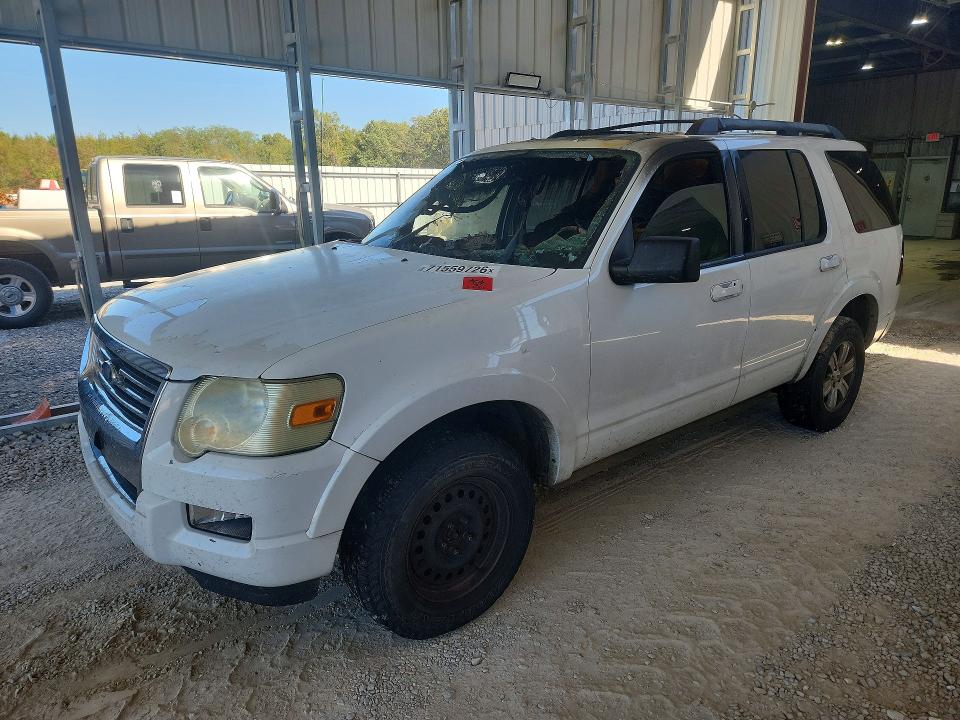
2009 Ford Explorer XLT: Interior Burn, Salvage Title, $3,150 ACV — Walk Away
You can't register a salvage title in 11 states. In the rest, good luck getting insurance on a car that burned from the inside.
How is the Shame Score calculated?
The Shame Score (1–10) combines five signals: damage-type severity, title-condition risk, the gap between ACV (Actual Cash Value — the car's pre-damage market price) and AI max bid, listing red flags (run/drive status, secondary damage), and misleading-listing signals from AI photo analysis. A score of 8+ means the model found no financially defensible reason to bid. ACV is pulled from auction listing data; repair costs reference industry body-shop benchmarks. All figures are directional estimates, not binding quotes. Repair costs reference CCC Intelligent Solutions benchmarks and regional body-shop averages.
Would you bid?
Vehicle
2009 FORD EXPLORER
Title
salvage
Damage
BURN - INTERIOR
State
Missouri
Mileage
—
Runs/drives
—
Approx ACV
~$3,000
AI max bid
$0
ACV from auction listing data · Repair costs via CCC benchmarks + body-shop averages
In plain numbers: Someone is bidding ~$2,700+ on this vehicle. AI analysis says it's worth at most $0 as a project. That's a $3,000gap. Here's why.
A 2009 Explorer XLT is actually a decent pull on paper — V6 or V8, third row, four-wheel drive, the kind of truck that was built to haul a soccer team and a cooler for another decade easy. Copart's ACV (Actual Cash Value — what it was worth before the fire) sits at $3,150, which sounds like the kind of number that makes a person lean forward at the screen. No current bids. No buy-now. Zero competition. The listing practically whispers that you found something everyone else missed.
The mileage is unknown. The run/drive condition is unknown. Whether it has a key is unknown. Those three unknowns would be enough to pass on a car with a clean title and a fender dent. This one has a salvage title (legally declared a total loss by an insurance company) and a primary damage code of burn — interior. The listing doesn't say where. Doesn't say how bad. Doesn't say whether the fire reached the dash, the wiring harness, the headliner, the floor, or all of it. That silence is not an accident.
Fire damage in a vehicle interior is not cosmetic. Smoke penetrates every cavity — the HVAC system, the ductwork behind the dash, the insulation under the carpet. Replacing a burned interior on a body-on-frame SUV means pulling the dash, the seats, the headliner, the carpet, the door panels, and every piece of trim, then inspecting every wire in the harness for heat damage. A wiring harness replacement on an Explorer runs $1,800 to $3,500 in parts alone, before labor. Full interior restoration on a burned truck: $4,000 to $9,000 depending on how deep the fire went. If it reached the under-dash wiring — and in an interior burn, it usually does — you're chasing electrical gremlins for as long as you own it. Add $800 to $1,500 for a salvage title inspection and re-registration in the states that even allow it. $1,800 wiring + $6,000 interior + $1,200 title work = $9,000 minimum on a truck with a $3,150 ACV.
Someone in that Explorer lit something they shouldn't have, or something lit itself. Either way, the insurance company did the math and wrote it off. The ACV is $3,150 because that's what the truck is worth as scrap with a story. There is no version of this where you come out ahead. Donna in Pensacola is going to bid $400 thinking she's stealing it and spend the next two years trying to get the smoke smell out of the vents.
“The new-car smell is gone. So is everything else.”
What to watch for: BURN - INTERIOR
- •Shine a flashlight behind the glove box and under the dash on the passenger side — if the wire insulation is bubbled, cracked, or has turned from white to brown, the harness is compromised and the electrical system is a liability.
- •Pull back the carpet at the base of the B-pillar on both sides. Fire suppression (water, foam, or extinguisher chemical) soaks into the floor pad and stays there. If it's damp or crystallized with white residue, the floor is rotting and the metal underneath may already be corroding.
- •Turn on the HVAC blower at full speed with the windows up and wait 60 seconds. Smoke odor in the duct system means the evaporator box and all ductwork needs to be pulled and replaced — that's a full dash-out job on an Explorer, typically 8 to 12 hours of labor.
- •Check the fuse box under the hood and the secondary fuse block under the dash for heat discoloration or melted plastic. Melted fuse block = the fire had enough heat to affect primary electrical components, not just upholstery.
Tomorrow’s lot. Before the auction. Free.
One lot. AI verdict. Max bid. The numbers that matter — before you bid.
Not bidding? Same email — one lot, one roast, every morning. Join readers who watch so they never bid blind.
Not ready? Browse all entries →TL;DR — copy & share
2009 FORD EXPLORER / BURN - INTERIOR / Missouri / ACV ~$3,000 Shame Score: 8.2/10 | AI Max Bid: $0 The new-car smell is gone. So is everything else. vetmyride.com/hall-of-shame/2009-ford-explorer-xlt-interior-burn-salvage-title-acv-walk-away-71559726
Previous entry
2015 DODGE CARAVAN · Shame 7.2
“232,000 miles and it still found a new way to die.”
Lot identifying info (lot number, VIN, seller, exact sale date) scrubbed. AI commentary is opinion based on publicly listed damage + auction signals. Always inspect in person before bidding.
AI-generated opinion based on publicly listed auction data. Not a factual vehicle assessment. Actual vehicle condition may differ from listing description. All figures are directional estimates, not binding quotes. VetMyRide is not affiliated with, endorsed by, or sponsored by any auction platform. Not a substitute for professional inspection.