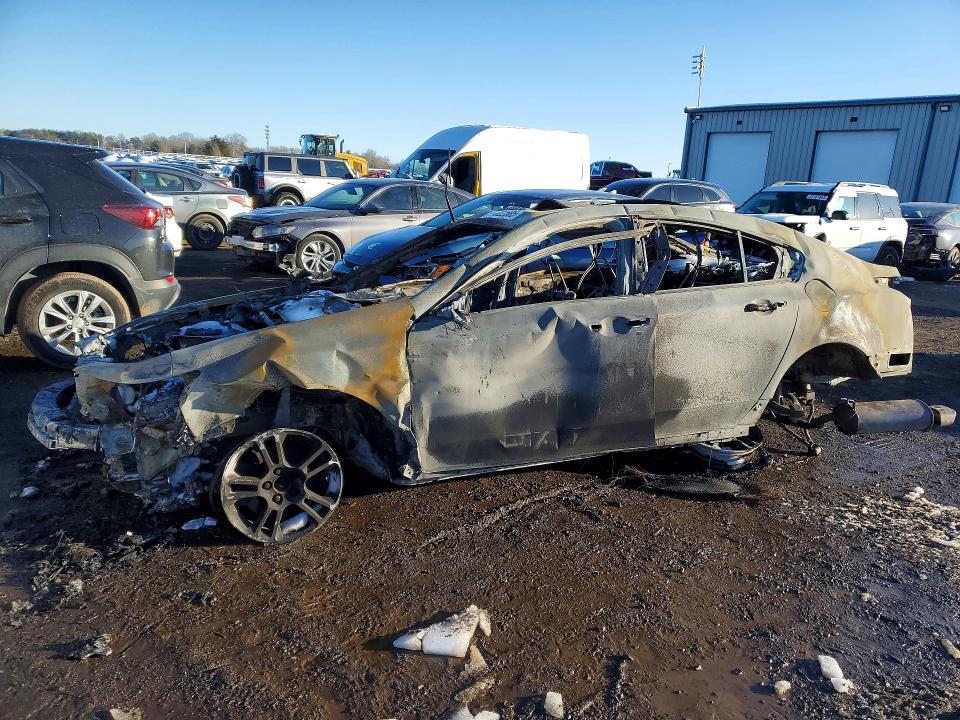
2009 Acura TL Salvage Fire Damage: $200 Bid, $5,900 ACV, Zero Answers
Fire damage on a salvage TL with no keys, no mileage, no run/drive — you can't register ash.
How is the Shame Score calculated?
The Shame Score (1–10) combines five signals: damage-type severity, title-condition risk, the gap between ACV (Actual Cash Value — the car's pre-damage market price) and AI max bid, listing red flags (run/drive status, secondary damage), and misleading-listing signals from AI photo analysis. A score of 8+ means the model found no financially defensible reason to bid. ACV is pulled from auction listing data; repair costs reference industry body-shop benchmarks. All figures are directional estimates, not binding quotes. Repair costs reference CCC Intelligent Solutions benchmarks and regional body-shop averages.
Would you bid?
Vehicle
2009 ACURA TL
Title
salvage
Damage
BURN
State
Maryland
Mileage
—
Runs/drives
—
Approx ACV
~$6,000
AI max bid
$0
ACV from auction listing data · Repair costs via CCC benchmarks + body-shop averages
In plain numbers: Someone is bidding ~$5,400+ on this vehicle. AI analysis says it's worth at most $0 as a project. That's a $6,000gap. Here's why.
The 2009 Acura TL was a genuinely good car. 3.5-liter V6, 280 horsepower, tech package with navigation, heated seats, a name that held value. At $5,900 ACV (Actual Cash Value — what it was worth before the fire), you're looking at a late-2000s near-luxury sport sedan that people still search for. And the bid is $200. Two hundred dollars. For a moment, in the worst part of your brain, the math feels like it works.
Then you look at what the listing doesn't say. No mileage. No keys. No run/drive status. Every one of those unknowns is a wall the seller built so you can't see what's behind it. Fire damage on a vehicle produces a specific kind of destruction — it doesn't stop at the thing that burned. Heat warps the firewall, melts wiring looms into fused plastic rope, cooks the ECU, and turns rubber seals to powder. The listing doesn't tell you where the fire started. Engine bay and passenger cabin are two completely different disasters, and you don't know which one you're buying.
Fire restoration on a vehicle this far gone runs deep. Wiring harness replacement on a 2009 TL — assuming you can source one — runs $1,800 to $3,500 in parts before labor. If the fire hit the interior, full cabin remediation, new headliner, new carpet, new seats, new plastics: $4,000 to $7,000 at a body shop that knows what it's doing. Engine damage from heat seizure or fire suppression fluid: $2,500 to $6,000 depending on what survived. Frame or firewall distortion from thermal stress: another $2,000 to $4,500 if it's even repairable. That's wiring $2,500 + interior $5,500 + engine $4,000 + structure $3,000 = $15,000 in the middle of the range, on a car with a $5,900 ACV and a salvage title (legally declared a total loss) that will cost you another $800 to $1,200 to attempt to re-title — in states that will even allow it on a fire salvage.
Someone is going to bid $200 on this and feel like a genius for six days. Then the flatbed drops it in their driveway and they open the door and smell it, and they understand. Fire smell doesn't leave. It lives in the foam, in the ductwork, in every surface that looks intact but isn't. Denise in Riverside is going to outbid three other optimists to get here. The car will sit. The driveway will smell. The $200 will become the least expensive part of this story.
“The only thing confirmed on this car is that it was on fire.”
What to watch for: BURN
- •Before you bid on any fire-damaged vehicle, demand photos of the engine bay, firewall, and floor pan. If the seller can't provide them, the fire reached somewhere they don't want you to see. Melted wiring insulation looks like black crumbling tape — if you see it anywhere near the fuse box or ECU, the electrical system is gone.
- •Check the firewall — the metal wall between the engine bay and passenger cabin — for warping or bubbling paint. A straight firewall means the fire stayed in one zone. A warped firewall means heat penetrated the structure, and no body shop can guarantee a straight repair on a compromised firewall.
- •Open every door and look at the door jamb seals. Rubber seals that have gone stiff, cracked, or turned chalky white were exposed to sustained heat. If the seals are cooked, assume the foam in every seat cushion and the insulation behind every panel absorbed smoke and suppression chemicals — and will off-gas for years.
- •On a car with unknown keys and unknown run/drive, pull the VIN and check if the ECU was in the fire zone. A 2009 TL's ECU sits under the dashboard on the passenger side. If the fire reached the cabin, the ECU is likely destroyed — and a replacement plus programming runs $600 to $1,200 before you've fixed anything else.
- •If you somehow get access to the car before bidding, lift the hood and smell the coolant reservoir. Coolant that smells burnt or shows black residue means the engine overheated during or after the fire — possibly warping the head gasket. A compression test on all six cylinders is the only way to know if the engine is salvageable, and you won't get that test at auction.
Tomorrow’s lot. Before the auction. Free.
One lot. AI verdict. Max bid. The numbers that matter — before you bid.
Not bidding? Same email — one lot, one roast, every morning. Join readers who watch so they never bid blind.
Not ready? Browse all entries →TL;DR — copy & share
2009 ACURA TL / BURN / Maryland / ACV ~$6,000 Shame Score: 9.2/10 | AI Max Bid: $0 The only thing confirmed on this car is that it was on fire. vetmyride.com/hall-of-shame/2009-acura-tl-salvage-fire-damage-bid-acv-zero-answers
Previous entry
salvage vehicle · Shame 9.7
“The listing knows less about this car than the tow truck driver who dropped it off.”
Lot identifying info (lot number, VIN, seller, exact sale date) scrubbed. AI commentary is opinion based on publicly listed damage + auction signals. Always inspect in person before bidding.
AI-generated opinion based on publicly listed auction data. Not a factual vehicle assessment. Actual vehicle condition may differ from listing description. All figures are directional estimates, not binding quotes. VetMyRide is not affiliated with, endorsed by, or sponsored by any auction platform. Not a substitute for professional inspection.