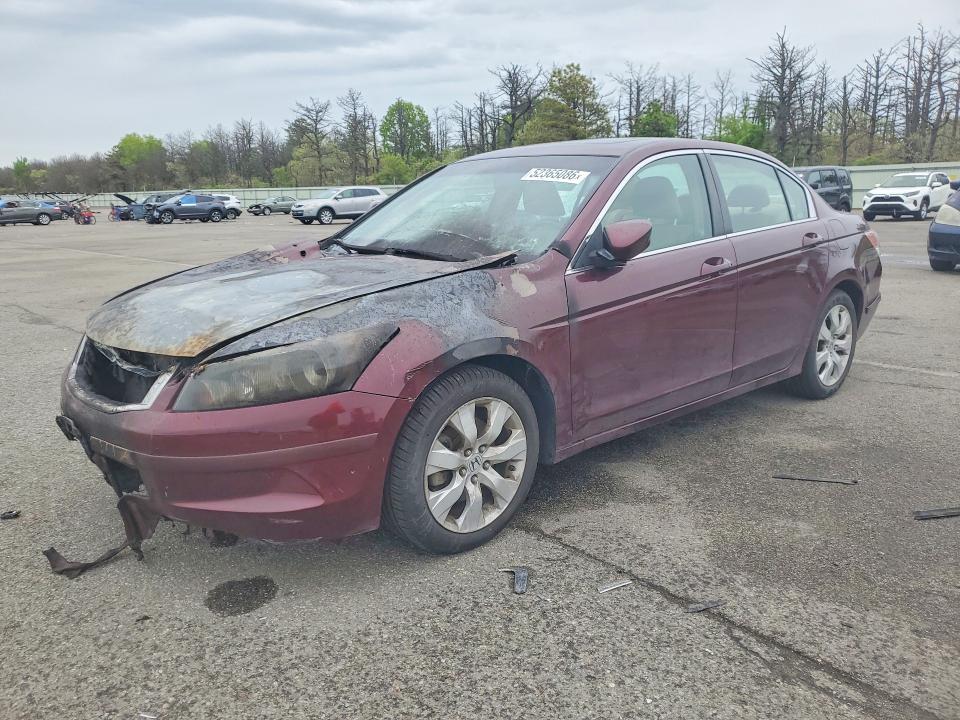
2008 Honda Accord EX-L Salvage: Fire Damage, $0 Bid, $6,850 ACV
Fire damage means wiring harness, ECU, and airbags — $4K minimum before the engine even runs.
How is the Shame Score calculated?
The Shame Score (1–10) combines five signals: damage-type severity, title-condition risk, the gap between ACV (Actual Cash Value — the car's pre-damage market price) and AI max bid, listing red flags (run/drive status, secondary damage), and misleading-listing signals from AI photo analysis. A score of 8+ means the model found no financially defensible reason to bid. ACV is pulled from auction listing data; repair costs reference industry body-shop benchmarks. All figures are directional estimates, not binding quotes. Repair costs reference CCC Intelligent Solutions benchmarks and regional body-shop averages.
Would you bid?
Vehicle
2008 HONDA ACCORD
Title
salvage
Damage
BURN
State
New York
Mileage
—
Runs/drives
—
Approx ACV
~$7,000
AI max bid
$0
ACV from auction listing data · Repair costs via CCC benchmarks + body-shop averages
In plain numbers: Someone is bidding ~$6,300+ on this vehicle. AI analysis says it's worth at most $0 as a project. That's a $7,000gap. Here's why.
A 2008 Honda Accord EX-L is genuinely one of the better used-car stories ever written. Dual-zone climate, leather, the 3.5L V6 that runs to 200,000 miles on spite alone. ACV (Actual Cash Value — what it was worth before the damage) sits at $6,850, which for a well-optioned Accord with that engine is almost insulting how cheap it sounds. The bid is $0. You're looking at this and thinking: what if the fire was small? What if it's just a scorched dashboard? What if I get lucky?
You won't. Fire damage on a vehicle listing is not a description of an event — it's a description of a category of destruction that insurance companies use to total cars they could otherwise fix. The primary damage is listed as BURN. Mileage is unknown. Run/drive is unknown. Those two unknowns together mean the car either can't move or the odometer melted. Neither is a selling point. The listing has a key, which is doing a lot of heavy lifting as the only positive data point.
Here's what fire does to a car that a photograph doesn't show you. The wiring harness — the nervous system that runs every sensor, every module, every relay — costs $1,800 to $3,500 just in parts, and that assumes the replacement harness exists for a 16-year-old platform. The ECU (Engine Control Unit — the brain that manages fuel, timing, and emissions) is heat-sensitive at 150 degrees; an engine compartment fire hits 1,200. Figure $400 to $900 for a replacement, assuming it wasn't the fire's origin point. Airbag modules deploy in heat or get cooked into inert plastic — $800 to $1,500 per bag, plus the clock spring, plus the seatbelt pretensioners. The fuel system on a fire car is condemned on sight by any shop with a liability policy. Catalytic converter, oxygen sensors, brake lines running near heat sources — all of it goes on the list. Fire damage $3,500 + wiring harness $2,800 + airbags $2,600 + ECU $700 + fuel system $1,200 = $10,800 before you've confirmed the engine block didn't warp.
This is a salvage title (legally declared a total loss) on a car with no known mileage, unknown operability, confirmed fire damage, and an ACV that doesn't survive the first repair invoice. Keisha in Riverside is going to bid $400 on this because the Accord name still means something to her, and she will spend the next four months learning what a wiring harness smells like when it's been cooked. Pass. Hard pass. The $0 current bid is the market telling you something.
“The only thing this Accord is still good at is being a warning.”
What to watch for: BURN
- •Open the hood and look at the wiring harness routing along the firewall — if the plastic conduit is melted, bubbled, or fused to the metal, the entire harness is compromised and no splice repair is safe or insurable
- •Pull back the carpet on the driver and passenger floors and press the padding — fire suppression water and foam trap moisture for months and accelerate floorpan rust from the inside out
- •Find the fuse box (usually driver's side under the dash and under the hood) and look for heat discoloration or melted plastic on the relay housings — if either box shows burn marks, every circuit in the car is suspect until proven otherwise
- •Check the brake lines and fuel lines running along the frame rails under the car — heat warps and weakens metal lines that look intact from above but are structurally compromised and can fail under pressure
- •Ask for or locate the insurance fire investigation report if one exists — fire origin point determines what systems were in the blast zone first, and 'electrical fire' means the wiring harness was the cause, not the casualty
Tomorrow’s lot. Before the auction. Free.
One lot. AI verdict. Max bid. The numbers that matter — before you bid.
Not bidding? Same email — one lot, one roast, every morning. Join readers who watch so they never bid blind.
Not ready? Browse all entries →TL;DR — copy & share
2008 HONDA ACCORD / BURN / New York / ACV ~$7,000 Shame Score: 9.2/10 | AI Max Bid: $0 The only thing this Accord is still good at is being a warning. vetmyride.com/hall-of-shame/2008-honda-accord-ex-l-salvage-fire-damage-bid-acv-52365086
Previous entry
2020 FREIGHTLINER ALL OTHER · Shame 9.2
“The key is included, which is adorable.”
Lot identifying info (lot number, VIN, seller, exact sale date) scrubbed. AI commentary is opinion based on publicly listed damage + auction signals. Always inspect in person before bidding.
AI-generated opinion based on publicly listed auction data. Not a factual vehicle assessment. Actual vehicle condition may differ from listing description. All figures are directional estimates, not binding quotes. VetMyRide is not affiliated with, endorsed by, or sponsored by any auction platform. Not a substitute for professional inspection.