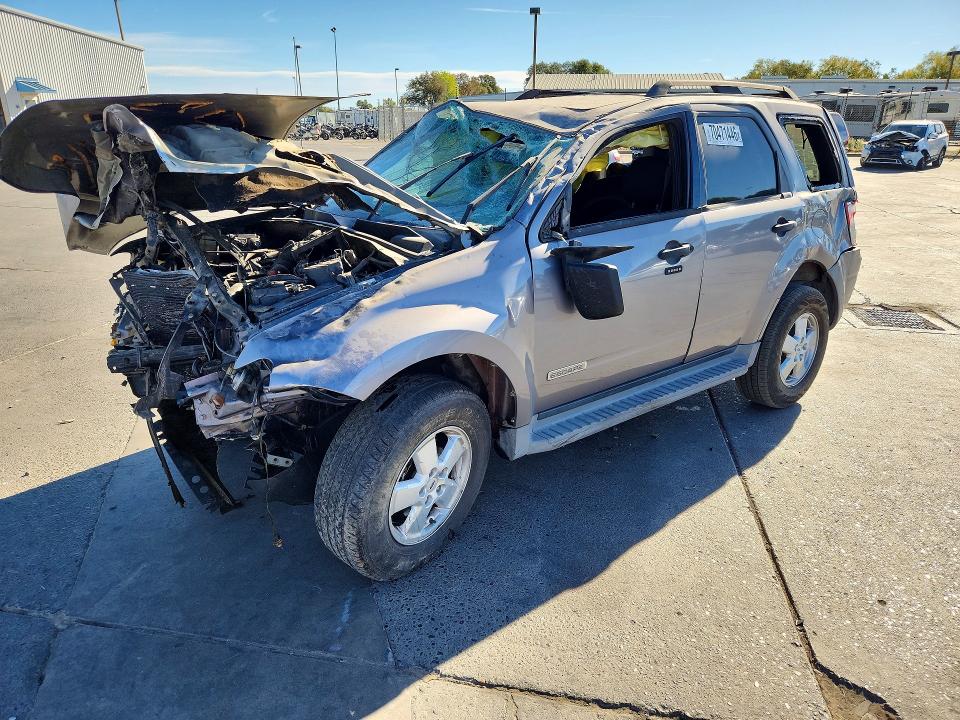
2008 Ford Escape XLT Rollover: Salvage Title, $0 Bid, $0 Sense
Rollover damage means every structural pillar is suspect. On a 16-year-old Escape, that's not a repair — that's a rebuild.
How is the Shame Score calculated?
The Shame Score (1–10) combines five signals: damage-type severity, title-condition risk, the gap between ACV (Actual Cash Value — the car's pre-damage market price) and AI max bid, listing red flags (run/drive status, secondary damage), and misleading-listing signals from AI photo analysis. A score of 8+ means the model found no financially defensible reason to bid. ACV is pulled from auction listing data; repair costs reference industry body-shop benchmarks. All figures are directional estimates, not binding quotes. Repair costs reference CCC Intelligent Solutions benchmarks and regional body-shop averages.
Would you bid?
Vehicle
2008 FORD ESCAPE
Title
salvage
Damage
ROLLOVER
State
California
Mileage
—
Runs/drives
—
Approx ACV
~$4,000
AI max bid
$0
ACV from auction listing data · Repair costs via CCC benchmarks + body-shop averages
In plain numbers: Someone is bidding ~$3,600+ on this vehicle. AI analysis says it's worth at most $0 as a project. That's a $4,000gap. Here's why.
A 2008 Ford Escape XLT with a salvage title (legally declared a total loss — meaning an insurance company did the math and walked away) sitting at $0 current bid. No buy-now pressure. No competing bidders yet. The key is present. The ACV (Actual Cash Value — what this truck was worth before the wreck) is $4,300, which on a clear-title Escape in decent shape would be a reasonable private-party number. You can see why someone opens the listing and thinks: base price is zero, ACV is four grand, how bad could it be?
The damage category is rollover. Not 'minor collision.' Not 'rear-end.' Rollover — which means this vehicle left the road, left the pavement, and rotated on at least one axis before stopping. What that does to a body-on-frame adjacent unibody crossover from 2008 is not subtle. The A-pillars, B-pillars, and C-pillars are the skeleton of this car. In a rollover, they absorb the load of the entire vehicle's weight coming down on the roof. The listing does not tell you how many times it rolled. It does not tell you the mileage. It does not tell you if it runs. Every field that would tell you something useful reads: unknown.
Roof replacement on an Escape of this vintage runs $1,200–$2,400 in sheet metal alone, before paint. Pillar straightening — if the shop will even attempt it — starts at $3,500 and climbs fast once they get it on the frame rack and find the cascade. If the frame rails are tweaked, add another $2,800–$4,500 for pulling, assuming the metal holds. Airbags deployed? Figure $800–$1,400 per bag plus the clockspring, the seatbelt pretensioners, and the module reset. Glass, door seals, and trim that sheared during the roll: call it $600 conservatively. That's $8,900–$12,100 before you've addressed whatever killed the drivetrain — and we don't know if the drivetrain is alive because nobody checked. The ACV is $4,300.
Someone is going to win this auction for $400 and feel like they robbed the place. Kevin in Macon is going to back it off the trailer, look at the roofline, and spend the next four months learning what 'total loss' means from the inside. The car was declared dead once already. The auction is just giving it a second funeral.
“The roof is the only part that touched everything, and it shows.”
What to watch for: ROLLOVER
- •Stand at the rear corner of the car and sight down the roofline toward the windshield. On a rolled vehicle, the roof sags or bows where the pillars buckled. If the roofline isn't ruler-straight, the pillars absorbed the hit and the structural repair bill just doubled.
- •Open every door and check the gap between the door and the frame all the way around. Rollover damage torques the whole body — doors that don't close flush, uneven gaps wider at the top than the bottom, or doors that swing open and don't stay mean the unibody is twisted, not just dented.
- •Pull back the headliner at the B-pillar (the pillar between the front and rear doors) and look for crease lines or buckles in the bare metal. Paint and filler can hide surface damage. Creased structural steel cannot be hidden once the trim is off — and it cannot be straightened back to spec on a 16-year-old crossover economically.
- •Check all four corners of the windshield frame for stress cracks in the glass or separation in the seal. The windshield on a unibody vehicle is a structural component — if the frame racked during the rollover, the glass cracks from the corners outward. A cracked windshield seal on a car with no front impact damage is a rollover tell.
Tomorrow’s lot. Before the auction. Free.
One lot. AI verdict. Max bid. The numbers that matter — before you bid.
Not bidding? Same email — one lot, one roast, every morning. Join readers who watch so they never bid blind.
Not ready? Browse all entries →TL;DR — copy & share
2008 FORD ESCAPE / ROLLOVER / California / ACV ~$4,000 Shame Score: 8.2/10 | AI Max Bid: $0 The roof is the only part that touched everything, and it shows. vetmyride.com/hall-of-shame/2008-ford-escape-xlt-rollover-salvage-title-bid-sense-70471446
Previous entry
2013 CADILLAC CTS · Shame 8.2
“The most powerful Cadillac ever built, and someone hated it more than you'll ever love it.”
Lot identifying info (lot number, VIN, seller, exact sale date) scrubbed. AI commentary is opinion based on publicly listed damage + auction signals. Always inspect in person before bidding.
AI-generated opinion based on publicly listed auction data. Not a factual vehicle assessment. Actual vehicle condition may differ from listing description. All figures are directional estimates, not binding quotes. VetMyRide is not affiliated with, endorsed by, or sponsored by any auction platform. Not a substitute for professional inspection.