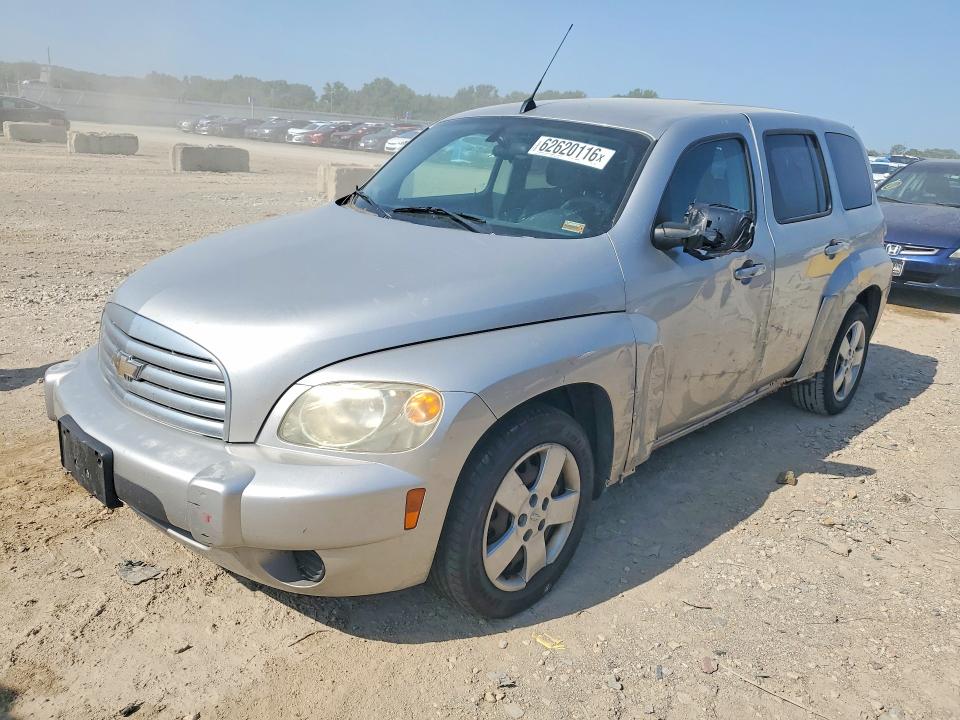
2007 Chevy HHR LS: Engine Fire, Salvage Title, Still Running Somehow
It runs. It also caught fire. Those two facts cannot coexist forever — and one of them is going to win.
How is the Shame Score calculated?
The Shame Score (1–10) combines five signals: damage-type severity, title-condition risk, the gap between ACV (Actual Cash Value — the car's pre-damage market price) and AI max bid, listing red flags (run/drive status, secondary damage), and misleading-listing signals from AI photo analysis. A score of 8+ means the model found no financially defensible reason to bid. ACV is pulled from auction listing data; repair costs reference industry body-shop benchmarks. All figures are directional estimates, not binding quotes. Repair costs reference CCC Intelligent Solutions benchmarks and regional body-shop averages.
Would you bid?
Vehicle
2007 CHEVROLET HHR
Title
salvage
Damage
BURN - ENGINE
State
Kansas
Mileage
100-150k
Runs/drives
Yes
Approx ACV
~$3,000
AI max bid
$0
ACV from auction listing data · Repair costs via CCC benchmarks + body-shop averages
In plain numbers: Someone is bidding ~$2,700+ on this vehicle. AI analysis says it's worth at most $0 as a project. That's a $3,000gap. Here's why.
A 2007 HHR LS with 107,000 miles and a $0 current bid. Nobody has touched it. That alone should tell you something, but let's say you found this at midnight, squinting at your phone, thinking: retro body, runs and drives, I could flip this. The Copart ACV (Actual Cash Value — what it was worth before the fire) is $3,425, which for a running HHR is about right. You start doing math in your head. You start losing.
The primary damage is listed as BURN — ENGINE. Not 'heat damage near the engine.' Not 'minor underhood fire.' The engine. The thing that makes the car go caught fire badly enough that an insurance company declared it a total loss, issued a salvage title (legally declared a total loss by the insurer), and walked away. The listing says it still runs. What it doesn't say is what melted to get there — wiring harnesses, fuel lines, intake components, sensor clusters, the plastic labyrinth that modern engine management depends on. Fire doesn't burn evenly. It burns everything it touches and leaves the rest waiting to fail.
Wiring harness replacement on an HHR, if the fire got into the engine bay loom, runs $800 to $1,400 in parts alone before a single hour of labor. Intake manifold: $300 parts, $400 labor. Any heat-damaged fuel line that wasn't replaced is a future fire waiting for a warm day. The salvage title registration fees, inspection requirements, and the permanent brand on the title mean resale value is effectively zero — you cannot trade this in, you cannot sell it to a dealer, and a private buyer who runs a title check will offer you half of nothing. ACV $3,425 − salvage title penalty (roughly 40-60% value reduction) − wiring diagnosis $150 − harness replacement $1,800 − fuel system inspection and line replacement $600 − intake components $700 = you have spent more than the car was worth before it burned, and you still don't know what else the fire touched.
Someone is going to bid on this because it's $0 and it runs and they will think they are smarter than the insurance company. Diane in Rockford is going to drive it home, park it in her garage, and find out six weeks later why fire investigators always pull the fuel system. The car runs today. It ran when it was on fire, too, briefly.
“The engine bay has seen more flames than a birthday cake for a centenarian.”
What to watch for: BURN - ENGINE
- •Pull every plastic cover off the engine bay and look for melted wiring insulation — it looks like black candle drips along the harness. If you see it anywhere, assume the entire loom is compromised, not just the visible section.
- •Trace the fuel lines from the tank forward and look for any section that has blistered, discolored, or brittle rubber. A fuel line that survived a fire is not a fuel line you want pressurized near a hot engine.
- •Check every electrical connector in the engine bay for heat distortion — connectors that look slightly warped or have brown discoloration inside the plastic housing are already failing. On a 2007 HHR, the ECM connectors and the main fuse block sit close enough to the engine that a serious fire reaches them.
- •Start the car cold and watch for any smoke from the dash vents. If the fire reached the HVAC intake or any wiring behind the firewall, you'll smell it or see it within the first two minutes of running the heater.
Tomorrow’s lot. Before the auction. Free.
One lot. AI verdict. Max bid. The numbers that matter — before you bid.
Not bidding? Same email — one lot, one roast, every morning. Join readers who watch so they never bid blind.
Not ready? Browse all entries →TL;DR — copy & share
2007 CHEVROLET HHR / BURN - ENGINE / Kansas / ACV ~$3,000 Shame Score: 7.2/10 | AI Max Bid: $0 The engine bay has seen more flames than a birthday cake for a centenarian. vetmyride.com/hall-of-shame/2007-chevy-hhr-ls-engine-fire-salvage-title-still-running-somehow-62620116
Previous entry
2016 UNKNOWN OTHER · Shame 9.2
“The listing doesn't know what it is. The flood didn't care.”
Lot identifying info (lot number, VIN, seller, exact sale date) scrubbed. AI commentary is opinion based on publicly listed damage + auction signals. Always inspect in person before bidding.
AI-generated opinion based on publicly listed auction data. Not a factual vehicle assessment. Actual vehicle condition may differ from listing description. All figures are directional estimates, not binding quotes. VetMyRide is not affiliated with, endorsed by, or sponsored by any auction platform. Not a substitute for professional inspection.