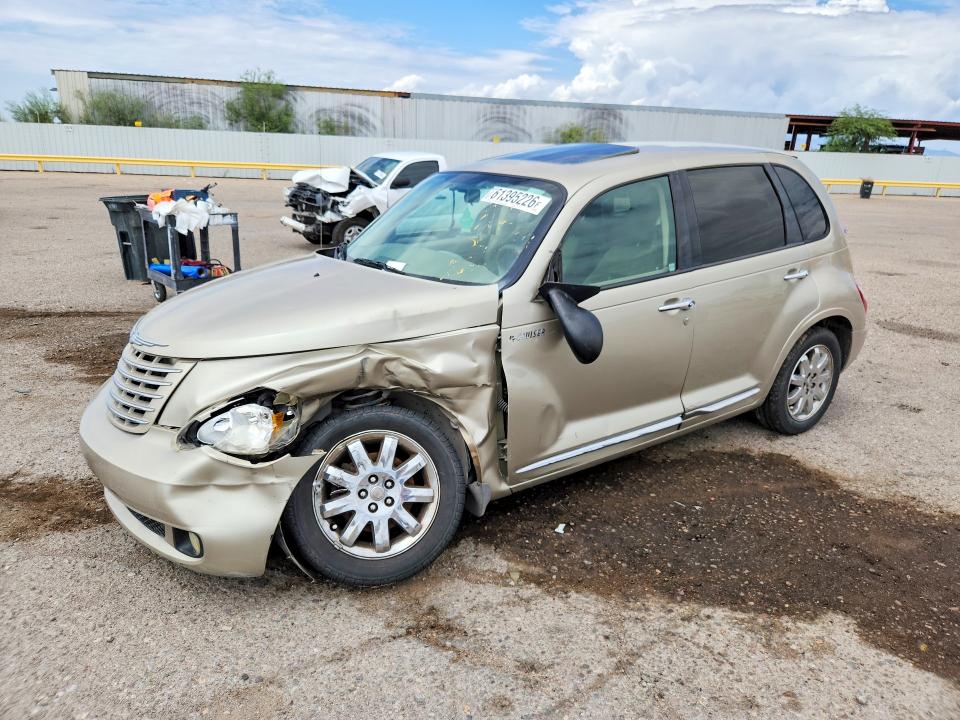
2006 Chrysler PT Cruiser Salvage: Undercarriage Unknown, Wallet Certain
Undercarriage damage on a 19-year-old unibody means the structure holding the engine, wheels, and you together is compromised.
How is the Shame Score calculated?
The Shame Score (1–10) combines five signals: damage-type severity, title-condition risk, the gap between ACV (Actual Cash Value — the car's pre-damage market price) and AI max bid, listing red flags (run/drive status, secondary damage), and misleading-listing signals from AI photo analysis. A score of 8+ means the model found no financially defensible reason to bid. ACV is pulled from auction listing data; repair costs reference industry body-shop benchmarks. All figures are directional estimates, not binding quotes. Repair costs reference CCC Intelligent Solutions benchmarks and regional body-shop averages.
Would you bid?
Vehicle
2006 CHRYSLER PT CRUISER
Title
salvage
Damage
UNDERCARRIAGE
State
Arizona
Mileage
25-50k
Runs/drives
—
Approx ACV
~$3,000
AI max bid
$0
ACV from auction listing data · Repair costs via CCC benchmarks + body-shop averages
In plain numbers: Someone is bidding ~$2,700+ on this vehicle. AI analysis says it's worth at most $0 as a project. That's a $3,000gap. Here's why.
Forty thousand miles on a 2006 PT Cruiser Limited. That's the dream stat — low miles, old car, survivor. The Limited trim means you're getting the upgraded interior, the chrome accents, the little details that made people actually like this thing back when gas was under two dollars. ACV (Actual Cash Value — what it was worth before the wreck) sits at $3,150, which is about right for a clean example of this generation. The bid is at zero. You're thinking: I could drive this home for nothing. You're not wrong about the price. You're wrong about everything else.
The damage category is undercarriage. Not bumper. Not door. Undercarriage — which on a PT Cruiser means the unibody (a vehicle where the frame and body are one welded structure, not separable) took a hit from below. Could be a parking garage column. Could be a curb at speed. Could be something that required a salvage title (legally declared a total loss by an insurance company) to be issued on a car worth three grand. The listing doesn't say. Run and drive is unknown. That's not a gap in the paperwork — that's the paperwork telling you something moved when they tried to start it, or nothing moved at all, and neither answer was worth writing down.
Unibody repair on undercarriage damage is not a parts swap. Frame straightening on a car this age runs $1,800 to $3,500 — if the metal isn't fatigued, if the welds didn't crack, if the subframe mounts are still intact. Subframe replacement on a PT Cruiser: $900 in parts, $600 in labor, assuming the surrounding structure accepts it. Alignment after structural repair: $180. Pre-purchase inspection from a shop willing to put their name on a salvage unibody: $150. That's $3,430 to $5,330 before you've confirmed the engine didn't shift in its mounts, before you've checked whether the CV axles (the shafts that transfer power from the transmission to the wheels) are bent, before you've discovered what happens when you put it on a lift and the floor flexes.
This car is worth $3,150 clean. Frame straightening $2,600 + subframe work $1,500 + alignment $180 + inspection $150 = $4,430 in repairs on a $3,150 asset. That math doesn't work at any bid. Sandra in Chattanooga is going to win this at $200, spend $600 getting it to a shop, and hear the word 'totaled' for the second time in this car's life.
“The frame is the car and the car is the problem.”
What to watch for: UNDERCARRIAGE
- •Crouch behind the rear wheels and sight down the rocker panels (the metal strips running along the bottom edge of the car between the wheel wells). They should be straight. A wave, a crease, or a visible bow means the unibody twisted during impact and no amount of straightening fully fixes that.
- •Put the car on a lift and look at the subframe mounting points — the four bolts that attach the front subframe to the unibody floor. Elongated bolt holes, cracked welds, or shiny metal around the mounts means the subframe moved. If it moved, the geometry is wrong and the repair bill starts at four figures.
- •Check the CV axle boots (the rubber accordion sleeves near the wheels) for tears and grease spray. Undercarriage impact often bends or cracks the axles — the boots blow out, the grease slings everywhere, and the axle destroys itself quietly for a few hundred miles before the clicking starts.
- •Open every door and check the gaps along the door frames. Unibody damage ripples through the whole structure — if the doors are hard to close, don't seal flush, or show uneven gaps at the top versus the bottom, the body has racked and you're looking at a car that will never align correctly.
Tomorrow’s lot. Before the auction. Free.
One lot. AI verdict. Max bid. The numbers that matter — before you bid.
Not bidding? Same email — one lot, one roast, every morning. Join readers who watch so they never bid blind.
Not ready? Browse all entries →TL;DR — copy & share
2006 CHRYSLER PT CRUISER / UNDERCARRIAGE / Arizona / ACV ~$3,000 Shame Score: 7.2/10 | AI Max Bid: $0 The frame is the car and the car is the problem. vetmyride.com/hall-of-shame/2006-chrysler-pt-cruiser-salvage-undercarriage-unknown-wallet-certain-61395226
Previous entry
2017 BMW 5 SERIES · Shame 9.2
“The only thing this BMW is still good at is depreciating.”
Lot identifying info (lot number, VIN, seller, exact sale date) scrubbed. AI commentary is opinion based on publicly listed damage + auction signals. Always inspect in person before bidding.
AI-generated opinion based on publicly listed auction data. Not a factual vehicle assessment. Actual vehicle condition may differ from listing description. All figures are directional estimates, not binding quotes. VetMyRide is not affiliated with, endorsed by, or sponsored by any auction platform. Not a substitute for professional inspection.