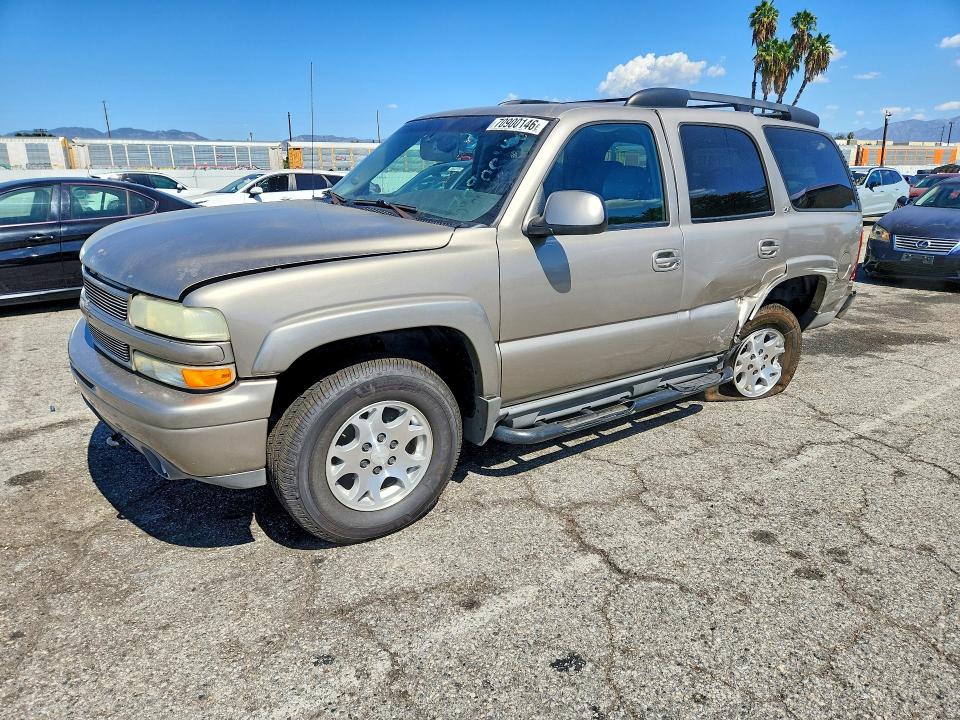
2003 Chevy Tahoe K1500 Salvage: Undercarriage Damage at 109K Miles
Undercarriage damage on a 21-year-old body-on-frame truck means bent frame rails, and bent frame rails mean it never aligns right again.
How is the Shame Score calculated?
The Shame Score (1–10) combines five signals: damage-type severity, title-condition risk, the gap between ACV (Actual Cash Value — the car's pre-damage market price) and AI max bid, listing red flags (run/drive status, secondary damage), and misleading-listing signals from AI photo analysis. A score of 8+ means the model found no financially defensible reason to bid. ACV is pulled from auction listing data; repair costs reference industry body-shop benchmarks. All figures are directional estimates, not binding quotes. Repair costs reference CCC Intelligent Solutions benchmarks and regional body-shop averages.
Would you bid?
Vehicle
2003 CHEVROLET TAHOE
Title
salvage
Damage
UNDERCARRIAGE
State
California
Mileage
100-150k
Runs/drives
—
AI max bid
$0
ACV from auction listing data · Repair costs via CCC benchmarks + body-shop averages
A 2003 Tahoe K1500 with a V8, four-wheel drive, and a known key — on paper, this is the part of the auction where your hand starts moving toward the bid button. These trucks run forever. Everyone knows someone who put 280,000 miles on one. The body-on-frame construction means they're repairable in ways unibody crossovers aren't, and at $0 current bid, the floor feels wide open. You could flip this. You could daily it. You could hand it to your kid.
The listing says undercarriage damage and then stops talking. No secondary damage listed. No run/drive status. No ACV (Actual Cash Value — what the vehicle was worth before whatever happened to it) to anchor the math. That silence is the tell. Copart listings that omit the ACV on a 2003 Tahoe aren't being modest — they're telling you the number wasn't useful to anyone. The undercarriage damage category covers a range that starts at "scraped a parking barrier" and ends at "the frame is no longer a rectangle." On a truck this age with this mileage, the odds of it being the former are not good.
Frame inspection on a body-on-frame truck isn't a quick look — a proper straightening estimate runs $1,800 to $4,500 depending on severity, and that's before you know if it's even worth straightening. Add the salvage title (legally declared a total loss by an insurance company) discount, which kills resale and financing options permanently, and you're holding an asset most buyers can't insure at full value and can't sell without disclosing. If the frame is tweaked, alignment is a recurring cost, not a one-time fix — tires wear at angles, steering wanders, and every mechanic who touches it writes "frame damage noted" in the file. Unknown run/drive status at 109,123 miles on a 21-year-old drivetrain means the engine and transmission are mysteries stacked on top of a structural mystery. A transmission rebuild on a 4L60-E is $2,200 to $3,400. A 4WD transfer case is another $800 to $1,500. Frame straightening $3,200 + transmission $2,800 + transfer case $1,100 + alignment and tires $600 = $7,700 before the thing moves under its own power.
Somebody bought this truck new, drove it 109,000 miles, and then something hit the undercarriage hard enough for an insurance company to write it off. That event is not described. The outcome of that event is not described. Destinee in Shreveport is going to bid $400 thinking she's getting a project and spend the next four months learning what "frame twist" means in a body shop. The truck might be fine. The listing is designed to make you believe it might be fine. Those are not the same thing.
“The key works. The frame might not.”
What to watch for: UNDERCARRIAGE
- •Crawl under the truck and sight down both frame rails from the rear bumper toward the cab — they should be parallel and level. Any visible bow, crinkle, or weld that wasn't factory means the frame took a hit and someone may have attempted a repair.
- •Look at the skid plates and crossmembers for fresh paint or undercoating applied in patches — that's the auction prep crew covering deformation, not protecting metal.
- •Check all four wheel wells for tire rub marks on the inner liner. A frame that's shifted will push a wheel out of its intended arc, and the evidence shows up as scuffing on the plastic even if the tire looks fine now.
- •Put the truck on a known-flat surface and measure the distance from each rocker panel to the ground at the front and rear of each door. More than a half-inch of variance side to side means the frame isn't level and alignment will never hold.
- •Pull the driveshaft and inspect the u-joints and slip yoke for impact damage — an undercarriage hit hard enough to total the truck often bends the driveshaft or destroys the u-joints, and a vibrating driveshaft at highway speed is a safety event, not a maintenance item.
Tomorrow’s lot. Before the auction. Free.
One lot. AI verdict. Max bid. The numbers that matter — before you bid.
Not bidding? Same email — one lot, one roast, every morning. Join readers who watch so they never bid blind.
Not ready? Browse all entries →TL;DR — copy & share
2003 CHEVROLET TAHOE / UNDERCARRIAGE / California / ACV ~$? Shame Score: 7.2/10 | AI Max Bid: $0 The key works. The frame might not. vetmyride.com/hall-of-shame/2003-chevy-tahoe-k1500-salvage-undercarriage-damage-at-70900146
Previous entry
2020 MERCEDES-BENZ GLE-CLASS · Shame 8.2
“Mercedes calls it 'vandalism.' The insurance company called it a total loss.”
Lot identifying info (lot number, VIN, seller, exact sale date) scrubbed. AI commentary is opinion based on publicly listed damage + auction signals. Always inspect in person before bidding.
AI-generated opinion based on publicly listed auction data. Not a factual vehicle assessment. Actual vehicle condition may differ from listing description. All figures are directional estimates, not binding quotes. VetMyRide is not affiliated with, endorsed by, or sponsored by any auction platform. Not a substitute for professional inspection.