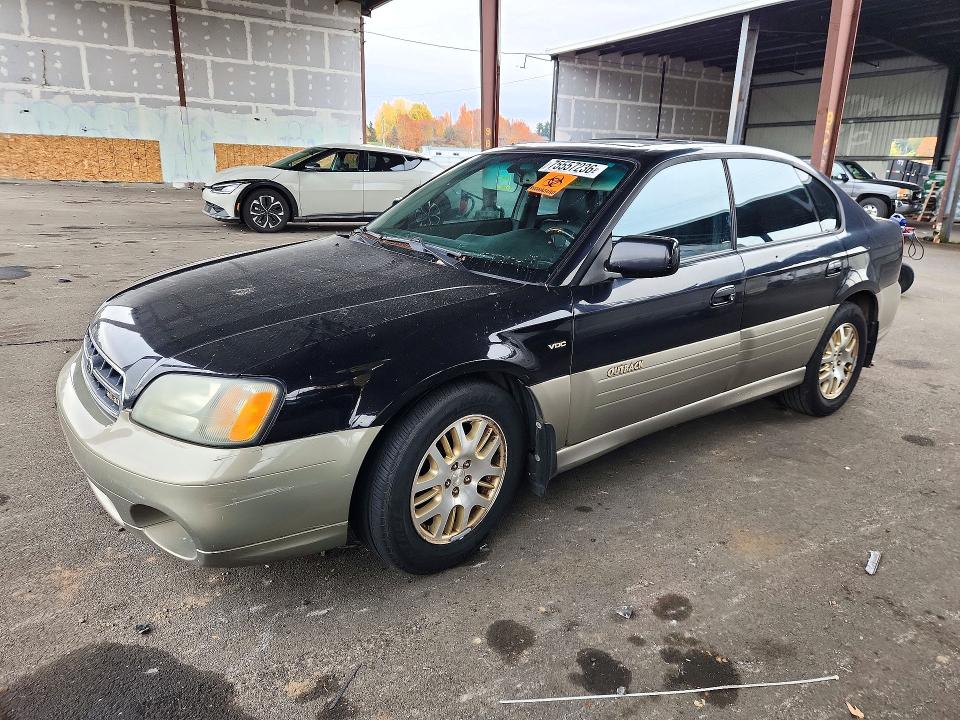
2002 Subaru Outback H6 Salvage: Vandalism at 180K Miles Isn't a Deal
Salvage for vandalism means someone did something bad enough to total a 22-year-old car worth maybe $2,800.
How is the Shame Score calculated?
The Shame Score (1–10) combines five signals: damage-type severity, title-condition risk, the gap between ACV (Actual Cash Value — the car's pre-damage market price) and AI max bid, listing red flags (run/drive status, secondary damage), and misleading-listing signals from AI photo analysis. A score of 8+ means the model found no financially defensible reason to bid. ACV is pulled from auction listing data; repair costs reference industry body-shop benchmarks. All figures are directional estimates, not binding quotes. Repair costs reference CCC Intelligent Solutions benchmarks and regional body-shop averages.
Would you bid?
Vehicle
2002 SUBARU LEGACY
Title
salvage
Damage
VANDALISM
State
Oregon
Mileage
150-200k
Runs/drives
—
AI max bid
$0
ACV from auction listing data · Repair costs via CCC benchmarks + body-shop averages
The 3.0 H6 Outback is genuinely rare. Subaru only put that smooth, quiet six-cylinder in the Legacy platform for a few years, and the people who know, know. No timing belt to snap — it's a chain. No turbo to cook. Just a flat-six that idles like a Swiss watch and pulls hills without drama. At $0 current bid, on a car with a known cult following, the lizard brain says jump. The listing is counting on that.
Vandalism (damage category used when the harm was intentional, not accidental — think slashed wiring, smashed glass, or something worse) is the single most useless damage descriptor at auction. It tells you nothing about what was destroyed and everything about what the seller doesn't want to say. A keyed door is vandalism. A stolen catalytic converter is vandalism. So is a cut brake line, a gutted interior, a torched dashboard, or an engine bay someone took a hammer to out of spite. The category exists on a spectrum from 'annoying' to 'structural.' The listing does not tell you where on that spectrum this car lives. That silence is doing a lot of work.
The math on a 2002 with 180,188 miles starts cruel and gets worse. Private party ACV on a running H6 Outback in rough shape is maybe $2,500 to $3,200 — and that's if it runs, drives, and has a clean title. This has none of those three things confirmed. Salvage title (legally declared a total loss by an insurance company) kills resale and makes financing impossible, so your buyer pool when you flip it shrinks to cash-only people who know exactly what they're looking at. If the vandalism hit the wiring harness — and on a 22-year-old Subaru, wiring is already the enemy — you're looking at $1,800 to $3,500 in diagnostic time and parts before you know the full scope. If it hit the catalytic converter, add $400 to $900 for an aftermarket replacement plus the inspection to confirm nothing upstream got damaged during the theft. If someone pulled the head unit and cut the harness behind it, that's another $600 in a shop that still works on 2002 Subarus. Tow from the yard: $200. Storage fees if you dawdle: $50 a day. You are spending real money to find out what kind of bad news you bought.
Someone totaled a 22-year-old car worth three thousand dollars. The insurance company looked at the vandalism, looked at the mileage, looked at the year, and wrote a check instead of fixing it. That decision already happened. You are now being invited to disagree with that decision using your own money. Priya in Bozeman is going to bid $400 on this because she loves Outbacks and thinks she's found a sleeper, and she's going to spend the next four months learning what 'vandalism' actually meant.
“The vandal did more paperwork on this car than the seller did.”
What to watch for: VANDALISM
- •Pull every fuse from the fuse box and look for ones that have been yanked, bypassed, or melted. Vandalism that targets the electrical system often starts at the fuse box — a pulled fuse is cheap, a cut harness behind it is not.
- •Check under the car for the catalytic converter before you bid a dollar. On a 2002 Outback H6, it's a common theft target. If it's gone, look at the oxygen sensor bungs — cut wiring there means the ECU has been throwing codes since the theft and you have no idea what else triggered.
- •Open every door and look at the window switches and interior panels. Vandalism that's 'just cosmetic' often means slashed seats, ripped panels, or a gutted stereo with cut wiring behind it. On a 22-year-old car, replacement interior parts come from other 22-year-old cars.
- •Start the car if they let you — and if they won't, treat that refusal as the answer. A vandalized Subaru H6 that runs will tell you in the first 30 seconds whether the damage was surface or deep. One that won't start at the yard won't start in your driveway either.
Tomorrow’s lot. Before the auction. Free.
One lot. AI verdict. Max bid. The numbers that matter — before you bid.
Not bidding? Same email — one lot, one roast, every morning. Join readers who watch so they never bid blind.
Not ready? Browse all entries →TL;DR — copy & share
2002 SUBARU LEGACY / VANDALISM / Oregon / ACV ~$? Shame Score: 7.2/10 | AI Max Bid: $0 The vandal did more paperwork on this car than the seller did. vetmyride.com/hall-of-shame/2002-subaru-outback-h6-salvage-vandalism-at-isn-t-a-deal-75557236
Previous entry
2015 MERCEDES-BENZ C-CLASS · Shame 8.2
“The undercarriage is damaged and the run/drive is unknown — on a Mercedes at 150,000 miles.”
Lot identifying info (lot number, VIN, seller, exact sale date) scrubbed. AI commentary is opinion based on publicly listed damage + auction signals. Always inspect in person before bidding.
AI-generated opinion based on publicly listed auction data. Not a factual vehicle assessment. Actual vehicle condition may differ from listing description. All figures are directional estimates, not binding quotes. VetMyRide is not affiliated with, endorsed by, or sponsored by any auction platform. Not a substitute for professional inspection.