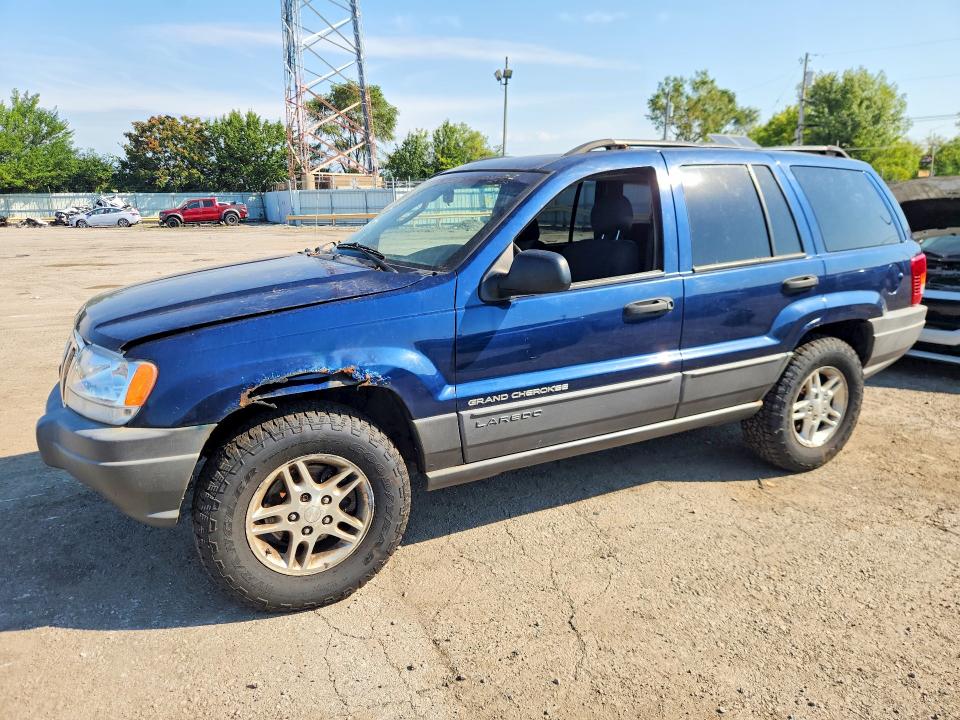
2002 Jeep Grand Cherokee Laredo: Roof Crushed, Salvage Title, Still Running
Roof damage on a body-on-frame SUV means bent pillars, shattered glass tracks, and a cage that already failed once.
How is the Shame Score calculated?
The Shame Score (1–10) combines five signals: damage-type severity, title-condition risk, the gap between ACV (Actual Cash Value — the car's pre-damage market price) and AI max bid, listing red flags (run/drive status, secondary damage), and misleading-listing signals from AI photo analysis. A score of 8+ means the model found no financially defensible reason to bid. ACV is pulled from auction listing data; repair costs reference industry body-shop benchmarks. All figures are directional estimates, not binding quotes. Repair costs reference CCC Intelligent Solutions benchmarks and regional body-shop averages.
Would you bid?
Vehicle
2002 JEEP CHEROKEE
Title
salvage
Damage
TOP/ROOF
State
Indiana
Mileage
100-150k
Runs/drives
Yes
AI max bid
$0
ACV from auction listing data · Repair costs via CCC benchmarks + body-shop averages
A 2002 Grand Cherokee Laredo with a key in the ignition, 119,000 miles, and a $0 current bid. That last part is doing a lot of work. These things have a following — the 4.0 inline-six is genuinely one of the toughest engines ever bolted into a truck, the Quadra-Trac transfer case is a cult item, and clean examples still move. Someone is going to look at this and think: old iron, simple mechanicals, what's the worst that could happen.
The worst is the roof. Top/roof primary damage on a unibody-adjacent SUV — the Grand Cherokee uses a unibody structure, not a true body-on-frame — means the damage ran straight into the structural skeleton. The A-pillars, B-pillars, and roof rails are not decorative. They are the cage. When that cage takes a hit hard enough to earn a salvage title (legally declared a total loss by an insurance company), the deformation doesn't stop at the sheetmetal. It travels. Down the windshield frame. Into the door jambs. Along the rocker panels. The listing shows it runs and drives, which tells you exactly nothing about whether the structure around the driver is still capable of protecting anyone.
Roof replacement on a 2002 Grand Cherokee isn't a bolt-on job. You're looking at a full skin replacement or, more likely, a structural repair that requires a frame rack, sectioning, and a welder who knows what they're doing — $3,500 to $6,000 in metalwork before paint, which adds another $1,500 to $2,500. Windshield is gone: $400. Both front door glass tracks are probably tweaked from pillar movement: $300 per side. Headliner, sun visors, grab handles, dome light assembly — another $400 in interior trim that's now crushed or stained. That's $6,100 to $9,700 in structural and cosmetic repair on a truck whose clean ACV in this mileage range tops out around $4,500 to $6,000 on a good day. The math doesn't get better. It gets worse when the shop finds the B-pillar needs sectioning.
Someone is buying this. The $0 bid won't last. Derek in Chattanooga is going to talk himself into it over a YouTube video about 4.0 rebuilds and drive home with a car whose roof might creak on the highway and whose salvage title (legally declared a total loss) will make it uninsurable for collision coverage in most states. The 4.0 will run forever. The structure around it already quit.
“It runs great — right up until the roof decides to finish the job.”
What to watch for: TOP/ROOF
- •Stand outside the car and sight down each door gap from front to rear. If the gap is wider at the top than the bottom on either front door, the A-pillar moved. That's a structural failure, not a trim issue.
- •Open both front doors fully and look at the striker plate on the B-pillar — the metal latch the door hooks into. If it's pulled away from the pillar, cracked the surrounding paint, or sits at an angle, the B-pillar absorbed the load and deformed.
- •Push up on the headliner from inside with both palms flat. A healthy roof is rigid. If it flexes, oil-cans, or makes a ticking sound, the roof skin is no longer properly bonded to the internal structure — and the internal structure may be buckled.
- •Check all four corners of the windshield opening for cracked seam sealer and paint. Windshield frames crack at the corners when the pillars move. Cracks here mean the opening is no longer square, and no glass shop can fix that with a new windshield.
Tomorrow’s lot. Before the auction. Free.
One lot. AI verdict. Max bid. The numbers that matter — before you bid.
Not bidding? Same email — one lot, one roast, every morning. Join readers who watch so they never bid blind.
Not ready? Browse all entries →TL;DR — copy & share
2002 JEEP CHEROKEE / TOP/ROOF / Indiana / ACV ~$? Shame Score: 7.2/10 | AI Max Bid: $0 It runs great — right up until the roof decides to finish the job. vetmyride.com/hall-of-shame/2002-jeep-grand-cherokee-laredo-roof-crushed-salvage-title-still-running-67636996
Previous entry
2012 FORD FOCUS · Shame 7.2
“The car has more miles than answers.”
Lot identifying info (lot number, VIN, seller, exact sale date) scrubbed. AI commentary is opinion based on publicly listed damage + auction signals. Always inspect in person before bidding.
AI-generated opinion based on publicly listed auction data. Not a factual vehicle assessment. Actual vehicle condition may differ from listing description. All figures are directional estimates, not binding quotes. VetMyRide is not affiliated with, endorsed by, or sponsored by any auction platform. Not a substitute for professional inspection.