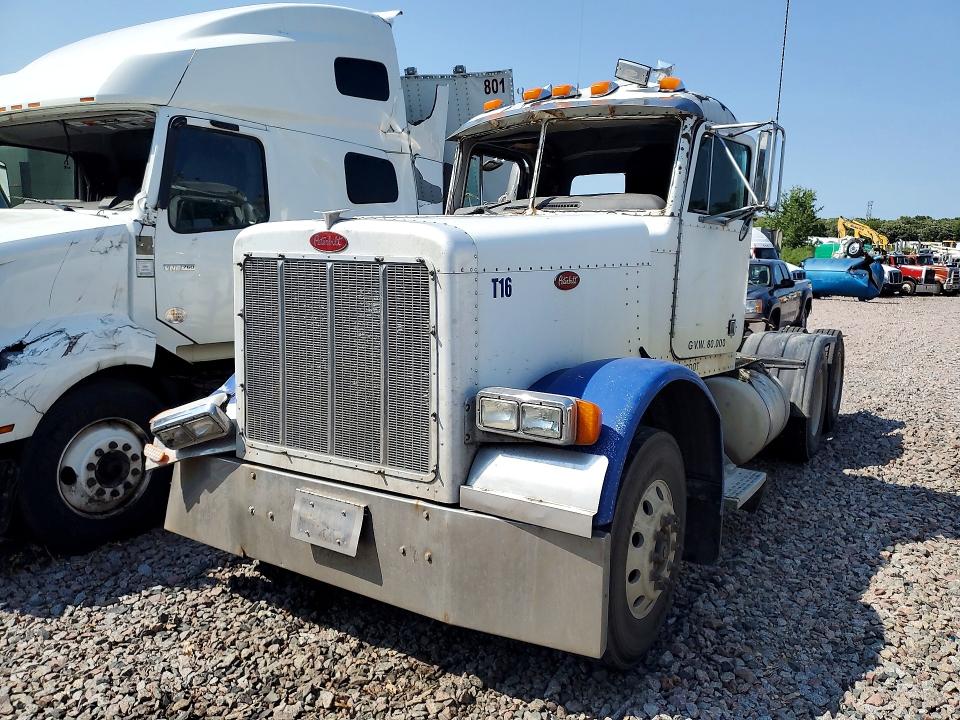
2001 Peterbilt 379 Rollover Salvage: $275 Bid, $28K ACV, Zero Answers
You can't put a CDL on a frame that kissed the pavement at highway speed. This thing needs a rotisserie, not a bid.
How is the Shame Score calculated?
The Shame Score (1–10) combines five signals: damage-type severity, title-condition risk, the gap between ACV (Actual Cash Value — the car's pre-damage market price) and AI max bid, listing red flags (run/drive status, secondary damage), and misleading-listing signals from AI photo analysis. A score of 8+ means the model found no financially defensible reason to bid. ACV is pulled from auction listing data; repair costs reference industry body-shop benchmarks. All figures are directional estimates, not binding quotes. Repair costs reference CCC Intelligent Solutions benchmarks and regional body-shop averages.
Would you bid?
Vehicle
2001 PETERBILT ALL OTHER
Title
salvage
Damage
ROLLOVER
State
Minnesota
Mileage
50-100k
Runs/drives
—
Approx ACV
~$29,000
AI max bid
$0
ACV from auction listing data · Repair costs via CCC benchmarks + body-shop averages
In plain numbers: Someone is bidding ~$26,100+ on this vehicle. AI analysis says it's worth at most $0 as a project. That's a $29,000gap. Here's why.
A 2001 Peterbilt 379 with 81,442 miles is the kind of truck that makes diesel guys stop scrolling. The 379 is a legend — long hood, set-back axle, the silhouette that launched a thousand mud flaps. Low miles for the platform, a key in hand, and a current bid sitting at $275. For a truck with a $28,525 ACV (Actual Cash Value — what it was worth before the wreck), that spread looks like opportunity. You start doing the math in your head. You start thinking about owner-operators who'd pay good money for a restored 379. You almost reach for your bidder number.
Then you read the primary damage: rollover. A semi rollover is not a fender bender that got miscategorized. When 40,000 pounds of truck leaves its wheels, the frame — the backbone that everything else bolts to — absorbs forces it was never engineered to survive. The listing tells you the truck runs and drives: unknown. It tells you the secondary damage: nothing. That silence is not reassuring. That silence means nobody put this truck on a chassis table, nobody fired up the engine, nobody checked whether the fifth wheel plate is still in the same zip code as the kingpin.
Frame straightening on a Class 8 semi runs $8,000–$15,000 if the damage is clean and the shop is optimistic — and shops are never optimistic about rollovers. Cab replacement or major structural repair on a 379 adds another $12,000–$25,000 depending on what the pavement took. The Caterpillar or Cummins under that hood needs a full inspection before anyone turns a key: oil contamination from lying on its side, coolant migration, turbo bearing damage from running dry. Figure $3,500–$6,000 just to know what you have. Suspension components on the low side took the hit — kingpins, tie rods, drag link, wheel seals — call it $4,000 minimum. Salvage title (legally declared a total loss) on a commercial vehicle means re-registration hell in most states and a permanent asterisk on any resale. Frame straightening $11,500 + cab work $18,000 + drivetrain inspection $4,500 + suspension $4,000 + title and compliance work $2,000 = $40,000 before you've touched the chrome.
The truck is worth $28,525 clean. You will spend $40,000 minimum to find out if it can be clean. Derek in Shreveport is going to bid on this because the 379 is his dream truck and $275 feels like destiny. The frame doesn't care about destiny.
“The cab is a rhombus now and someone bid $275 like that's the hard part.”
What to watch for: ROLLOVER
- •Look at the frame rails from directly behind the truck — they should form two perfectly parallel lines. Any bow, twist, or vertical sag means the frame took a set and straightening is a best-case scenario, replacement is more likely.
- •Check the cab corners and the lower door sills on the side that hit the ground. If the metal is wrinkled, folded, or shows fresh undercoating sprayed over bare metal, the cab structure is compromised and you're looking at a shell replacement.
- •Pull the engine oil dipstick and look for a gray or milky film — when a diesel lays on its side, coolant migrates into the crankcase. If it ran afterward, you may have a hydrolocked or scored engine on top of everything else.
- •Inspect the fifth wheel plate and the mounting crossmembers directly — rollover stress concentrates there. Any cracks in the welds or elongated bolt holes mean the truck cannot legally haul until that assembly is replaced and certified.
- •Check every air line fitting and the air dryer for impact damage. Brake system components on a rolled semi are routinely destroyed and routinely overlooked because they're not visible until you're under the chassis with a light.
Tomorrow’s lot. Before the auction. Free.
One lot. AI verdict. Max bid. The numbers that matter — before you bid.
Not bidding? Same email — one lot, one roast, every morning. Join readers who watch so they never bid blind.
Not ready? Browse all entries →TL;DR — copy & share
2001 PETERBILT ALL OTHER / ROLLOVER / Minnesota / ACV ~$29,000 Shame Score: 9.2/10 | AI Max Bid: $0 The cab is a rhombus now and someone bid $275 like that's the hard part. vetmyride.com/hall-of-shame/2001-peterbilt-379-rollover-salvage-bid-k-acv-zero-answers-63471186
Previous entry
2017 FORD EDGE · Shame 7.8
“The roof caved and took the resale value with it.”
Lot identifying info (lot number, VIN, seller, exact sale date) scrubbed. AI commentary is opinion based on publicly listed damage + auction signals. Always inspect in person before bidding.
AI-generated opinion based on publicly listed auction data. Not a factual vehicle assessment. Actual vehicle condition may differ from listing description. All figures are directional estimates, not binding quotes. VetMyRide is not affiliated with, endorsed by, or sponsored by any auction platform. Not a substitute for professional inspection.