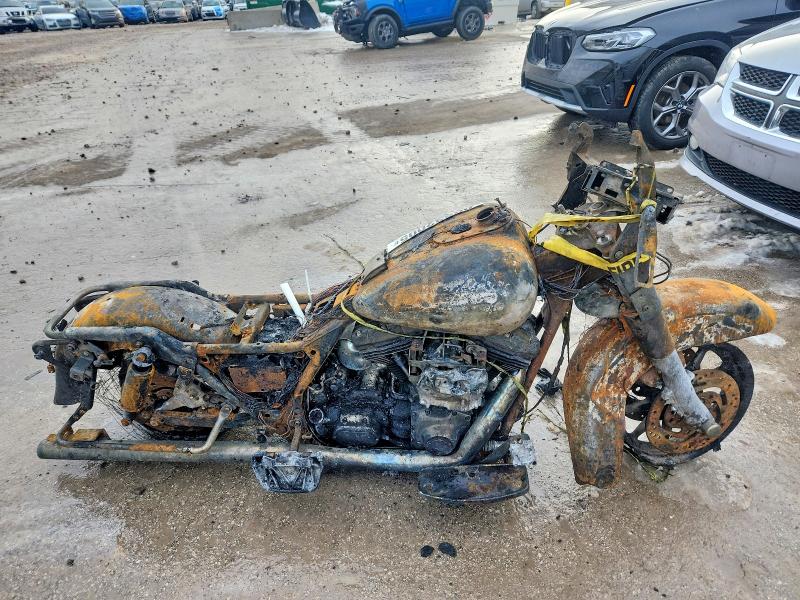
2000 Harley FLHTCI Electra Glide: Fire Damage, Unknown Everything
Unknown title on a burned bike means you can't register what you can't prove survived.
How is the Shame Score calculated?
The Shame Score (1–10) combines five signals: damage-type severity, title-condition risk, the gap between ACV (Actual Cash Value — the car's pre-damage market price) and AI max bid, listing red flags (run/drive status, secondary damage), and misleading-listing signals from AI photo analysis. A score of 8+ means the model found no financially defensible reason to bid. ACV is pulled from auction listing data; repair costs reference industry body-shop benchmarks. All figures are directional estimates, not binding quotes. Repair costs reference CCC Intelligent Solutions benchmarks and regional body-shop averages.
Would you bid?
Vehicle
2000 HARLEY-DAVIDSON FL
Title
unknown
Damage
BURN
State
Wisconsin
Mileage
—
Runs/drives
—
AI max bid
$0
ACV from auction listing data · Repair costs via CCC benchmarks + body-shop averages
A 2000 Harley-Davidson FLHTCI Electra Glide Classic. Full dresser. The one with the fairing, the hard bags, the chrome, the Tour-Pak — the bike retired guys save for three years to buy. Even at 24 years old, a clean example moves for $7,000–$10,000 on a good day, and the faithful will pay it without blinking. One dollar opening bid. For a moment, your brain does the math and the math looks interesting.
Then you read the fields. Unknown title. Unknown mileage. Unknown run/drive. Unknown key. Primary damage: burn. Secondary damage: nothing listed — which on a fire vehicle doesn't mean there wasn't secondary damage, it means nobody bothered to catalog it. Fire doesn't stay where it starts. It moves through wiring looms, through rubber fuel lines, through the plastic housing on every sensor the ECM depends on, and it does this before the first firefighter arrives. The listing shows you a burned bike and tells you nothing else. That silence is doing a lot of work.
Here's what fire does to an Electra Glide specifically. The Twin Cam 88 engine may look intact — cast iron survives flame better than everything around it — but the wiring harness on a full dresser is enormous and runs everywhere, and replacement isn't a trip to AutoZone. A factory FLHTCI harness runs $800–$1,400 for the part alone, plus 12–20 hours of labor at $110–$130/hr. The Tour-Pak, fairing, and saddlebag lids are ABS plastic: warped, melted, or stress-cracked from heat and water, and Harley OEM replacements are $400–$900 per piece. Chrome that's been through fire is pitted and blue-tinted — it cannot be re-chromed economically, it gets replaced. Footboards, controls, grips, seat: gone. And the fuel system — tank, petcock, lines, carb or throttle body depending on the build — gets inspected and replaced as a unit after a fire, not piecemeal. You are looking at $6,000–$11,000 in parts before a single labor hour, on a bike with no title, no key, unknown miles, and no confirmation it turns over.
The title situation alone kills this. Unknown title (meaning the ownership status is unresolved — it may be a salvage title, a lien title, a title that never transferred, or no title at all) on a motorcycle is harder to resolve than on a car. Many states require a physical inspection and a surety bond to title a motorcycle from scratch. Some won't do it at all if the VIN plate shows heat damage. You can't register it. You can't insure it. You can't legally ride it. Somebody in a leather vest is going to bid $400 on this because they can see the engine cases and they're going to spend the next two years and $9,000 finding out what fire actually took.
“The only thing confirmed on this Harley is that it was on fire.”
What to watch for: BURN
- •On a fire-damaged bike, pull the spark plugs and look inside the cylinders with a flashlight before anything else. If the firefighters used water, you may find rust scoring on the cylinder walls within days of the fire — that engine is already dying.
- •Check the VIN plate on the steering neck for heat distortion or discoloration. If the plate is bubbled, warped, or the stamping is illegible, several states will refuse to issue a title regardless of what paperwork you bring.
- •Run your hand along every rubber component — fuel lines, fork seals, brake lines, throttle cables. Fire-adjacent heat hardens rubber without visibly burning it. Brake lines that look intact can be cracked internally and will fail under pressure.
- •On an FLHTCI, the wiring harness runs behind the fairing and through the frame. If the fairing shows fire or heat damage, assume the entire harness is compromised — there is no such thing as a partial wiring repair on a full dresser that stays reliable.
- •Check the fuel tank interior with a flashlight through the petcock opening. Heat can warp the tank seams from the outside without obvious external damage, and a tank that holds fuel on day one may weep or split under vibration within 500 miles.
Tomorrow’s lot. Before the auction. Free.
One lot. AI verdict. Max bid. The numbers that matter — before you bid.
Not bidding? Same email — one lot, one roast, every morning. Join readers who watch so they never bid blind.
Not ready? Browse all entries →TL;DR — copy & share
2000 HARLEY-DAVIDSON FL / BURN / Wisconsin / ACV ~$? Shame Score: 9.2/10 | AI Max Bid: $0 The only thing confirmed on this Harley is that it was on fire. vetmyride.com/hall-of-shame/2000-harley-flhtci-electra-glide-fire-damage-unknown-everything
Previous entry
2021 CHEVROLET SILVERADO · Shame 7.2
“'Vandalism' is the auction word for 'we're not going to tell you what happened.'”
Lot identifying info (lot number, VIN, seller, exact sale date) scrubbed. AI commentary is opinion based on publicly listed damage + auction signals. Always inspect in person before bidding.
AI-generated opinion based on publicly listed auction data. Not a factual vehicle assessment. Actual vehicle condition may differ from listing description. All figures are directional estimates, not binding quotes. VetMyRide is not affiliated with, endorsed by, or sponsored by any auction platform. Not a substitute for professional inspection.