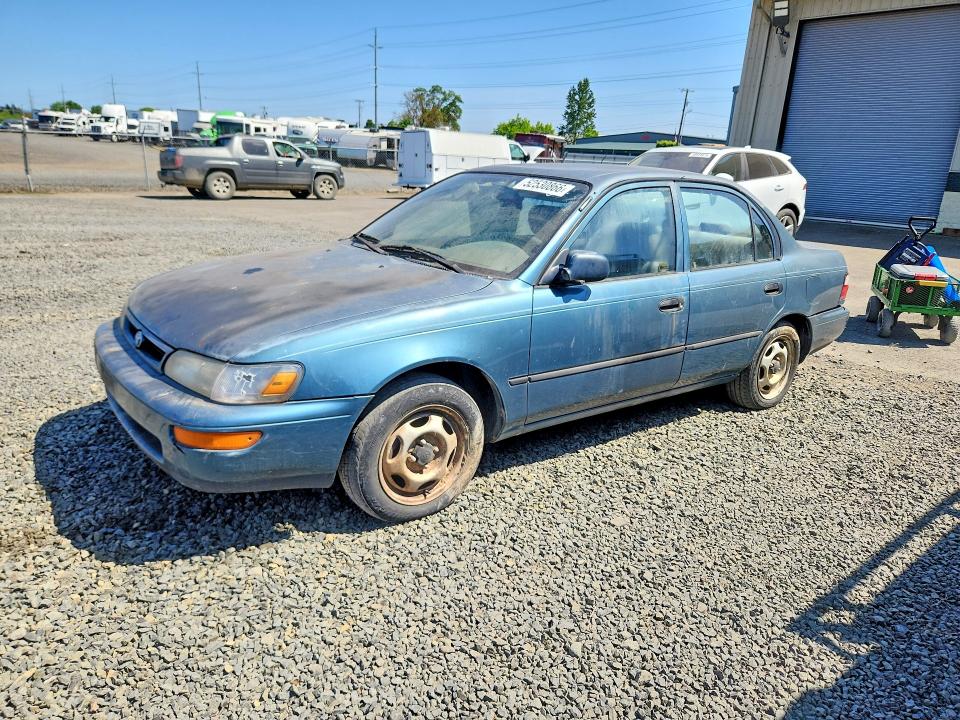
1996 Toyota Corolla Salvage: 211K Miles, Crushed Roof, Zero Bids
Roof damage on a 28-year-old unibody means the whole car is the damage now.
How is the Shame Score calculated?
The Shame Score (1–10) combines five signals: damage-type severity, title-condition risk, the gap between ACV (Actual Cash Value — the car's pre-damage market price) and AI max bid, listing red flags (run/drive status, secondary damage), and misleading-listing signals from AI photo analysis. A score of 8+ means the model found no financially defensible reason to bid. ACV is pulled from auction listing data; repair costs reference industry body-shop benchmarks. All figures are directional estimates, not binding quotes. Repair costs reference CCC Intelligent Solutions benchmarks and regional body-shop averages.
Would you bid?
Vehicle
1996 TOYOTA COROLLA
Title
salvage
Damage
TOP/ROOF
State
Oregon
Mileage
over 200k
Runs/drives
Yes
AI max bid
$0
ACV from auction listing data · Repair costs via CCC benchmarks + body-shop averages
A 1996 Toyota Corolla with 211,000 miles and a current bid of zero dollars. You're thinking what everyone thinks: these things run forever, parts are everywhere, how bad can it be? The 4A-FE engine in this car will outlast the people reading this post. At zero dollars, you could theoretically flip it for scrap, part it out, or daily-drive it into the next decade. The legend of the indestructible Corolla is doing a lot of heavy lifting right now.
The primary damage is TOP/ROOF. On a modern car with a bolt-on roof panel, that's a repair conversation. On a 1996 Corolla, the roof is not a panel — it's a structural member of the unibody (a vehicle where the body and frame are one welded piece, not separate components). Whatever hit this car from above — a tree, a rollover, a garage collapse — didn't just dent sheet metal. It loaded force directly into the A-pillars, B-pillars, and the roofline rails that hold the entire passenger cell in geometry. When those go, the doors may not close right. The windshield frame may be racked. The floor may have twisted. You cannot see any of this in photos.
A proper unibody inspection on a car this age runs $150-$200 at a frame shop, assuming they'll even touch a 28-year-old vehicle. If the pillars are compromised, you're looking at sectioning work that costs more than the car's entire ACV (Actual Cash Value — what it was worth before the damage) — which on a '96 Corolla with 211K is somewhere between $1,200 and $2,800 on a good day. Roof skin replacement alone is $800-$1,400 in labor. Pillar repair, if the shop agrees to attempt it, starts at $2,500 and climbs. A salvage title (legally declared a total loss by an insurance company) on a car this old means no lender will touch it, most states will require a rebuilt inspection, and resale value is essentially zero. You cannot give this car away with a clear conscience once you know what the roof damage did to the structure underneath.
Somebody is going to bid on this because it's a Corolla and Corollas don't die. They're right about the engine. They're wrong about everything else. The car that runs forever is now a car you cannot safely put a human being inside. Whoever wins this auction wins a parts car with a salvage title and a crushed safety cell, and they will figure that out approximately four days after they get it home. Sandra in Knoxville is going to bid on this because her nephew needs cheap transportation and she's heard these things last forever.
“It survived three presidents and one tree.”
What to watch for: TOP/ROOF
- •Stand at each corner of the car and sight down the roofline. If the ridge is bowed, kinked, or drops unevenly toward one side, the roof rails have collapsed and the whole upper structure is compromised.
- •Open all four doors and check the gaps between door and frame at the top corners. Uneven gaps — wider at the top than the bottom, or pinched on one side — mean the B-pillar has moved. That's a structural failure, not a cosmetic one.
- •Push up on the headliner at the center of the roof with both palms. On an undamaged car it's rigid. If it flexes, crackles, or feels soft, the roof skin has separated from the reinforcement underneath — and the damage runs deeper than the skin.
- •Check the windshield for stress cracks radiating from the upper corners. A racked A-pillar puts torsional load on the glass. Cracks there mean the front of the cabin has twisted.
- •Look at the door striker plates — the metal catches bolted to the B-pillar. If the striker has been adjusted recently (fresh tool marks, misaligned screw holes) someone already knew the doors weren't closing right and tried to compensate.
Tomorrow’s lot. Before the auction. Free.
One lot. AI verdict. Max bid. The numbers that matter — before you bid.
Not bidding? Same email — one lot, one roast, every morning. Join readers who watch so they never bid blind.
Not ready? Browse all entries →TL;DR — copy & share
1996 TOYOTA COROLLA / TOP/ROOF / Oregon / ACV ~$? Shame Score: 6.5/10 | AI Max Bid: $0 It survived three presidents and one tree. vetmyride.com/hall-of-shame/1996-toyota-corolla-salvage-crushed-roof-zero-bids-52530866
Previous entry
2008 HONDA CRV · Shame 9.2
“Every 'unknown' on this listing is doing the work of a sentence the seller didn't want to write.”
Lot identifying info (lot number, VIN, seller, exact sale date) scrubbed. AI commentary is opinion based on publicly listed damage + auction signals. Always inspect in person before bidding.
AI-generated opinion based on publicly listed auction data. Not a factual vehicle assessment. Actual vehicle condition may differ from listing description. All figures are directional estimates, not binding quotes. VetMyRide is not affiliated with, endorsed by, or sponsored by any auction platform. Not a substitute for professional inspection.