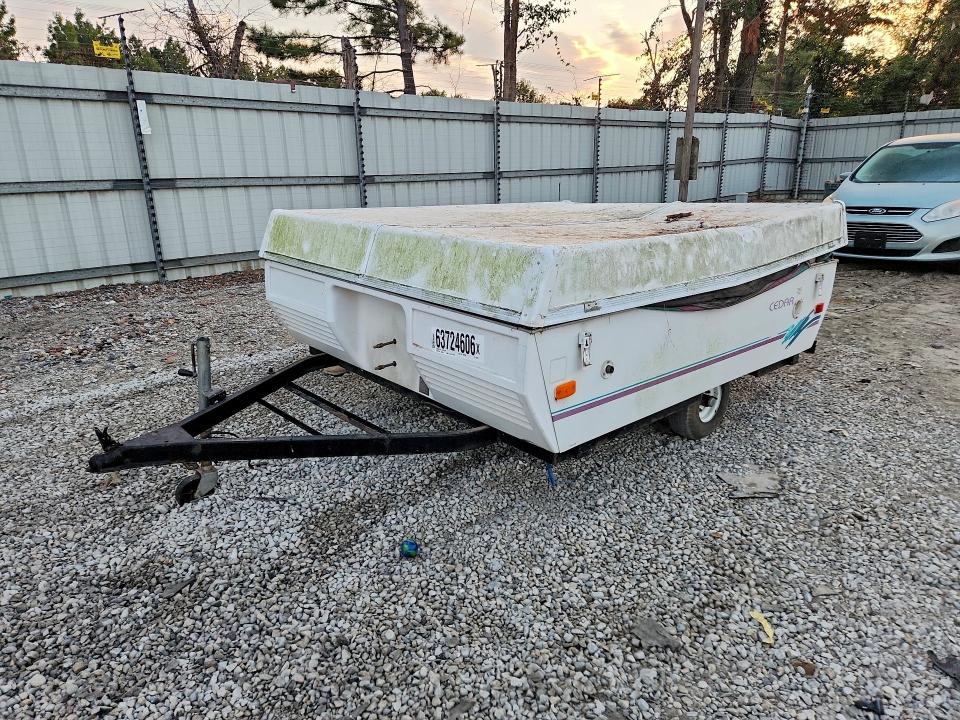
1995 Coleman Cedar Pop-Up Camper: Salvage Title, Crushed Roof, Zero Known Anything
You can't register a salvage camper in most states. You also can't stand up inside one with a crushed roof.
How is the Shame Score calculated?
The Shame Score (1–10) combines five signals: damage-type severity, title-condition risk, the gap between ACV (Actual Cash Value — the car's pre-damage market price) and AI max bid, listing red flags (run/drive status, secondary damage), and misleading-listing signals from AI photo analysis. A score of 8+ means the model found no financially defensible reason to bid. ACV is pulled from auction listing data; repair costs reference industry body-shop benchmarks. All figures are directional estimates, not binding quotes. Repair costs reference CCC Intelligent Solutions benchmarks and regional body-shop averages.
Would you bid?
Vehicle
1995 COLEMAN CEDAR
Title
salvage
Damage
TOP/ROOF
State
Virginia
Mileage
—
Runs/drives
—
AI max bid
$0
ACV from auction listing data · Repair costs via CCC benchmarks + body-shop averages
A 1995 Coleman Cedar pop-up is genuinely charming. Coleman built these things to last — fold-out beds, canvas sides, that satisfying crank that lifts the roof. The Cedar was a mid-tier family camper, not fancy, but honest. Thirty years old and still showing up at auction means somebody used it and somebody else kept it. Current bid is zero dollars. Zero. On a camper with a buy-now that doesn't exist, from a seller who apparently ran out of information after typing the word "salvage."
The damage is listed as TOP/ROOF. On a pop-up camper, the roof is not a component. The roof IS the camper. The entire structural logic of a pop-up depends on a rigid lid that lifts cleanly, seals against canvas, and comes back down without binding. When that lid takes a hit — tree branch, garage door, low clearance structure, another vehicle — the aluminum frame warps. The lift mechanism bends. The canvas tears at the seams where the distorted frame pulls it wrong. And because pop-up roofs are a sandwich of aluminum skin, foam insulation, and interior board, impact damage hides inside the layers where you cannot see it standing at an auction preview.
Replacing a Coleman Cedar roof assembly, if you can find one, runs $800 to $1,500 in parts alone — and that assumes a 30-year-old replacement panel exists in a salvage yard somewhere in America, which is a generous assumption. A canvas replacement for a Cedar is $400 to $700 from a specialty supplier. Lift mechanism repair or replacement: $200 to $600 depending on what bent. Frame straightening on aluminum pop-up structure: not really a thing — aluminum fatigues, it doesn't spring back. You're looking at $1,500 to $2,800 in parts and labor before you've addressed the salvage title (legally declared a total loss), which in most states makes a camper trailer either unregisterable or requires a rebuilt title inspection that some jurisdictions don't offer for trailers at all. Run and drive status is unknown. Keys are unknown. Mileage is unknown. The ACV field is blank, which means even Copart's algorithm looked at this and shrugged.
Someone is going to bid on this because the current bid is zero and humans cannot resist a zero. They will drive two hours with a borrowed trailer hitch. They will get it home. They will crank the lift handle and watch the roof rise four inches and stop. Kevin in Chattanooga is going to spend the next three weekends on YouTube learning that Coleman Cedar parts dried up around 2008. The camper will sit in the driveway. The HOA will send a letter. This is how it ends.
“Somewhere a raccoon is living better in this thing than you will.”
What to watch for: TOP/ROOF
- •Stand at the rear corner and sight down the roofline when it's in the raised position — any visible twist or bow in the aluminum lid means the frame took a permanent set and the roof will never seal flat against the canvas again.
- •Grab the lift crank and feel for resistance or grinding before it reaches full height — a bent lift mechanism will bind, and that binding point is where the system fails completely, usually with the roof halfway up.
- •Press your palm flat against every section of canvas and look for stiff spots, discoloration, or areas where the fabric doesn't flex evenly — those are tears or delamination from where the distorted frame pulled the canvas during impact.
- •Check the four corner castings where the canvas attaches to the roof lid — if any casting is cracked or the staple strip has pulled away, the canvas replacement cost just doubled because the mounting surface is gone.
- •Look up the specific Coleman Cedar canvas part number before you bid a single dollar — if that part is discontinued and no aftermarket supplier carries it, you are buying a very heavy lawn ornament.
Tomorrow’s lot. Before the auction. Free.
One lot. AI verdict. Max bid. The numbers that matter — before you bid.
Not bidding? Same email — one lot, one roast, every morning. Join readers who watch so they never bid blind.
Not ready? Browse all entries →TL;DR — copy & share
1995 COLEMAN CEDAR / TOP/ROOF / Virginia / ACV ~$? Shame Score: 7.2/10 | AI Max Bid: $0 Somewhere a raccoon is living better in this thing than you will. vetmyride.com/hall-of-shame/1995-coleman-cedar-pop-up-camper-salvage-title-crushed-roof-zero-known-anything-63724606
Previous entry
2019 NISSAN VERSA · Shame 7.8
“The car that taught a curb about structural integrity.”
Lot identifying info (lot number, VIN, seller, exact sale date) scrubbed. AI commentary is opinion based on publicly listed damage + auction signals. Always inspect in person before bidding.
AI-generated opinion based on publicly listed auction data. Not a factual vehicle assessment. Actual vehicle condition may differ from listing description. All figures are directional estimates, not binding quotes. VetMyRide is not affiliated with, endorsed by, or sponsored by any auction platform. Not a substitute for professional inspection.