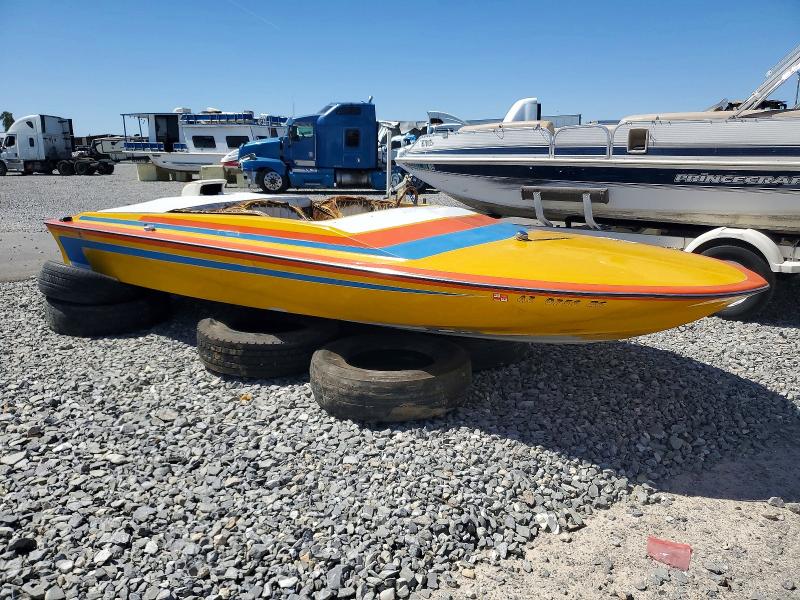
1973 Unknown Boat, Salvage Title, Fire Damage, $0 Bid: Walk Away
You can't register a salvage-titled boat in most states without a rebuild inspection — and they'll want to know what burned.
How is the Shame Score calculated?
The Shame Score (1–10) combines five signals: damage-type severity, title-condition risk, the gap between ACV (Actual Cash Value — the car's pre-damage market price) and AI max bid, listing red flags (run/drive status, secondary damage), and misleading-listing signals from AI photo analysis. A score of 8+ means the model found no financially defensible reason to bid. ACV is pulled from auction listing data; repair costs reference industry body-shop benchmarks. All figures are directional estimates, not binding quotes. Repair costs reference CCC Intelligent Solutions benchmarks and regional body-shop averages.
Would you bid?
Vehicle
1973 UNKNOWN 5
Title
salvage
Damage
BURN
State
Nevada
Mileage
—
Runs/drives
—
AI max bid
$0
ACV from auction listing data · Repair costs via CCC benchmarks + body-shop averages
A 1973 vintage boat at zero dollars has a certain romance to it. Classic fiberglass, maybe mahogany trim, the kind of hull that was built when boats were overengineered because lawsuits weren't yet a design consideration. Fifty-year-old American marine construction at a starting bid that rounds to nothing. You could trailer it home, spend a summer on it, sell it to someone with a dock and a dream. The price is zero. The possibilities feel enormous.
The listing calls it a '5 boat.' Not a make. Not a model. A category. Which means either the seller has no documentation, no hull identification number, or no interest in finding out — and on a fire-damaged vessel, any one of those is a wall you'll hit at the DMV before you hit it on the water. A salvage title (legally declared a total loss) on a watercraft means a state marine inspector has to sign off on a rebuilt title before it can be registered. They will ask what burned. They will ask why. They will want to see what's left of the wiring, the fuel system, and the hull stringers beneath the char.
Fire on a fiberglass boat doesn't stay on the surface. It travels into the laminate, weakens the resin matrix, and leaves the hull looking intact while the structural integrity is gone. A surveyor — and you will need a marine surveyor, not a mechanic, not a body shop — runs $150 to $300 per hour and will likely spend three to five hours on something this damaged. That's $450 to $1,500 before you've bought a single part. If the stringers are compromised, full replacement runs $3,000 to $8,000 on a boat this size. Rewiring a 50-year-old vessel from scratch, because you cannot trust fire-adjacent wiring, is another $2,000 to $4,000. A rebuilt marine title inspection fee, if your state even offers one, adds $200 to $500. That's $5,650 to $13,500 minimum on a boat with no confirmed identity and no confirmed anything.
Someone is going to bid on this because the number is zero and the fantasy is free. They'll trailer it home, pull back the tarp, smell what a fire smells like six months later, and start Googling marine surveyors at 11pm. Denise in Pensacola is going to outbid three other dreamers by $25 and spend the next two years explaining to her husband why there's a burned boat in the driveway. The make is unknown. The damage depth is unknown. The title is salvage. The bid is zero because that's what it's worth.
“The seller doesn't know what it is. The fire did.”
What to watch for: BURN
- •Press a flathead screwdriver firmly into the hull stringers — the longitudinal ribs running the length of the interior floor. On sound fiberglass they resist. On fire-damaged laminate they compress or crack. If it gives, the structural core is gone and the hull is a display piece.
- •Pull back any remaining flooring and smell the bilge. Fire accelerants — gasoline, oil — soak into the fiberglass and don't fully off-gas for years. If it still smells like an accelerant, an arson investigator smelled it too, and your insurance company will ask.
- •Look for the hull identification number (HIN) on the transom — the rear vertical panel. If it's burned away or missing, you cannot get a clean title in any state. No HIN, no registration, no legal operation on public water. Walk before you even open the tarp.
- •Check every wire run you can access with a flashlight. Fire-damaged wiring looks intact until it doesn't — the insulation cracks, the copper oxidizes, and the first time you run the bilge blower you find out why the boat burned in the first place.
Tomorrow’s lot. Before the auction. Free.
One lot. AI verdict. Max bid. The numbers that matter — before you bid.
Not bidding? Same email — one lot, one roast, every morning. Join readers who watch so they never bid blind.
Not ready? Browse all entries →TL;DR — copy & share
1973 UNKNOWN 5 / BURN / Nevada / ACV ~$? Shame Score: 9.2/10 | AI Max Bid: $0 The seller doesn't know what it is. The fire did. vetmyride.com/hall-of-shame/1973-unknown-boat-salvage-title-fire-damage-bid-walk-away-49313156
Previous entry
2016 JEEP RENEGADE · Shame 8.7
“Jeep built it to ford streams. The stream won.”
Lot identifying info (lot number, VIN, seller, exact sale date) scrubbed. AI commentary is opinion based on publicly listed damage + auction signals. Always inspect in person before bidding.
AI-generated opinion based on publicly listed auction data. Not a factual vehicle assessment. Actual vehicle condition may differ from listing description. All figures are directional estimates, not binding quotes. VetMyRide is not affiliated with, endorsed by, or sponsored by any auction platform. Not a substitute for professional inspection.